

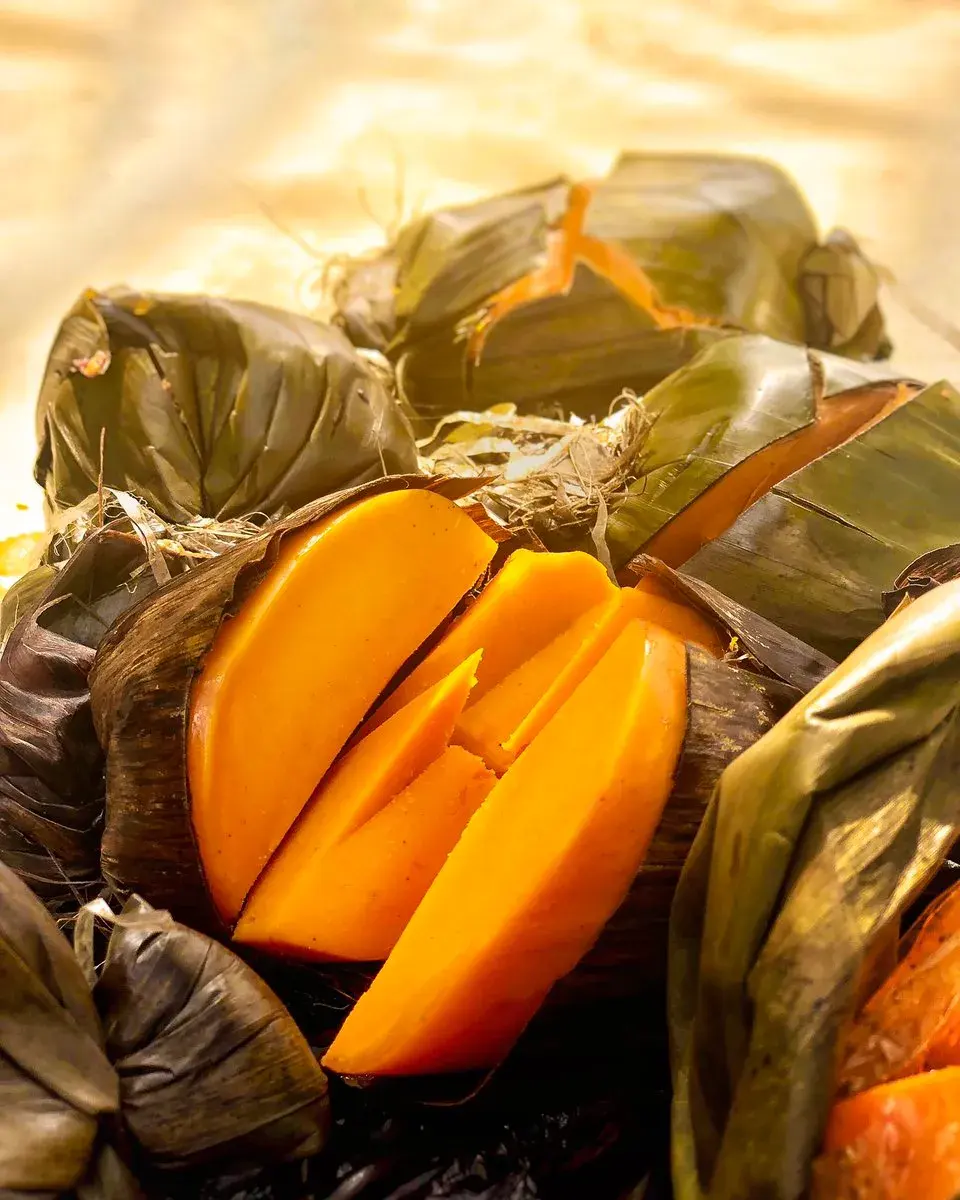
Okpa
Aperçu
Okpa is a steamed pudding of Bambara nut flour and palm oil, wrapped and cooked in boiling water until it sets solid. It is the street food of Enugu, and anyone travelling into the city from Onitsha or Lagos will hear the sellers calling okpa di oku, meaning okpa is hot. Bambara groundnut is an indigenous African legume, grown long before peanuts arrived from South America, and it is the same nut behind several dishes across the continent. It is known as jugo beans in southern Africa, and okpa itself is also called igba and ntucha. The seeds come in small pods and are extremely hard, so hard that domestic grinders cannot handle them and only industrial mills will do the job. That is why okpa flour is bought rather than made. Restraint is the principle. Bambara nuts have a good flavour of their own, and the source is emphatic that adding onions and crayfish ruins it, which is unusual advice in Nigerian cooking where those two go into almost everything. Palm oil, salt, stock cubes and pepper are the whole seasoning. The mixture looks alarmingly watery when mixed, and that is correct. The ratio in the recipe gives the right texture, and using less water produces something rock hard.
Note de Patrimoine AFN
Okpa is made from Bambara groundnut, an indigenous African legume, and is a street food particularly associated with Enugu in southeastern Nigeria. It is also known as igba and ntucha, and the nut is called jugo bean in southern Africa.
Ingrédients
Les mentions alimentaires sont fournies par les contributeurs à titre indicatif. Elles ne sont pas vérifiées par AFN et dépendent des produits que vous achetez. En cas d’allergie grave, vérifiez vous-même chaque ingrédient. Cuisine, allergies et votre propre jugement
Préparation
- 1
Sift the okpa flour into a large bowl.
- 2
Add the salt and crushed stock cubes and mix well.
- 3
Add the palm oil and mix thoroughly until it is fully incorporated and the flour is an even yellow.
- 4
Set a large pot of water on the stove to boil.
- 5
Gradually add the lukewarm water to the flour, mixing until there are no lumps. Crush any lumps thoroughly. A blender gives the smoothest mixture, at the cost of more washing up.
- 6
Add the sliced habanero pepper and check the salt.
- 7
Line the pot with spare wrappers or plastic bags, which act as a base for the okpa wraps.
- 8
Scoop the mixture into a wrapper, tie the end with string and place it in the boiling water. It must be completely immersed.
- 9
Repeat for the rest of the mixture, stirring the mix each time before scooping so it stays even.
- 10
Cover the wraps with more leaves or bags, put the lid on and cook over medium to high heat.
- 11
Cook for at least 1 hour before checking. The okpa is done when it is solid all the way through.
Notes de l’Africook
- Do not add onions or crayfish. The source is firm about this and it is unusual advice in Nigerian cooking: Bambara nut has its own flavour and those two override it.
- The mixture will look far too watery. That is correct. 1.2 litres to 450 g of flour is the ratio, and less gives a hard, rough okpa.
- Use enough palm oil for a bright even yellow. It is doing colour and flavour, and a pale okpa is an under-oiled one.
- Stir the mixture before every scoop. The flour settles quickly and the last wraps will otherwise be thin.
- Keep the wraps fully immersed throughout. Any part above the water will not set.
- Buy the flour rather than trying to grind the nuts. They are too hard for domestic mills, and bambara nut flour is sold at Nigerian grocers and posts well from Nigeria.
Questions fréquentes
What is okpa made from?
Bambara groundnut, an indigenous African legume grown across the continent long before peanuts arrived from South America. It is called jugo bean in southern Africa. The nuts are extremely hard and can only be milled industrially, so okpa flour is bought ready ground rather than made at home.
Why should I not add onions or crayfish?
Because they overwhelm the flavour of the Bambara nut, which is the whole point of the dish. This is genuinely unusual advice in Nigerian cooking, where crayfish and onion go into almost everything, and the source states it plainly. Palm oil, salt, stock cubes and pepper are the complete seasoning.
The mixture looks too watery. Is that right?
Yes. 1.2 litres of water to 450 g of flour looks alarming and is correct. Okpa sets as it steams, and a thicker mixture produces something rock hard and rough. Trust the ratio rather than the appearance, which is the most common reason a first attempt goes wrong.
What can I use instead of leaves for wrapping?
Food grade plastic bags, which is what the source uses alongside leaves and what most sellers now use. Banana or uma leaves give a faint aroma and the traditional shape. Ramekins or heatproof cups covered with foil work as a steamed pudding version if neither is available.
Avis
2 avis
Vous Aimerez Aussi
Voir toutes les recettes Nigeria →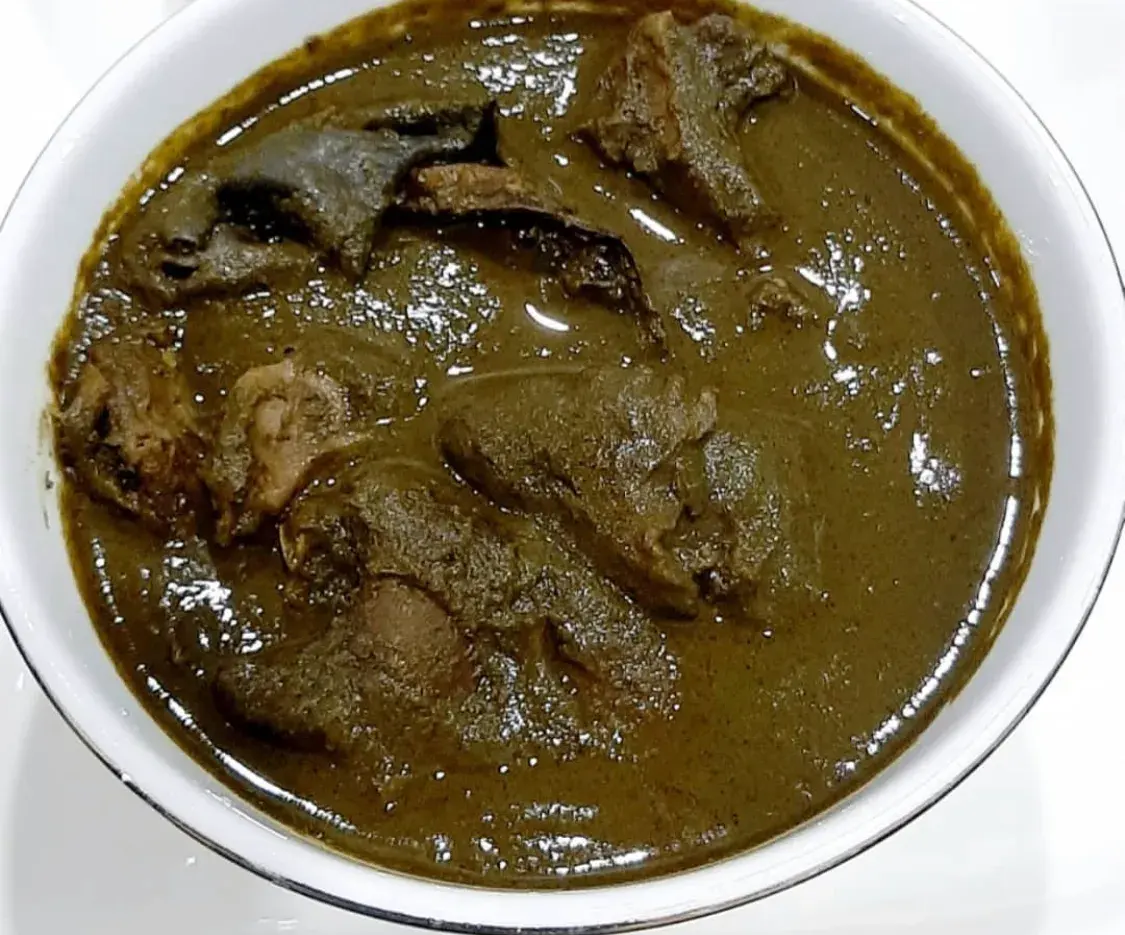
Edo Black Soup
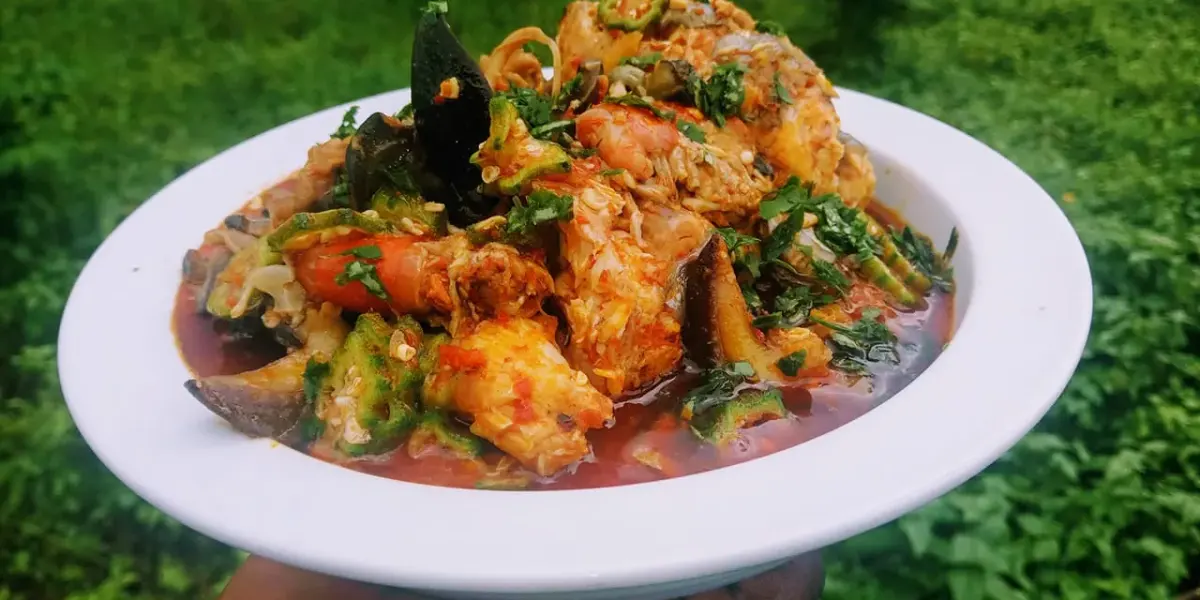
Nigerian Fisherman Soup
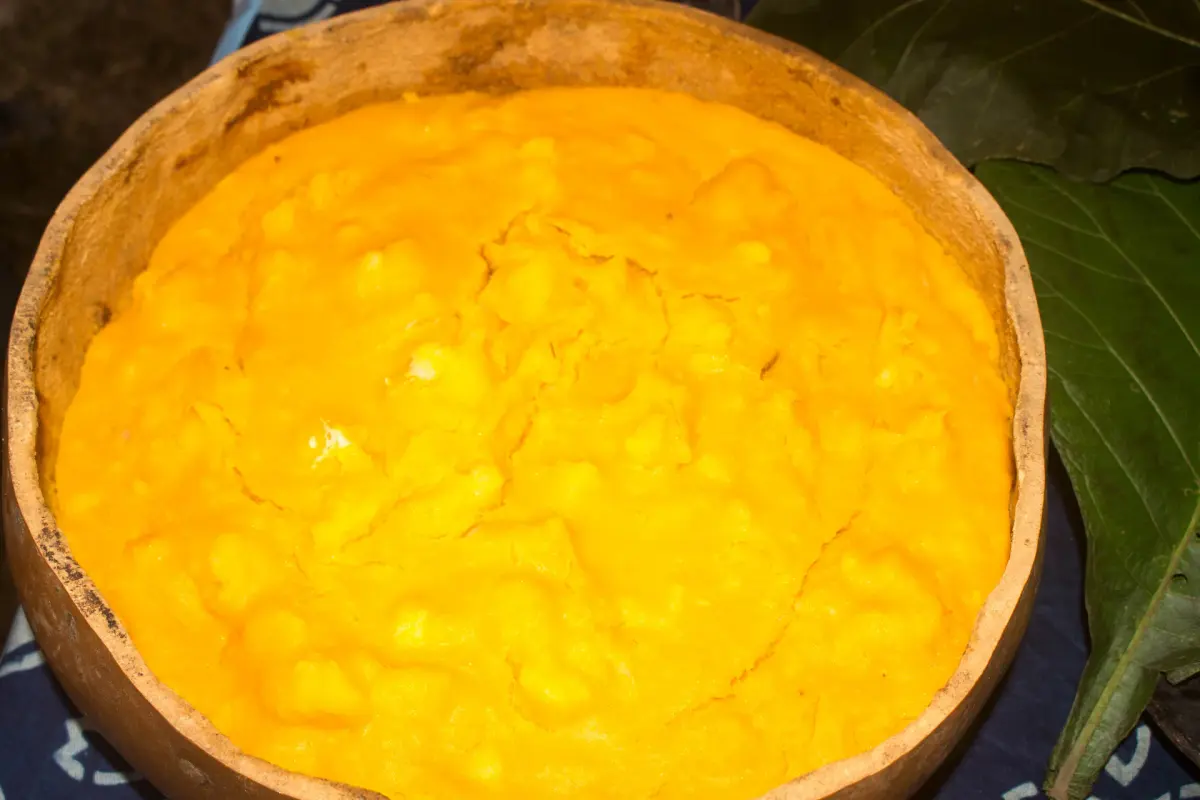
Igbo Yam Porridge
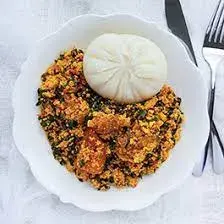
Chale, Bambara nut flour is serious business paa. In Ghana we mostly cook the whole beans for aboboi, so seeing the flour rubbed with red palm oil until yellow was new to me. Tying the leaves with string before boiling for 60 minutes takes patience oo. Found 4 stock cubes a bit too salty for my taste, 3 is plenty, but the texture came out very smooth.
Using a blender for the lukewarm water and flour mix saved my arms today! I was taught that plastic bags ruin the taste so I managed to get fresh uma leaves. That 15 tablespoons of palm oil gives it the exact deep yellow colour like the okpa 9th Mile vendors sell in Enugu. E sweet sha o.