
Mahshi
Abuja, Nigeria · Voir toutes les recettes
Aperçu
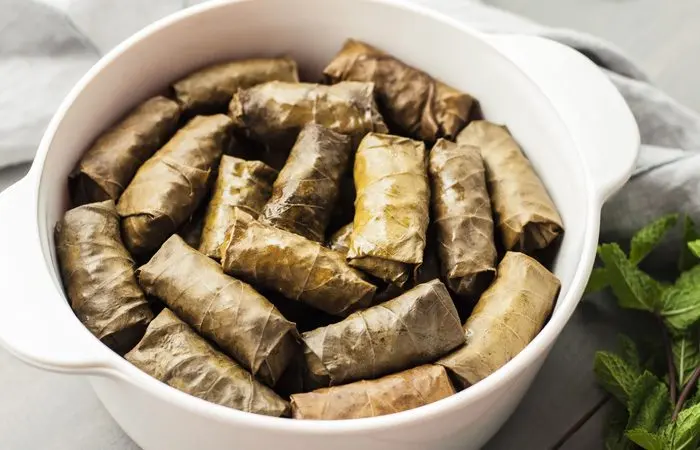
Mahshi means stuffed, and the dish is exactly that: vegetables hollowed out, filled with a mixture of rice and minced meat, and cooked in a tomato and cumin sauce. It is the archetypal dish for feeding people. Making mahshi is slow, repetitive work, hollowing, filling, packing the pot, which is why it belongs to occasions and to households cooking for numbers rather than to a weeknight. The vegetable used varies by country and by season, and this variation is much of the pleasure of the dish. Courgette, particularly the pale Lebanese kusa, is among the most common. Aubergine, bell peppers, tomatoes and potatoes are all used, and vine leaves and cabbage leaves are rolled rather than stuffed but belong to the same family. Egyptian versions frequently combine several in one pot. The filling is rice and minced beef or lamb with herbs, and it is packed loosely, the rice swells substantially as it cooks and a tightly packed vegetable will split. A vegetarian version made with rice, herbs and no meat is entirely standard rather than an adaptation, and is often served cold.
Note de Patrimoine AFN
Mahshi, meaning stuffed, is prepared across the eastern Mediterranean and Middle East with vegetables varying by country and season. Egyptian versions commonly combine several vegetables in a single pot, cooked in a tomato and cumin sauce.
Ingrédients
Les mentions alimentaires sont fournies par les contributeurs à titre indicatif. Elles ne sont pas vérifiées par AFN et dépendent des produits que vous achetez. En cas d’allergie grave, vérifiez vous-même chaque ingrédient. Cuisine, allergies et votre propre jugement
Préparation
- 1
In a pot over medium heat, add oil and then sauté onions until translucent for about 2-3 minutes.
- 2
Add the tomato sauce and paste. Stir to dissolve tomato paste.
- 3
When it starts bubbling, add rice, spices and herbs cook for just two minutes.
- 4
Turn heat off and set aside to cool down.
- 5
Wash the veggies thoroughly and clean them well, Note4.
- 6
Core veggies and make sure not to tear the walls especially when making zucchini or eggplants. Note5
- 7
For Anaheim pepper, I usually like to cut it in half for easy stuffing and make sure to buy long straight ones.
- 8
Stuff each one with the rice mixture making sure not to reach the top, so basically you want to leave about 1/2 cm of the top of your vegetable.
- 9
Rice will expand after cooking and if you are overstuffing the veggies, rice will come off. Not that it will taste bad but the presentation will not be as fancy.
- 10
Arrange herbs stems, the inside of your veggies that you just took out, lemon slices, tomato slices or onion slices at the bottom of your cooking pot to prevent scorching.
- 11
Arrange the stuffed veggies in your pot.
- 12
Dissolve bouillon and tomato paste in the hot water.
- 13
Pour into the pot so that the cooking liquid is halfway through the veggies layers.
- 14
Place pot on medium high, bring to a boil then reduce heat and simmer for 40 minutes until veggies are cooked. Note6
- 15
Wait for it to cool down a bit and serve.
- 16
Serve Mahshi with tabbouleh and tzatziki sauce.
Notes de l’Africook
- Pack the filling loosely. Rice swells as it cooks and an overfilled vegetable will burst.
- Keep the hollowed-out flesh and add it to the sauce rather than throwing it away.
- Pack the pot tightly so the vegetables hold each other upright and do not tip and spill.
- Weigh them down with a plate so they stay submerged in the sauce.
Questions fréquentes
Which vegetables can I use?
Courgette, especially the pale Lebanese kusa, aubergine, bell peppers, tomatoes and potatoes are all traditional. Vine leaves and cabbage leaves are rolled rather than hollowed but belong to the same dish. Egyptian versions often use several in one pot, which is worth doing since they cook at similar rates.
Why did my mahshi burst?
The filling was packed too tightly. Rice roughly doubles as it absorbs the sauce, so each vegetable needs to be filled loosely, around two-thirds, to leave room. Overfilling is the single most common fault, and there is no fixing it once it happens.
Can it be made vegetarian?
Yes, and the meatless version is entirely standard rather than a modern adaptation. Rice with herbs, onion, tomato and spices makes the filling, and it is frequently served cold, particularly in summer, where the meat version is served hot.
Avis
Soyez le premier à noter cette recette
Vous l’avez cuisinée ? Votre note aide la personne suivante à se décider.
Aucun avis sur cette recette pour le moment. Si vous l’avez cuisinée, le vôtre serait le premier.
Vous Aimerez Aussi
Voir toutes les recettes Egypt →
Tarb (Grilled Kofta Wrapped in Lamb Fat)

Egyptian Meshabek