
Hawawshi (Egyptian Stuffed Bread)
London, United Kingdom · Voir toutes les recettes
Aperçu
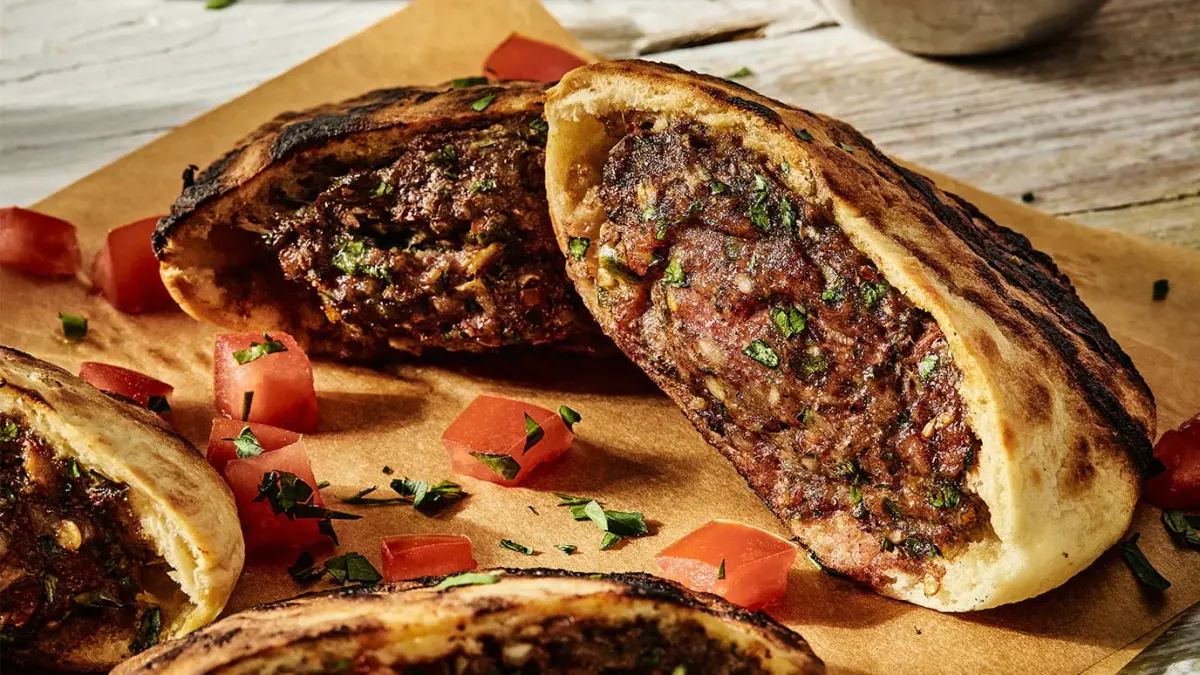
Hawawshi is pita stuffed with heavily spiced minced beef and baked until the meat cooks through and the bread crisps. It is Egyptian street food, sold across Cairo and Alexandria, where it is also known as baladi. The story attached to it is unusually specific for a street food. It is credited to a butcher named Ahmed Al-Hawash, working in Cairo's Tawfeek Souq in the early 1970s, with the dish taking his name. The source hedges this as legend and that is the right level of confidence, it is widely repeated, plausible given how recent it is, and not documented in a way that settles it. What makes it work is the raw filling. The meat goes into the bread uncooked, and the fat renders as it bakes, soaking into the pita from the inside while the outside crisps in the oven. Cooking the meat first would lose that entirely and give you a dry sandwich. The wet-vegetable problem is the one thing to get right, and the source handles it well: the onion, pepper, jalapeño and parsley are processed and then drained in a sieve before they go near the meat. Skipping that step floods the bread. Related dishes exist across the region, Lebanese arayes is the same idea with different spicing.
Note de Patrimoine AFN
Hawawshi is an Egyptian street food of pita bread stuffed with spiced minced beef and baked. It is sold across Cairo and Alexandria, where it is also called baladi, and is commonly credited to a Cairo butcher, Ahmed Al-Hawash, in the early 1970s. The Lebanese dish arayes is closely related.
Ingrédients
Les mentions alimentaires sont fournies par les contributeurs à titre indicatif. Elles ne sont pas vérifiées par AFN et dépendent des produits que vous achetez. En cas d’allergie grave, vérifiez vous-même chaque ingrédient. Cuisine, allergies et votre propre jugement
Préparation
- 1
Set the oven to 400°F / 200°C.
- 2
Combine the coriander, allspice, paprika, black pepper, cardamom, cumin and cinnamon in a small bowl.
- 3
Put the onion, garlic, bell pepper, jalapeño and parsley into a food processor and pulse a few times until finely chopped. Tip the mixture into a sieve and press it with the back of a spoon to drain the liquid, this step is what keeps the bread from going soggy.
- 4
Transfer the drained vegetables to a large bowl with the ground beef and tomato paste and mix to combine.
- 5
Mix in the spice blend and a good pinch of kosher salt, working it through until the spices are evenly distributed.
- 6
Cut the pita loaves in half to make 12 pockets.
- 7
Brush a large baking sheet with olive oil.
- 8
Stuff each pocket with about a third of a cup of the raw meat mixture, spreading it inside with the back of a spoon so it fills the pocket evenly.
- 9
Arrange the pitas on the sheet and brush the tops with olive oil.
- 10
Bake for 15 minutes, then turn them over carefully and bake for a further 5 to 10 minutes, until the meat is cooked through and the bread is crisp on both sides.
Notes de l’Africook
 Notes personnelles de Nympha Nzeribe
- Drain the vegetables properly. Wet filling floods the pita from the inside and no amount of baking recovers it.
- Put the meat in raw. The fat rendering into the bread as it bakes is the entire point, and pre-cooked meat gives you a dry sandwich.
- Spread the filling thinly and evenly inside the pocket. A thick lump in the middle stays raw while the edges burn.
- Turn them halfway. Both sides need to crisp, and the underside sits against the tray.
- Use pita with a proper pocket. Pocketless flatbread will not work for this.
- Check the meat is cooked through before serving, the bread crisps before thick filling is done.
Questions fréquentes
Where does hawawshi come from?
Egypt, and unusually for a street food the origin is fairly specific: it is credited to a butcher named Ahmed Al-Hawash working in Cairo's Tawfeek Souq in the early 1970s, with the dish taking his name. The source presents this as legend, which is the right level of confidence, it is widely repeated and plausible given how recent it is, but not documented in a way that settles the matter.
Should I cook the meat first?
No, and this is the most important thing about the dish. The filling goes into the bread raw, and as it bakes the fat renders and soaks into the pita from the inside while the outside crisps in the oven. That is what makes hawawshi different from a sandwich. Cooking the meat first drives the fat off and leaves you with dry mince in dry bread. Just make sure it is cooked through before serving.
Why drain the vegetables?
Because onion, pepper and jalapeño hold a great deal of water, and once processed they release it. Mixed straight into the meat, that liquid has nowhere to go but into the pita, which turns soggy from the inside while the outside is still baking. Pressing the processed vegetables through a sieve takes a minute and prevents it entirely. It is the best piece of technique in the original recipe.
What is arayes?
The Lebanese version of the same idea, pita or flatbread stuffed with raw spiced minced meat and grilled or baked. The construction is identical; the seasoning differs, with Lebanese versions leaning more on parsley, mint and seven-spice and less on the cardamom and allspice that characterise hawawshi. Arayes is often grilled rather than oven-baked, which gives a smokier result. The two are close cousins.
Avis
Soyez le premier à noter cette recette
Vous l’avez cuisinée ? Votre note aide la personne suivante à se décider.
Aucun avis sur cette recette pour le moment. Si vous l’avez cuisinée, le vôtre serait le premier.
Vous Aimerez Aussi
Voir toutes les recettes Egypt →
Tarb (Grilled Kofta Wrapped in Lamb Fat)
Egyptian Meshabek