

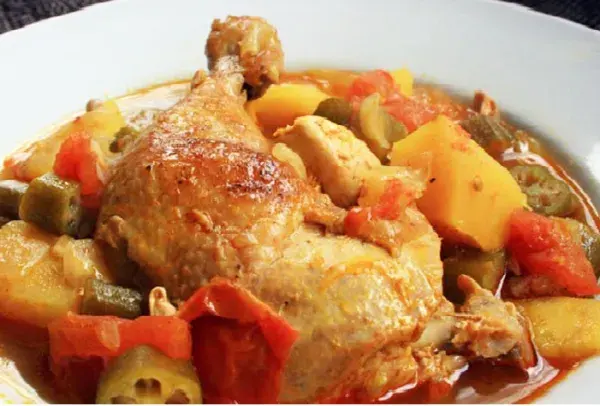
Muamba Chicken (Muamba De Galinha)
Aperçu
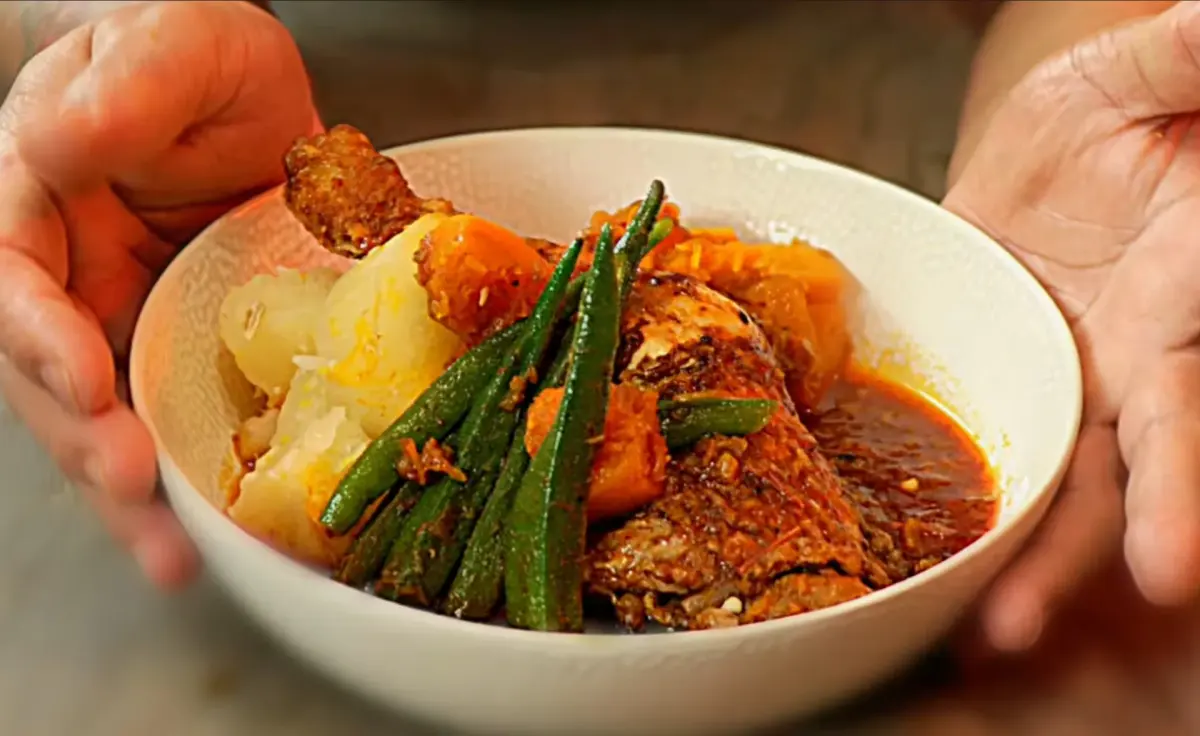
Muamba is a family of palm based dishes across Angola and the Congo basin, and the chicken version is the one most often named as Angola's national dish. Chicken is simmered in palm oil with onion, garlic, tomato and hot pepper, thickened with okra, and served over rice or with funge, the cassava porridge. This particular version takes a path towards the Congo. Peanut butter goes in alongside the palm oil, which is a Congolese and Central African treatment more closely associated with moambe than with the Luandan preparation, and the result is heavier and nuttier than the Angolan version that relies on palm oil and okra alone. Both are legitimate. Muamba names a method rather than a single fixed recipe, and it changes as it crosses the region. The palm oil is what holds all the versions together. It is pressed from the fruit of the oil palm, which is indigenous to West and Central Africa, and it gives the dish its deep orange colour and a flavour that no other fat provides. Angolans call it dendem. Whatever else varies between one muamba and the next, a version made without palm oil is a chicken stew and not a muamba, which is the one point on which nobody in the region disagrees.
Note de Patrimoine AFN
Muamba names a family of palm based dishes across Angola and the Congo basin, of which the chicken preparation is the most widely known. The oil palm, Elaeis guineensis, is indigenous to West and Central Africa and its fruit has been processed for oil there for several thousand years.
Ingrédients
Les mentions alimentaires sont fournies par les contributeurs à titre indicatif. Elles ne sont pas vérifiées par AFN et dépendent des produits que vous achetez. En cas d’allergie grave, vérifiez vous-même chaque ingrédient. Cuisine, allergies et votre propre jugement
Préparation
- 1
Simmer the chicken covered in water with the bay leaf and thyme until it is falling off the bone. Keep it at a simmer rather than a hard boil, which toughens the meat.
- 2
Pull the meat off the bone and reserve the stock.
- 3
Fry the onion, hot pepper and garlic in the palm oil until translucent. Add the tomato.
- 4
Stir in the tomato paste and about half a cup of the reserved stock.
- 5
Add the peanut butter.
- 6
You should have a sauce with the texture of a thick tomato sauce. Add more stock if it is too tight.
- 7
Return the chicken to the pan and simmer for a few minutes so the flavours come together.
- 8
Add the okra and cook for 2 to 3 minutes until just tender.
- 9
Serve over rice or with funge.
Notes de l’Africook
 Notes personnelles de Nympha Nzeribe
- Simmer the chicken rather than boiling it. A hard boil tightens the muscle fibres and gives rubbery meat, which is the one thing that cannot be corrected later.
- Loosen the peanut butter with hot stock before it goes in, or it will sit in lumps that take a long time to disperse.
- Add the okra at the very end and give it two or three minutes only. Longer and it collapses and the sauce turns slimy.
- This version uses peanut butter alongside the palm oil, which is closer to the Congolese moambe treatment. The Luandan version relies on palm oil and okra without peanut, and both are correct.
- Funge, the Angolan cassava porridge, and plain rice are the standard accompaniments. Boiled cassava also works.
Questions fréquentes
Is muamba chicken the same as muamba de galinha?
Yes, they are two names for the same dish, and this recipe carries both. Muamba de galinha is the Portuguese, meaning muamba of chicken. Note that this particular version includes peanut butter, which is a Congolese and Central African treatment closer to moambe, where the Luandan Angolan version relies on palm oil and okra without it.
Why does this recipe use peanut butter?
Because muamba is a regional family rather than one fixed recipe. Peanut is standard in the Congolese and Central African versions and in Angolan muamba de ginguba, the groundnut preparation. The result is heavier and nuttier than the palm oil and okra version most associated with Luanda. Neither is more correct than the other.
Can I use ordinary vegetable oil instead of palm oil?
No, not if you want a muamba. Red palm oil provides both the deep orange colour and the specific flavour that defines the dish, and no other fat approximates it. A neutral oil with paprika will give you the colour and none of the taste. Palm oil is widely stocked by African grocers.
What is muamba chicken served with?
Funge, the Angolan cassava porridge, is the standard, and plain rice is equally common. Boiled cassava, sometimes tossed in lemon and garlic, also appears. Whatever it is served with should be plain, since the stew carries all the flavour and the accompaniment is there to take up the sauce.
Avis
4 avis
Vous Aimerez Aussi
Voir toutes les recettes Angola →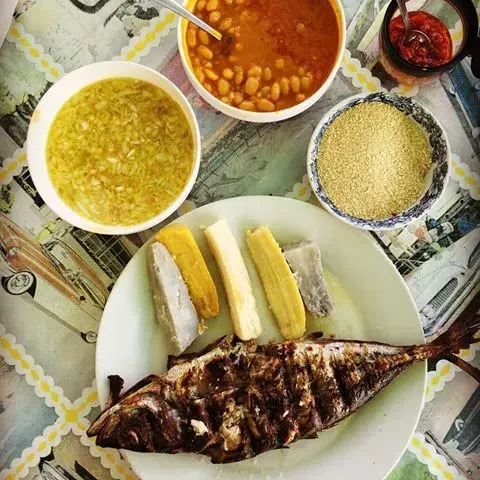
Mufete
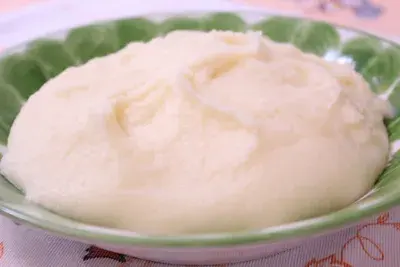
Funge
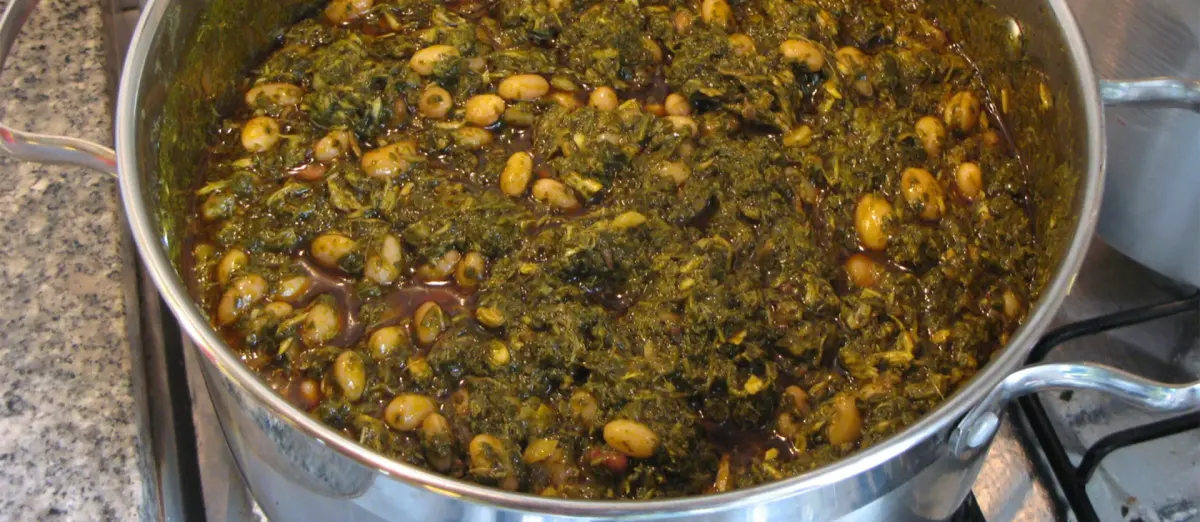
Kizaca
That tip to keep the chicken at a gentle simmer instead of a hard boil saved the meat from turning tough! Picked up my palm oil in Scarborough at the market near Lawrence. Mixed the chunky peanut butter into the tomato and palm oil base just like you wrote, tasted incredible with warm rice o.
found the red palm oil at Your DeKalb Farmers Market easily. My only thing is the whole 6 oz can of tomato paste made the sauce a bit too thick once the half cup of peanut butter went in, so I had to add almost a full cup of the reserved stock to loosen it up. Good flavor sha.
I got my red palm oil from the African store on Bissonnet here in Houston and used chunky Skippy since that was in my pantry. Simmering the chicken low with the bay leaf and thyme made the stock so rich! My husband cleared his plate, e sweet no be small thing.
abeg can I just leave the chicken pieces on the bone instead of pulling all the meat off after simmering with the thyme and bay leaf? In Lagos here we like to bite the bone in stew, but I want to try this Angolan peanut butter and palm oil combination for Sunday dinner.