

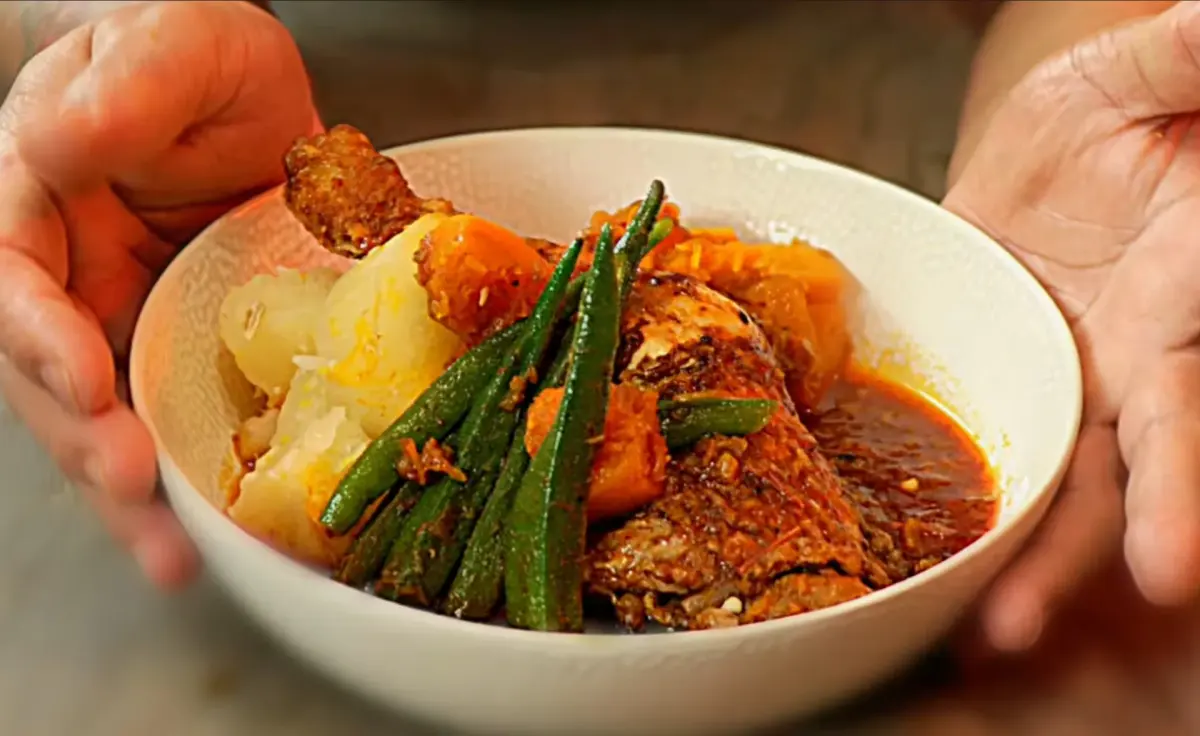
Muamba De Galinha (Angolan Chicken Stew)
Aperçu
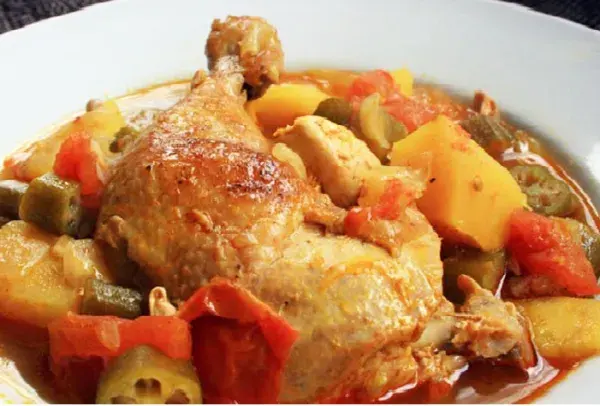
Muamba de galinha is the dish most often named as Angola's national one, and it earns the title by being the clearest single statement of what Angolan cooking is. Chicken marinated in garlic and paprika, seared in red palm oil, simmered with onion, tomato and hot pepper, thickened with okra and given body by squash. The palm oil is not a background ingredient. It is what turns the stew the deep orange that muamba is recognised by, and it carries a specific flavour that no other fat provides. Angolans call it dendem or red oil, and a muamba made with anything else is a chicken stew rather than a muamba. The name itself points somewhere older. Muamba refers to a family of dishes built on palm across Angola and the wider Congo basin, of which muamba de galinha is the chicken version and muamba de ginguba the groundnut one. The Portuguese in the name is only the galinha. It is eaten with funge, the cassava porridge, or with rice, and the version here serves it with cassava tossed in lemon and garlic, which is a contemporary treatment of a very old accompaniment.
Note de Patrimoine AFN
Muamba names a family of palm based dishes across Angola and the wider Congo basin, of which muamba de galinha is the chicken preparation. The oil palm, Elaeis guineensis, is indigenous to West and Central Africa and its fruit has been processed there for several thousand years.
Ingrédients
Les mentions alimentaires sont fournies par les contributeurs à titre indicatif. Elles ne sont pas vérifiées par AFN et dépendent des produits que vous achetez. En cas d’allergie grave, vérifiez vous-même chaque ingrédient. Cuisine, allergies et votre propre jugement
Préparation
- 1
Mince the garlic and mix the herbs and spices into the olive oil. Zest and squeeze the lemon into it.
- 2
Coat the chicken in the marinade and leave in the fridge for an hour.
- 3
Peel the cassava and cut into pieces. Boil until just tender, then drain.
- 4
Mince the garlic for the cassava and mix it with the lemon and salt in the olive oil. Toss the drained cassava through it.
- 5
Sear the chicken legs in a saucepan until golden brown, then remove from the pan.
- 6
Peel and cube the butternut squash, dice the onions, mince the garlic, roughly dice the tomatoes and halve the okra.
- 7
Heat the red palm oil in the same saucepan.
- 8
Fry the onions and garlic until translucent.
- 9
Add the spices and fry for 30 seconds.
- 10
Add the tomatoes and fry until just soft.
- 11
Return the chicken to the pan with the butternut squash.
- 12
Add water to just cover the chicken and squash, and season lightly with salt.
- 13
Bring just to the boil, then simmer for 30 minutes until the gravy thickens lightly.
- 14
Add the okra on top and cook for 2 to 3 minutes until just tender.
- 15
Season again if needed, and serve with the lemon and garlic cassava.
Notes de l’Africook
 Notes personnelles de Chef Donkey
- Red palm oil is structural. It gives the stew its colour and its characteristic flavour, and substituting any other oil produces a different dish that happens to share a method.
- Add the okra at the very end and give it two or three minutes only. Cooked longer it collapses and turns the stew slimy rather than lightly thickened.
- Sear the chicken hard before it goes into the sauce. This is where the depth comes from, and pale seared chicken gives a thin stew.
- The marination is worth the hour but not essential. If you are short of time, season with salt and pepper before searing and the stew still works.
- Funge, the Angolan cassava porridge, and plain rice are the conventional accompaniments. The lemon and garlic cassava here is a modern treatment.
Questions fréquentes
What is red palm oil and can I substitute it?
Red palm oil is pressed from the fruit of the oil palm and is deep orange, thick and distinctly flavoured, quite different from the refined palm oil used in processed food. It is what makes muamba de galinha look and taste as it does. There is no real substitute. A neutral oil with paprika approximates the colour and none of the flavour.
What is muamba and are there other kinds?
Muamba names a family of palm based dishes across Angola and the Congo basin rather than one recipe. Muamba de galinha is the chicken version. Muamba de ginguba is made with groundnuts. The common thread is the palm base, and the Portuguese element in the names is only the identification of the protein.
Do I have to use okra in muamba de galinha?
Okra is the conventional thickener and gives the stew its particular body. You can leave it out and reduce the sauce further instead, which gives a thinner but perfectly good stew. What you should not do is cook the okra long, because more than a few minutes turns it slimy and takes the dish somewhere it should not go.
What is muamba de galinha served with?
Funge, the Angolan cassava porridge, is the standard accompaniment, and plain rice is equally common. The version here serves it with boiled cassava tossed in lemon, garlic and oil, which is a contemporary treatment. Whatever it is served with should be plain, since the stew carries all the flavour.
Avis
4 avis
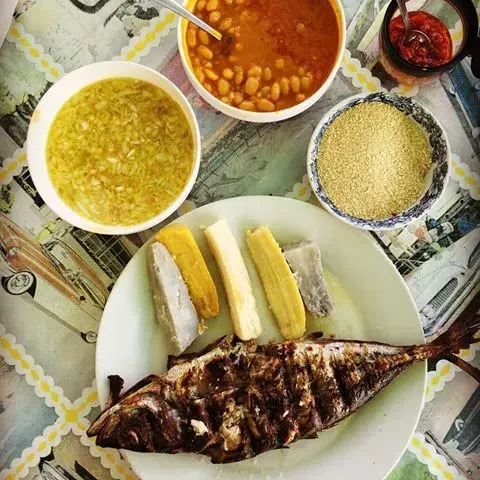
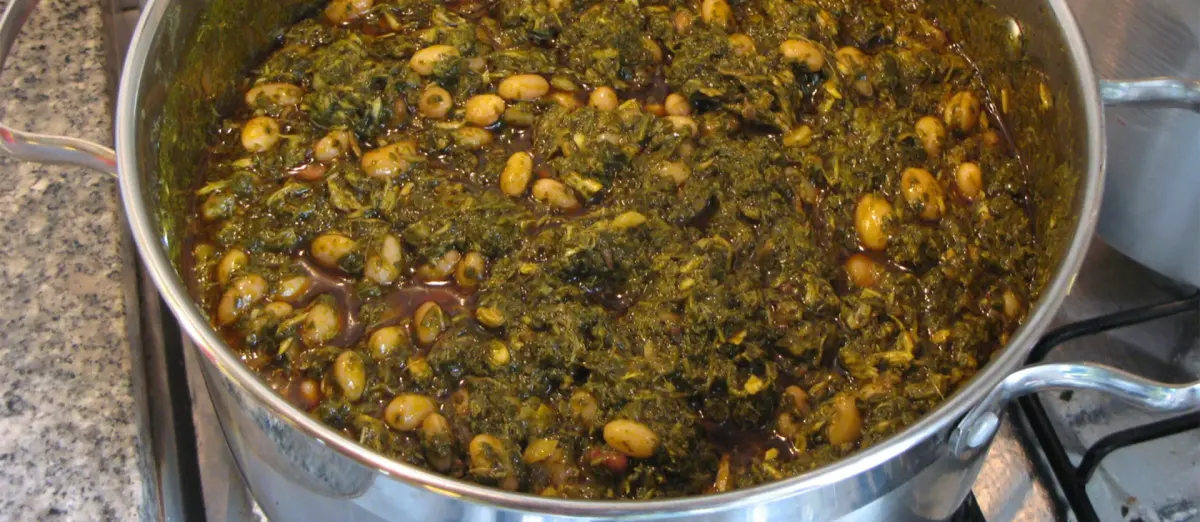
Left the chicken to marinate in the smoked paprika and lemon overnight instead of just one hour. Got proper red palm oil from Rye Lane market here in Peckham. That garlic lemon oil tossed through the boiled cassava at the end balanced the richness of the palm oil so well, e sweet o!
Abeg three red onions is key for this stew, gave the palm oil base such a rich sweet taste. Was a bit skeptical about tossing the boiled cassava in lemon garlic oil first but e make sense sha. My chilli powder was a bit too strong though so it masked the paprika flavour.
Made this yesterday with fresh halal chicken legs. Searing the meat after marinading in that chilli and garlic oil made the skin brown nicely before adding to the palm oil and sliced red onions. My brothers finished the whole pot, cassava was soft oo.
Chale, the lemon zest in the marinade gave the chicken legs such a nice fresh bite before searing. Only thing is 30 mins cook time was too short for the meat to fall off the bone properly, had to leave it on low heat for extra 20 mins paa.