
Fumbua (Congolese Wild Spinach Stew)
London, United Kingdom · Voir toutes les recettes
Aperçu
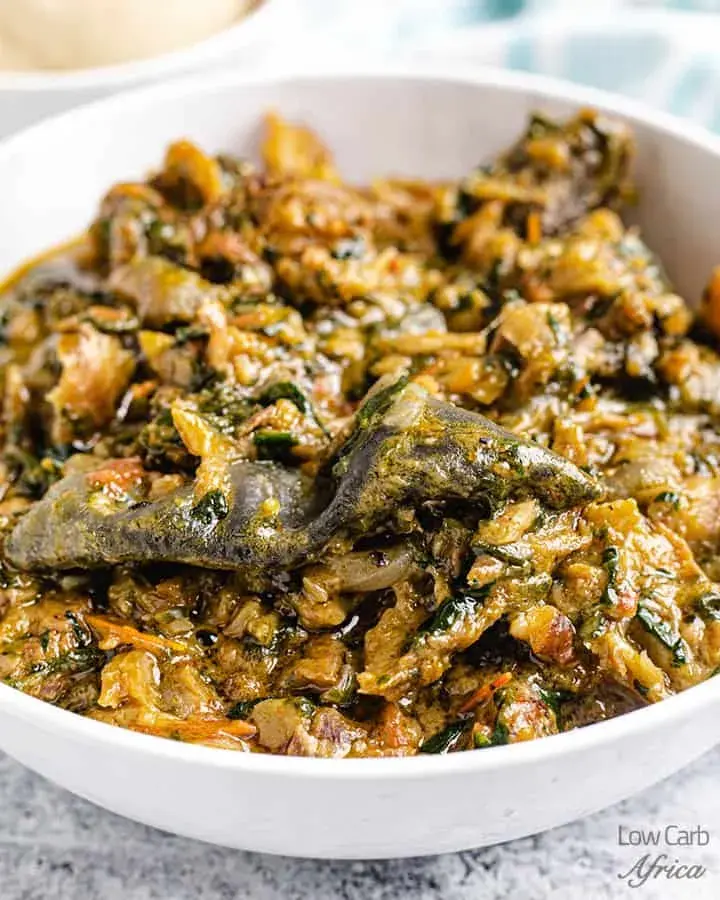
Fumbua is chopped wild greens cooked with smoked fish, peanut butter and palm oil into a thick, savoury stew. It comes from the Democratic Republic of the Congo and is eaten in Angola too. **It contains peanut butter, which the title gives no indication of.** The greens the dish is named for are fumbwa, the leaves of *Gnetum africanum*, the same wild forest vine known as eru in Cameroon and afang or okazi in Nigeria. That single plant supports a whole cluster of Central and West African dishes, each with its own name and its own treatment, and fumbua is the Congolese one. Its distinguishing feature within that group is the peanut butter, which thickens the stew and gives it a richness that eru and afang do not have. Peanuts and palm oil doing the work together is characteristic of Congo basin cooking generally, and it is the same combination that underpins moambe, the Congolese national dish. The source is realistic about substitution, and rightly so. Genuine fumbwa leaves are hard to find outside the region, and it recommends spinach, kale or collard greens instead. That is a fair compromise, the texture will be softer and the flavour milder, but the dish still works. The source's low-carbohydrate framing has not been carried across.
Note de Patrimoine AFN
Fumbua is a stew from the Democratic Republic of the Congo made from fumbwa, the leaves of the wild forest vine Gnetum africanum, cooked with smoked fish, peanut butter and palm oil. The same leaf is known as eru in Cameroon and afang or okazi in Nigeria.
Ingrédients
Les mentions alimentaires sont fournies par les contributeurs à titre indicatif. Elles ne sont pas vérifiées par AFN et dépendent des produits que vous achetez. En cas d’allergie grave, vérifiez vous-même chaque ingrédient. Cuisine, allergies et votre propre jugement
Préparation
- 1
Soak the smoked fish in hot water for a few minutes to soften it.
- 2
Chop the greens, rinse them and leave them in a colander to drain.
- 3
Bone the smoked fish and break it into medium pieces, rinsing them thoroughly.
- 4
Chop the onions, tomato and habanero, and mince the garlic.
- 5
Pour the water and stock into a pot and bring to the boil.
- 6
Put the chopped greens in and cook gently for 10 minutes.
- 7
Tip in the smoked fish, diced tomatoes, habanero, onion, garlic, bouillon powder, salt and black pepper. Bring back to the boil and cook gently for about 10 minutes.
- 8
Finally work in the peanut butter and palm oil and cook for a further 10 minutes, until thickened and glossy.
- 9
Taste for salt, the stock and smoked fish are both salty, so check before adding any more.
Notes de l’Africook
 Notes personnelles de Nympha Nzeribe
- This contains peanuts, and the name gives no hint of it. Say so when serving.
- Loosen the peanut butter with a little of the hot broth before it goes into the pot, or it will seize into lumps that never disperse.
- Taste before salting. Smoked fish and stock cubes are both heavily salted and it is easy to overshoot.
- Spinach, kale or collards are the practical substitutes for fumbwa. The texture is softer and the flavour milder but the dish holds up.
- Palm oil is a defining flavour here, not just a fat. Substituting another oil changes the dish substantially.
- It thickens further as it stands, so take it off slightly looser than you want it.
Questions fréquentes
Does this contain peanuts?
Yes, four tablespoons of peanut butter, which thickens the stew and is central to its character. Nothing in the name indicates it, so it is worth stating when serving this to anyone whose allergies you do not know. There is no straightforward substitution: the peanut butter is doing structural work as well as contributing flavour, and leaving it out gives you a thin, quite different stew.
What is fumbwa?
The leaves of Gnetum africanum, a wild forest vine gathered rather than farmed across Central and West Africa. The same plant is called eru in Cameroon and afang or okazi in Nigeria, and each region has its own dish built around it. Fumbua is the Congolese version, distinguished within that family by the peanut butter. The leaves are tough and are chopped very finely before cooking.
Can I use spinach instead?
Yes, and the source recommends it, along with kale or collard greens. Genuine fumbwa is difficult to find outside Central Africa, and the substitution is an honest one rather than a compromise nobody admits to. Expect a softer texture and a milder flavour, fumbwa is considerably tougher and more distinctive than spinach, but the peanut, palm oil and smoked fish carry the dish regardless.
What is it served with?
Rice, fufu, or chikwangue, the fermented cassava bread of the Congo basin, which has its own recipe on this site under the name chikuanga. Any starch that will carry a thick sauce works. The stew is rich and substantial, so the accompaniment is there to soak it up rather than to add flavour of its own, which is the usual arrangement across Central African cooking.
Avis
Soyez le premier à noter cette recette
Vous l’avez cuisinée ? Votre note aide la personne suivante à se décider.
Aucun avis sur cette recette pour le moment. Si vous l’avez cuisinée, le vôtre serait le premier.