The Science Of Frying Foods

cooking french fries close frying fryer shutterstock 464044346
image source: tasteofhome

When it comes to cooking, there are several methods that can be employed in turning food from a raw form into a more palatable and edible form. Some cooking methods include; boiling, steaming, frying, sautéing, baking and grilling. All these methods give foods different final flavour and texture. For example, a grilled meat will not taste the same as a boiled meat. It is this uniqueness that makes the idea of cooking extremely interesting.

Frying is a method of cooking that is used both in home kitchens and commercial kitchens. Foods are fried to achieve a crispy and golden brown dish. Most of the street foods and fast foods are fried. When frying, foods are cooked in a bath of hot oil or fat between temperatures of 350°F and 375°F. Foods are either partially or fully immersed in the oil or fat medium until they turn golden brown with a crisp outer layer and moist interior.

HOW FRYING WORKS

When a food is introduced into hot oil, it rapidly begins to dehydrate. When the food is immersed in the oil, the water within the food material immediately starts to boil and rise to the food surface thereby causing free fatty acids to form. The crust of the food helps to lock in moisture and prevents the food from becoming completely dehydrated.

During frying, Maillard reaction occurs, which results in a golden brown colour and rich flavour. The interior of the food is cooked by the heat from the oil and this softens the fibers, denatures the proteins and gelatinizes the starches in the food material. The crust which locks in water and forms as a protective layer is typically formed in heavy starch foods like flour based batters and dough. This protective crust is very essential to the frying process to lock in the moisture and avoid excess oil absorption.

There are four common methods of frying, they are;

  1. Deep Frying: In this frying method, the food is immersed fully in the hot oil. It is frequently done using a deep frying machine but can also be done manually using a deep pan or pot.
  2. Pan Frying: In this method, the foods are cooked in varying amounts of oil in a frying pan. The foods which are pan fried are generally sliced thinly before frying.
  3. Stir-Frying: In this method, the foods are fried in a unique pan with sloped sides. The foods are fried quickly over high temperatures and it is best done over an open flame or gas stove.
  4. Air Frying: This method is a healthy method of frying because hot air is used instead of fat. It is carried out in a special machine called the air fryer machine.

A very important aspect of frying is choosing the right oil. There are various factors that need to be put into consideration when choosing the best oil for frying. The factors include; frying method, healthfulness of the recipe, desired flavour, type of food etc. Different areas in the world have significant types of oils that are common to them therefore; oil type will also depend on the location where the food is cooked. The best oils should be those with neutral flavours and high smoke point. Unsaturated oils are preferred as the healthiest option but the disadvantage of using them is that they have a low smoke point. Make sure to put all these factors into consideration when choosing the oil for frying. Официальный сайт казино Пин Ап в России отличается простым и понятным интерфейсом. Все разделы расположены на стандартных местах, поэтому с управлением проблема не возникнет. Сверху есть клавиши входа, создания аккаунта и главное меню с разделами. Ниже размещен баннер, информирующий обо всех текущих акциях, бонусах и новинках, добавленных в каталог. В центре основной страницы сайта Pin Up казино в России представлен каталог со всем ассортиментом игр. Все развлечения разделены на разделы, что упрощает поиск нужного слота. В футере доступна информация о лицензии, основные правила.

The most popular oils and fats used for frying are;

  • Soybean Oil
  • Canola Oil
  • Peanut Oil
  • Sunflower Oil
  • Shortening
  • Rendered animal fat like lard

When frying at home, here are certain tips you need to know:

  1. Monitor the Temperature: Use a thermometer to check if the food has reached the correct temperature stated in the recipe before bringing it off the fire. Bear in mind that oil which is too hot will burn the food surface and oil which isn’t hot enough will result in a soggy and greasy dish.
  2. Don’t Crowd: Immersing many pieces of food into the oil at once can potentially result in the immediate dropping of the oil temperature which will cause the food to absorb grease. Try to cook in small batches to avoid temperature fluctuation.
  3. Be Consistent with the Size: Cut the foods into similar shapes and sizes before frying. This will guarantee that they will all fry at the same rate. Size deviations will result in uneven frying and under-cooked foods.
  4. Drain Thoroughly: It is important to drain foods after frying to get rid of excess oil. You can drain foods using a rack, mesh sieve or paper towel-lined plate.
  5. Season Immediately: Season the food immediately it comes out of the fryer to ensure that the flavour is locked in while they are still hot.
  6. Eat It Hot: To fully enjoy the crunchy exterior and moist interior of fried food, it is advised to eat them hot.
  7. Be Careful: When frying foods, safety should be of utmost importance. Never leave a food in frying oil unattended and also try to keep children away from the frying area. Try to avoid oil contact by using a large frying pan and a heavy-duty slotted spoon or pair of tongs.

Note that; frying oil should never be poured down the drain because they can clog pipes and damage your plumbing. Ensure to always pour used oil into a disposable container with a lid before throwing them into the trash can. The oil should be cooled properly before disposing it.

Make Your Mayonnaise From Home With These Simple Steps

Homemade Mayonnaise Fifteen Spatulas 2

Mayonnaise can be classified as a very important kitchen condiment. It is necessary to have a jar of mayonnaise in your kitchen at all times. Mayonnaise is a thick condiment that is commonly used as a dressing in the case of salads, hamburgers and sandwiches. It can also serve as a base in sauces like Tartar sauce. Mayonnaise should not be confused with normal salad dressing because it contains different ingredients and is not as sweet as the normal salad dressing. Few people prefer using mayonnaise as a spread than using butter. This is attributed to the fact that it contains less fat than butter.

Mayonnaise is very easy to prepare at home and producing it yourself  is a lot cheaper than purchasing it in the market. It also taste amazing. All you need is egg, lemon juice/vinegar, virgin oil, salt, sugar and a blender.

Here are simple steps to produce homemade mayonnaise.

Ingredients

  • 2 large eggs.
  • 2 tea spoons fresh squeezed lemon juice or vinegar.
  • 1 cup of virgin oil (preferably olive oil or sunflower oil)
  • A pinch of fine grained salt.
  • A pinch of fine grained sugar.

Step 1: Gather all your ingredients and get a blender.

Step 2: Separate the egg white from the egg yolk and place the egg yolk in the blender.

Step 3: Add the fresh lemon juice or the vinegar into the blender and mix well with the egg yolk.

Step 4: Slowly pour the oil into the blender, put a drop of oil at a time while the blender mixes it.

Step 5: Once the mayonnaise has started to thicken, pour the remaining  oil in a slow and steady stream while the blender keeps mixing.

Step 6: Once all the oil has been mixed in, the mayonnaise should look thick and fluffy. Add the pinches of salt and sugar then mix for one last time.

If the mayonnaise is too thick and you prefer a thinner mayonnaise, just add water to bring it to the consistency you would like. Add a tea spoon of water at a time.


The principle behind making mayonnaise is called Emulsification. Mayonnaise is an emulsion, which means that it is a mixture of two liquids that are normally impossible to combine on their own. An example of an emulsion is the combination of oil and water.


Emulsifying is done by slowly adding one ingredient into another while simulataneously mixing rapidly. This causes a dispersion, thereby making tiny droplets of one liquid to be suspended through the other. However, the two liquids would easily separate again if an emulsifier is not added. Emulsifiers serve as liaison to stabilize the mixture of two incompatible liquids. Egg and gelatin are good examples of food that can serve as emulsifiers. In the case of mayonnaise, the emulsifier is the egg yolk which contains lecithin. Lecithin is a fat emulsifier.

Since homemade mayonnaise is uncooked, be sure to use the freshest eggs possible. Make sure the eggs are free from salmonella. Homemade mayonnaise will last for three to four days in the refrigerator but can last for months in the freezer.


image source: fifteenspatulas

The Art Of Stew Making

Ayamese Stew 1

Stew is arguably a part of our everyday meal in Nigeria. There’s almost a silent Sunday tradition in every Nigerian house. The ‘Rice and Stew’ Sunday tradition. You’ll always find a pot of stew in the kitchen or in a plate in the freezer.

According to Wikipedia, A stew is a combination of solid food ingredients that have been cooked in liquid and served in the resultant gravy. Ingredients in a stew can include any combination of vegetables (such as carrots, potatoes, onions, beans, peppers, mushrooms, and tomatoes) and may include meat, especially tougher meats suitable for slow-cooking, such as beef. Poultry, sausages, and seafood are also used. While water can be used as the stew-cooking liquid, stock is also common. Seasoning and flavourings may also be added. Stews are typically cooked at a relatively low temperature (simmered, not boiled), allowing flavours to mingle.

The popular Nigerian stew is made from the combination of tomatoes, pepper and onions. This is the default combo. As taste varies from one individual to the next, other spices like ginger and garlic are added to the stew.

How do you make your stew? I have seen different methods of making stew. My mother fries her stew. That’s the method I learned growing up. However, I have seen other methods of making stew. These Yoruba women in their Amala canteens boil their stews, the ones they use with ewedu, they call them Omi Obé.


Frying method

Ingredients

  • Tomatoes
  • Pepper
  • Onions
  • Curry
  • Seasoning
  • Salt
  • Thyme
  • Sunflower oil

-The tomatoes and pepper are blended. You can decide to blend your onions as well, this is optional. Boil your blended mixture until excess water dries up and it forms a paste.

Directions

  • Chop onions.
  • Place a pot on heat.
  • Add oil.
  • When the oil is hot, add curry.
  • Leave for a few seconds.
  • Add chopped onions.
  • Pour in your blended tomatoes, pepper and onions.
  • Allow to fry for a ten to fifteen minutes.
  • Add seasoning. Add salt.
  • Add in your preferred protein. If it’s chicken or beef, you can add in the stock as well (taste for salt and seasoning).
  • Allow to boil for a few minutes.
  • Stew is ready.


Boiling Method

  • Place a pot on heat.
  • Pour in your blended tomatoes and pepper.
  • Allow to boil for ten minutes.
  • Add sunflower oil.
  • Add in your preferred protein.
  • Add seasoning to taste.
  • Add salt to taste.
  • Allow to boil for about ten to fifteen minutes.
  • Your stew is ready.


Serve with rice. Note that any method you decide to use, the stew will come out nice.

This Is Why Too Much Coffee Is Bad For Your Health

270202 2200 800x1200 1

Drinking coffee has been associated with alertness because of the caffeine it contains. A cup of coffee every morning has become ritualistic in the life of many adults.

Coffee is a brewed drink that is prepared from roasted coffee beans. Roasted coffee beans are ground and then brewed with boiling water to produce coffee. Coffee is a dark coloured, bitter drink that is slightly acidic and has stimulatory effect. It is one of the most popular drinks in the world. There are numerous health benefits associated with drinking coffee, but coffee can be very detrimental to health if consumed in large quantities. Here are some reasons why too much coffee is bad for your health:

  1. It Leads to Anxiety

Caffeine in coffee is known to increase alertness by blocking the effects of adenosine which is a brain chemical that makes you feel tired. The caffeine also triggers the release of adrenaline hormone which is associated with increased energy. At higher doses, these effects of caffeine are heightened which leads to anxiety and nervousness. This condition is called caffeine-induced anxiety disorder. High daily intakes  of about 1000mg or more of coffee have been reported to cause edginess and nervousness. Even moderate intake of coffee can lead to similar effect in caffeine-sensitive people. Also, a moderate dose of coffee has been shown to cause rapid breathing and an increased level of stress when consumed in one sitting. When you notice nervousness or edginess after drinking coffee, it might be good to cut back on your coffee intake.

  1. It Leads to Insomnia

Caffeine has the ability to help people stay awake, which is one of its most prized quality but, too much caffeine can make it difficult to get enough therapeutic sleep. Several studies have shown that higher caffeine intake increases the amount of time it takes to fall asleep. There is also evidence that higher caffeine intake decreases total sleepy time especially among the elderly. Caffeine consumed later in the day may interfere with your sleep because it takes several houses for the effects to wear off. It is therefore important to pay attention to both the amount and timing of drinking coffee to improve your sleep.

  1. It Can Cause Digestive Issues

People have found out that a cup of coffee in the morning helps their bowel movements. The laxative effect of coffee has been attributed to the release of gastrin, a hormone produced by the stomach to speed up activities of the colon. Caffeine also stimulates bowel movements by increasing the contractions that move food through your digestive tract. This is the reason why large doses of caffeine may lead to loose stools and diarrhea in some people. Some studies suggest that caffeinated beverages may worsen gastroesophagael reflux disease in few people. If you are a frequent coffee drinker and you experience any digestive issues, you may need to reduce the amount of coffee you drink.

  1. It Can Lead to Muscle Breakdown

Excessive coffee intake has been related to a serious condition called Rhabdomyolysis. This is a condition in which damaged muscle fibers enter into the blood stream thereby leading to kidney failure and other health problems. This is especially evident in people who consume large dosage of caffeine within a short period of time. In order to reduce your risk of this condition, it is advised to limit your caffeine intake to about 250mg per day.

  1. It Can Increase High Blood Pressure

Caffeine has been shown to raise blood pressure due to its stimulatory effect on the nervous system. An elevated blood pressure puts you at risk of heart attack and stroke because it may damage arteries on the long run, thereby restricting blood flow to your heart and brain. Fortunately, the effect of caffeine on blood pressure seems to be temporary. The effects of high caffeine on the blood pressure were common in healthy people during exercise and in people with mildly elevated blood pressure. It is therefore necessary to pay attention to the dosage and timing of caffeine especially if you already had high blood pressure.

  1. It Can Lead to Addiction

There is no denying that frequent coffee drinking may become habit. Reviews suggest that caffeine triggers certain brain chemicals similar to the way cocaine and amphetamine do but it does cause classic addictions the way these drugs do. However, high doses of caffeine can lead to psychological or physical dependency. Although the compound does not seem to cause true addiction, regular consumption of coffee or other caffeinated beverages has a food chance of leading to dependency.

Although this response to high coffee intake varies from person to person, it is still evident that high consumption is not advised. Choose to take coffee in light and moderate amounts because it provides impressive health benefits in comparison to high intake.


image source: medicalnewstoday

These Are Some Of The Weirdest Food Combinations You Will See In Nigeria

d2cc0761fecffa73df0171ae469753fe

Is there a guideline to food combinations? What should be combined with what? What shouldn’t be combined with what? Have you had any weird food combination? Many of us have a friend or family member or even an acquaintance that can eat almost anything, no matter how weird the combination is.

Read our list of weird food combinations;


Pasta and Tea

Can you try this combo? I was over at a friend’s the other day. She served me brunch in bed. Pasta and tea. It made me laugh. Deliciously stir fried pasta with loads of veggies and chicken to top, then a mug of warm chocolate tea. I’ve seen pasta and wine. I’ve never seen this. Is it weird? Would you try it? It wasn’t bad actually.


Vegetable soup and poached eggs

Yes, it happened once. I was ill, and had completely lost all my appetite. Combined with the unwillingness to cook, this came up. I found a frozen plate of vegetable soup in my freezer, complete with all the necessary proteins I like to make my vegetable soup with. I also had two egg yolks that my brother took out of his egg whites. What did I do? I put the vegetable soup in the microwave, it thawed in minutes. I sprinkled salt and pepper on the egg yolks, put it in the microwave, and in two minutes, it poached. I convinced myself it was healthy, albeit a weird combo, it would provide nutrients for me to recover quickly.


Beans and Eba

My mum’s sister is the queen of weird food combinations. She’ll make really delicious looking and tasting beans porridge. Then…boom! She’s making eba to go with it. Yes, I said eba. Talk about protein and carbohydrate combo.


Rice and okro

The day I saw this going into someone’s mouth, my jaw dropped. I almost asked how it felt in her mouth. I didn’t want to be rude, so I just let it slide. I kept wondering long after I left the place. I couldn’t figure it out. Was she eating it, or swallowing it? I know that I will never have a first hand knowledge of what this combo feels like in the mouth. Why? Because I will never try it. Thank you, next!


Yam and Okro

My friend once told me that she used to have this boyfriend that ate yam and okro. She visited him once at his family house and his mother served her yam and okro. I remember laughing hard at that story. According to her, it was a regular meal for them. She didn’t eat it by the way. Would you? яндекс


image source: opera

Is It Bad To Reuse Vegetable Oil?

Vegetable oil is one of the essential food ingredients. It is used to cook almost all foods. Oil is used in so many different ways to enhance the flavor of food, or give food a certain texture. Since oil is used frequently, many households tend to reuse oil in a bid to minimize wastage. This is extremely unsafe and can lead to several health problems.

EFFECTS OF REUSING OIL

  • Production of Free Radicals: Reusing oil can create free radicals which are prone to cause ailments in the long run. Free radicals attach themselves to the healthy cells in the body and in this way, lead to diseases. These free radicals can be carcinogenic, which means they can cause cancer. The free radicals can also be atherosclerosis which means that they can lead to increase in bad cholesterol levels.
  • It Increases Low Density Lipo-protein Cholesterol: Food cooked in oils that have turned black or are smoked can increase level of Low density lipo-protein or bad cholesterol in the body. High levels of LDL cholesterol can increase risk of heart disease, stroke and chest pain.
  • Increased Acidity: Reusing oil can cause burning sensations in your stomach and throat. When you notice this sensation, avoid eating road side junk and deep fried foods.

reusing oilImage source: thehealthsite

Although the health risk of reusing oils is plenty, you can still reuse oil if you do it in the right way and adhere to certain directives. There is actually no set number of times you can reuse oil, this depends on some factors like; type of oil used, oil heating time, what the oil is used for (deep frying or shallow frying) and what type of food was cooked in it.

Though a fresh batch is good to use every time, it may not always be possible. But if done correctly, the negative effects and risk could be reduced . Here are some points to help reuse oil safely

  • Make sure the leftover oil from cooking or frying is left to cool. After cooling it should be transfered into an airtight container using a strainer/muslin cloth. This will help to remove food particles in the oil. Presence of such food particles can spoil the oil much sooner than expected.
  • Make sure to check the colour and thickness of the oil each time before reusing. If it is dark in colour and more greasy/sticky than usual, it is best to change the oil.
  • If the oil is more smoky than usual when heating, you need to discard it and use a new one. It may have accumulated HNE which is a toxic substance that has been associated with various diseases like stroke, liver diseases etc.

Remember that all oils are not the same, some have higher smoking point than others and therefore can be used for deep frying. Such oils do not break down on high temperatures. They include oils like soybean oil, sunflower oil, safflower oil, peanut oil, sesame oil, mustard seed oil and canola oil. Oils which have low smoke point should only be used for sauteing as they do not require high temperature. So try to use the right oil for cooking and frying.


Do You Know What Makes Tomato Red?

Tomatoes

Tomato plants are widely grown in temperate climates which is the best climate for growing them. Green houses make it possible for tomato to be produced through out all seasons of the year, making it readily available all year long.

As tomato ripens, its colour starts to change from green to yellow and finally settles for red colour when it is ripe. The green colour is as a result of the chlorophyll. The chlorophyll concentration decreases a lot during ripening and the carotenoid concentration increases significantly. The chlorophyll breaks down gradually and synthesizes a red carotenoid known as Lycopene.

Lycopene belongs to a group of carotenoid that have a strong red colour. Lycopene has been linked to various health benefits which improves the general health of an individual. Some prominent  health benefits are;

  1. Antioxidant Properties.

Antioxidants are compounds that protect your body from being damaged by free radicals. Lycopene’s antioxidant properties have been shown to keep free radical levels in balance and protect the body against chronic health conditions like cancer, diabetes, heart disease and alzheimer’s disease.

  1. Protection Against Certain Types of Cancer.

Lycopenes have the potential of slowing down or preventing the progression of some types of cancer. Certain studies have shown that lycopene may slow the growth of breast and prostrate cancers by limiting the growth of tumor. Further studies have shown that lycopene have potentials for preventing the growth of cancer cells in the kidney. It has been recorded by observational studies that, high intake of lycopene lowers the risk of lung and prostrate cancer by 32-50%.

  1. Promote Heart Health.

Lycopene also helps in reducing the risk of developing or prematurely dying from heart disease. It does this by specifically reducing the damage caused by free radicals. It also does this by reducing the bad cholesterol levels. The protective effect of lycopene in terms of heart health is particularly beneficial to those people who have low blood antioxidant levels or high oxidative stress. This includes older adults and people who smoke or have diabetes.

  1. Protect Against Sunburn.

Lycopene appears to protect against the damaging effect of the sun. Studues have shown that supplements which provide a mix of lycopene and other carotenoids are very effective against damage caused by ultra violet rays. People who are exposed to ultra violet rays will have less severe skin reaction when they consume about 16mg of lycopene from tomato.

  1. Help Eye Sight.

Lycopene which is a carotenoid, contains a high amount of beta carotene which is a good vitamin A source. This enables them the ability to prevent or delay the formation of cataracts. It also reduce the risk or macular degeneration, that invarably cause blindness in older adults.

  1. Reduce Pain and Protect Brain.

Lycopene helps to reduce neuropathic pain that is caused by damage on the nerve and tissues. They also help in preventing seizures and memory loss that is common to old people, like in the case of alzheimers disease.

  1. Contributes To Stronger Bones.

The strong antioxidant action of lycopene slows down the death of bone cells and helps to keep bones healthy and strong.

Lycopene is generally considered safe, especially when obtained from food. In some cases, consumung high amount of lycopene-rich foods leads to a skin discolouration known as Lycoperodermia. So it is advised to consume tomato in safe level and stick to getting lycopene from sources like tomato and watermelon.

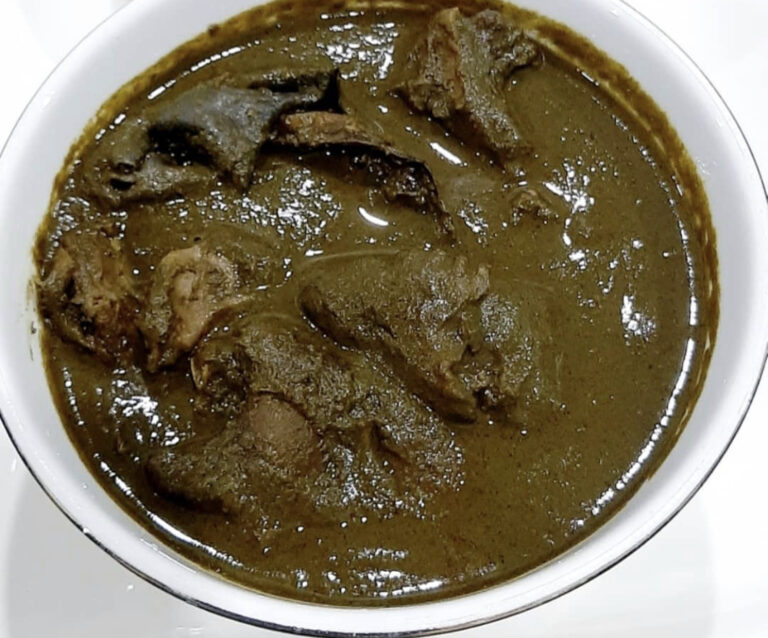
Black Soup

Looking for Edo Black Soup recipe? You’re in the correct place because this recipe post would show you, step by step, how to make black soup the number 1 ultimate way.

It really doesn’t matter your language or ethnic group, if you try this soup and get it right, you are going to have the same experience as those that have been enjoying it for ages.

What Is Black Soup?

Black soup also known as Efirin soup, Scent leaf soup, or Eweluje is a popular and tasteful (Edo) Esan soup, it is quite delicious and easy to prepare. This turned out really delicious, I love it and I’m guessing you are going to love it too.

Most people complain about the dark color, it gets the color from the ground leaves. Same leave you already probably know and use for other Nigerian soups. The difference is that we ground it in this recipe.

Is Black Soup Healthy?

Yes of course. Black soup very very healthy and it is recommended for pregnant women. Black soup is rich in iron, and folic acid. Iron help to build hemoglobin which help to boost red blood cell production and treat anemia in pregnancy.

How To Make Nigerian Black Soup

This is one of the easiest Nigerian soups to cook. First, remove the stems from the basil leaves and rinse.

Add the leaves and ground egusi seeds to a blender with a little water and blend till pureed. Pour the blended mix into a pot.

There will still be quite a bit left in the blender because the mixture is very thick. Pour roughly 1 cup of water into the blender, give it a shake and pour it into the pot.

Add the palm oil, cayenne pepper, bouillon, and crayfish. Bring to a boil and simmer for about 5 minutes on medium-high heat.

Add your cooked beef and stock. You can use water if you don’t have stock but will need to adjust the spices. Taste for salt and add some if you need it.

Cook for 10 minutes with the pot covered. If it is too thick, add just a little bit of water about a 1/2 cup at a time. Serve and enjoy!

What To Eat With Black Soup

The soup is commonly eaten with different swallow: Pounded yam, Semolina, Garri,  and Cassava Fufu.

Other Delicious Soups and Stews You Will Love:

  • Ogbono soup: A viscous and hearty soup made with Ogbono seeds (wild mango seeds) that is laden with meats and fish and cooked in a light, delectable broth.
  • Okra SoupA well-loved soup!
  • Chicken Pepper soup: This easy to put together chicken pepper soup is loaded with spicy, bold, and hearty flavors. It’s so easy to make and you can hardly go wrong putting this together.
  • The best Egusi soup recipeTrust me on this. It’s the best!

Thanks for reading this recipe, if you made this recipe, don’t forget to leave me feedback. Enjoy!

Black Soup Recipe

Black soup, when combined with any one of the many Nigerian swallows, becomes a delicacy in Edo state Nigeria. This soup is indigenous to the Esan people in Edo state Nigeria but also loved and eaten by many Nigerians
Prep Time 5 minutes
Cook Time 25 minutes
Total Time 30 minutes
Course Soup
Cuisine Nigerian
Servings 6

Ingredients
  

  • Assorted meat
  • 1 bulb of onion
  • 1 cup of scent leaf
  • 2 cups of bitterleaf
  • Stock fish
  • Smoked fish
  • 2 pieces of fresh pepper or 1 spoon of ground pepper
  • Palm oil or banga sauce
  • ½ cup of ground crayfish
  • 3 seasoning cubes
  • Salt to taste

Instructions
 

  • Wash and boil your meat with onion. Add seasoning cubes and salt. Cook for 15-20 minutes.
  • Add your banga sauce, stock fish, smoked fish, pepper and crayfish. Leave to boil for 15 minutes. The mixture would get thick. Don’t forget to taste.
  • Add the ground leaves and stir. Allow to cook for 5 – 7 minutes.
  • Serve with your preferred choice of swallow.

Notes

 
NOTE: Grind the leaves
Tried this recipe?Let us know how it was!

Bunny Chow

Bunny chow is, in essence, a bread bowl. You take a loaf of white bread, hollow it out, and stuff it with a curry, either vegetarian beans or meat.

What is Bunny Chow?

This is a delicious sandwich and a traditional, portable and popular South African Street food that shows fusion like South African Cuisine.

Bunny Chow is made with aromatic spices, meat, chickpeas, and potatoes served in hollow bread. However, Although its history is controversial, it can be said to have originated from Indians in South Africa during Apartheid.

Where Did Bunny Chow Originate From?

There are many stories about how this dish came to be, but the most common one describes it as a completely portable dish served to black people during apartheid, South Africa’s 20th-century racial separation system.

“Bunny chow began as a way to sell food to black people who were not allowed to eat in certain restaurants during apartheid,” says Ameera Patel, a Johannesburg-based novelist. “The bread was used as a holder or plate, so nothing had to be returned after eating.”

The name is said to come from “banya chow.” Banya is an old name for the Indian population in Durban, and the word Chow is a cliché for food.

This innovative meal was cheap, easy to make, able to yield energy for a full day’s work, and can be eaten with hands or very little cutlery this made it the perfect meal for the indentured Indian laborers, who were brought to work in KwaZulu-Natal’s sugarcane fields.

However, It is best enjoyed when you start at the top which has the scooped-out bread the top and works your way to the gravy-soaked bottom.

Is Bunny Chow Healthy?

Many health specialists have insinuated that bunny chow is unhealthy fast food. You can tweak this dish with vegetables to create a healthy balance.

Bunny chow

Bunny Chow

Avatar photoJennifer Ezeokoli
Bunny Chow is a delicious sandwich and a traditional, portable and popular South African Street food which shows the fusion in the nature of the South African Cuisine. Bunny Chow is with made with aromatic spices, meat, chickpeas and potatoes served in hollow bread.
Prep Time 15 minutes
Cook Time 40 minutes
Total Time 55 minutes
Course Breakfast
Servings 0

Ingredients
  

  • ½ cup cooking oil
  • 2-3 curry leaves
  • 2 tbsp minced ginger and garlic
  • 1 tbsp curry powder
  • 1 med onion diced
  • 2 med tomatoes diced
  • 1 cinnamon stick
  • 1 tbsp paprika
  • 3 green cardamom pods
  • 500 g potatoes cleaned and cut into cubes
  • 42 g chickpeas rinsed and drained
  • ½ tbsp cayenne pepper
  • cup chicken broth
  • salt and pepper to taste

Instructions
 

  • Heat up a pan with oil over medium heat.
  • After that, stir in onions, garlic, cinnamon stick, curry leaves, cardamom pods and curry powder until onions is looks translucent.
  • Add tomatoes followed by chicken and stir for about 2-3 more minutes.
  • Pour in chicken broth.
  • Next add chickpeas, potatoes.
  • Bring to a boil and let it simmer until sauce thickens or for about 25 minutes or more.
  • Adjust for salt, pepper and stew consistency.
  • Serve in hollowed out fresh bread.

Notes

Image Source: The Dream Africa
Keyword Bunny Chow
Tried this recipe?Let us know how it was!

Homemade Lemonade

0

Homemade Lemonade is one of the most enjoyable summer drinks that can be found anywhere around the world, all characterized by lemon flavor.

Most lemonade varieties can be separated into two distinct types as Cloudy and Clear, each is known simply as “Lemonade” (or a cognate) its a traditionally homemade drink made with lemon juice, water, and sweeteners such as cane sugar or honey.

Lemonade has been promoted as healthful, due to its high concentration of Vitamin C. However, the drink’s health benefits will be highly limited in many diets due to its very high sugar content.

Brief History of Lemonade

This beverage was invented in Paris around 1630. Despite its origin traced to Paris, the kind in Europe today is completely different – it’s carbonated, which means it’s a sweet lemon-flavored carbonated soft drink.

It is named “lemonade” rather than “lemon juice,” as is the case with “orange juice,” because it is made up of lemon juice, sugar, and water. Orangeade is made by mixing orange juice and apple juice with water and sugar. Do you get it?

It takes on the qualities of a fizzy, carbonated drink outside of the United States. In many regions of the world, sodas such as Sprite or 7-UP are considered lemonade (although technically, they are lemon and lime drinks.) Concentrated lemon solutions can also be used to make this beverage.

Difference Between Lemon Juice and Lemonade

Lemon juice is just the juice extracted from a lemon. It has a strong sour flavor. Water, sugar, and lemon juice are used to make lemonade.

This means that while lemon juice from lemons is the base element for making the lemonade, it is only a derived product from lemon juice and it is achieved by adding sugar and water to the juice.

Health Benefits of Lemonade

This homemade lemonade certainly contains a lot of sugar, but several benefits can be derived by taking it:

It is a source of Vitamin C: Our body needs vitamins to stay nourished and hydrated. All bodily tissues require vitamin C, commonly known as ascorbic acid, for growth, development, and repair.

It’s engaged in a variety of body activities, including collagen creation, iron absorption, immune system function, wound healing, cartilage, bone, and tooth maintenance.  A dose of lemonade contains enough Vitamin C to meet your daily needs.

It’s an energy booster: There are several energy-boosting elements and activities, lemonade is one. Apart from its benefits including providing us with our daily dose of Vitamin C and its antioxidizing properties, it provides our bodies with enough sugar for energy-boosting.

The sugars which our bodies can employ as fuel to meet their daily requirements can be derived from lemonades. Taking lemonade is a terrific way to stay motivated and maintain a healthy blood sugar level, especially if you’ve been exercising.

There are downsides to consuming a lot of sugar anyway. As an alternative, you may want to explore other energy-boosting options.

Is Homemade Lemonade Healthy?

Since lemonade is made from freshly squeezed lemons, it’s got to be healthy and good for you, right? Well, yes and no.

Lemon juice is full of minerals and vitamins, especially vitamin C, which helps strengthen your immune system. It also helps digestion and mineral absorption and aids weight loss.

While drinking homemade lemonade has many benefits, store-bought lemonade often has a VERY high amount of sugar which makes it as bad for you as any other sugar-filled drink.

The good news is, when making lemonade at home, you have more control over the ingredients and can easily make lemonade a healthy drink to enjoy.

Let’s be honest here, really, the only not-so-healthy component of lemonade is the sugar. Luckily, you can easily make lemonade healthier by swapping sugar with healthier, natural sweeteners.

Tips On How to Make the Best Lemonade

One of the beauties of making your lemonade at home is not only that it is super easy, but you’ll be able to customize your lemonade, and here are some best tips for how to make the best lemonade.

  1. Use fresh lemon juice – avoid buying pre squeezed lemon juice.  It just won’t taste the same.
  2. Use good quality ingredients – fresh, vibrant lemons, raw honey, and good quality water will all help to make your lemonade taste great.
  3. Don’t just add all the sweeteners – just because you can, doesn’t mean you should.  Make sure to taste test the lemonade mixture to see how much honey water you’ll need to add to get it to suit your taste buds.
  4. Keep or remove the pulp – if you don’t like pulp, you can strain the lemonade through a fine-mesh sieve to easily remove the pulp.
  5. Make sure to refrigerate – after you mix everything, your lemonade needs a little time to chill in the fridge
  6. To get those flavors to jive together and make the most flavorful lemonade.
  7. Add more flavors – try using one of the added fruits to your lemonade to make a whole new delicious flavor of lemonade.
  8. Consider making a little extra to turn into ice cubes for later so your ice doesn’t “water down” your lemonade.

How Long Does Homemade Lemonade Last?

Homemade lemonade is best served fresh and chilled, but it’s also a super easy recipe to make ahead for the week.

Generally speaking, homemade lemonade will last in your fridge for up to 7-8 days.  The longer it sits in your fridge, however, the more strong the flavor will become.

How To Make Lemonade Sugar-Free

Our main goal to make lemonade healthier is to replace the highly refined granulated which will spike your blood sugar levels through the roof and then leave you with a sugar crash.

Here are some healthier non-sugar options for how to sweeten your lemonade without sugar:

Coconut Palm Sugar – this sugar is sapped from the coconut palm which is heated and evaporated which reduces it to granules.

Coconut sugar is nutritious and has a low score on the glycemic index (which essentially means it doesn’t tax your body and make you crash after giving you a sugar rush).  Coconut sugar tastes similar to brown sugar but slightly richer.  

Raw Honey – is simply honey that has not been filtered or pasteurized so it includes beeswax, royal jelly, bee pollen, and propolis (a substance collected by honeybees from tree buds, used to fill crevices and seal honeycombs.).

Raw honey is pretty awesome.  It’s used by many cultures as a remedy for ailments, including ulcers, digestion problems, and as an antibiotic. Raw honey contains antioxidants, vitamins, minerals, amino acids, and enzymes.

Make sure to look for raw in the name, as processed honey has no such health benefits.

Each of these non-sugar clean sweetener alternatives would work well in your lemonade to sweeten, but my favorite is raw honey because the sweetness is so rich and it doesn’t impair the color as much as the others.  For more info on sugar, check this post on Uses Of Sugar That Will Blow Your Mind!

Alright, let’s get to the homemade lemonade recipes!

Other Healthy Drinks To Try

  1. Apple juice
  2. Tamarind Juice
  3. Orange juice
  4. Cucumber juice
Homemade Lemonade

Homemade Lemonade

Beatrice IgeBeatrice Ige
Homemade Lemonade is one of the most enjoyable summer drink that can be found anywhere around the world, all characterized by lemon flavor. Most lemonade varieties can be separated into two distinct types such as Cloudy and Clear, each is known simply as "Lemonade" (or a cognate) its a traditionally homemade drink made with lemon juice, water and sweetener such as cane sugar or honey.
Prep Time 25 minutes
Total Time 25 minutes
Course Drinks
Servings 0

Ingredients
  

  • Sugar
  • Lemon Juice
  • Water
  • Raisins

Instructions
 

  • Make a simple syrup by dissolving the sugar in warm water so that its dispersed evenly instead of sinking in the bottom.
  • Extract the juice from the lemons.
  • Pour the juice and sugar water into a jug throw in the raisins and leave for awhile (overnight if possible) to allow them to start fermenting and give it a fizz.
  • Before serving add about two cups of cold water and bag of ice to the jug. If the lemonade is still a bit sweet for anyone's taste, chuck a slice or two of lemon into the glass.
Keyword Homemade Lemonade
Tried this recipe?Let us know how it was!

QUICK RECIPES