
Harira (Moroccan Soup)
Overview
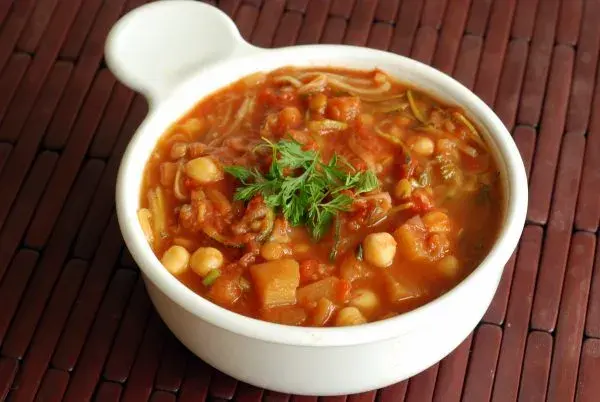
Harira is the thick North African soup of lentils, chickpeas and tomato, usually with lamb, thickened at the end and sharpened with lemon. It is made in Morocco and Algeria, and no single country has been assigned here. It is the soup that breaks the fast. Harira is eaten at iftar throughout Ramadan, traditionally alongside chebakia and dates, and it is also eaten by Moroccan Jews to break the Yom Kippur fast, a shared practice worth noting. It is made year-round too, but its association with fasting is strong enough that most Moroccans think of it that way first. The name explains the texture. Harira derives from the Arabic word for silk, and refers to how the soup feels once it has been thickened, either with beaten egg mixed in at the end, or with tedouira, a slurry of flour and water that is sometimes left to ferment for a day or two before use. That thickening step is what separates harira from an ordinary lentil soup. **A significant contradiction in the source.** It describes this version as vegan. Its ingredient list contains a pound of cubed lamb and two eggs. The recipe below follows the ingredients, and the vegan claim has not been carried across.
AFN Heritage Note
Harira is a thick soup of lentils, chickpeas and tomato made across Morocco and Algeria, traditionally eaten to break the fast during Ramadan alongside chebakia and dates. Moroccan Jews eat it to break the Yom Kippur fast. The name derives from the Arabic word for silk, describing its texture once thickened.
Ingredients
Directions
- 1
Put the lamb, turmeric, black pepper, cinnamon, ginger, cayenne, butter, celery, onions and coriander into a large soup pot over low heat.
- 2
Turn everything over frequently for 5 minutes.
- 3
Tip in the tomatoes, holding back their juice, and cook gently for 15 minutes.
- 4
Pour in the reserved tomato juice, the water and the lentils.
- 5
Bring to the boil, then lower the heat.
- 6
Cover and cook gently for 2 hours.
- 7
About 10 minutes before serving, raise the heat, tip in the chickpeas and the vermicelli, and cook for about 10 minutes until the pasta is al dente.
- 8
Mix in the lemon juice and the beaten eggs, and let the eggs cook for a minute. This is what gives harira its silky texture.
Africook’s Notes
- Do not skip the egg at the end. The thickening is what makes harira harira, and the name refers to exactly that texture.
- Add the eggs off a rolling boil and mix constantly, or they scramble into strands instead of thickening the soup.
- It is better the next day, once the flavours have merged. It thickens considerably in the fridge, so loosen it with water or stock.
- The vermicelli goes in at the very end. Added early it swells and turns the soup to porridge.
- For a genuinely vegan version, leave out the lamb and the eggs and thicken with tedouira, a slurry of flour and water, instead.
- Chebakia and dates are the traditional accompaniments at iftar, and the sweetness against the sharp soup is deliberate.
Questions cooks ask
Is this recipe vegan?
No, despite what the source says. Its opening paragraph describes the version as vegan; its ingredient list contains a pound of cubed lamb and two beaten eggs. The recipe here follows the ingredients, which are internally consistent, and the vegan claim has been dropped. A genuinely vegan harira is entirely possible, leave out the lamb and eggs and thicken with tedouira, the flour and water slurry, instead.
Why is it called harira?
From the Arabic word for silk, describing the texture of the soup once it has been thickened. That thickening is done either with beaten egg mixed in at the end, as here, or with tedouira, a slurry of flour and water which is sometimes left to ferment for a day or two before use, and which some cooks make with a little yeast. Without it you have a lentil soup rather than harira.
When is harira eaten?
Most strongly during Ramadan, when it is the standard dish for breaking the fast at iftar, served with chebakia, the honey and sesame pastry, and dates. Moroccan Jews eat it to break the Yom Kippur fast in much the same way, which is a shared practice worth noting. It is also made throughout the year as an everyday soup, but the fasting association is what most Moroccans think of first.
Can I make it in advance?
Yes, and it improves for it, the flavours merge overnight and the soup is generally considered better on the second day. It thickens substantially in the fridge because of the lentils and the egg, so loosen it with water or stock when reheating and check the salt again afterwards. If you are making it well ahead, hold back the vermicelli and add it when you reheat, since it turns to mush on standing.
Reviews
Be the first to rate this recipe
Cooked it? Your rating helps the next person decide whether to try it.
No reviews on this one yet. If you have cooked it, yours would be the first.