
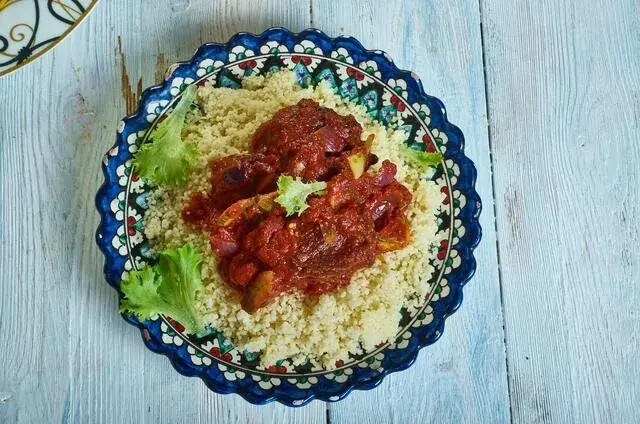
Bassi Salté (Senegalese Millet Couscous)
Abuja, Nigeria · View all recipes
Overview
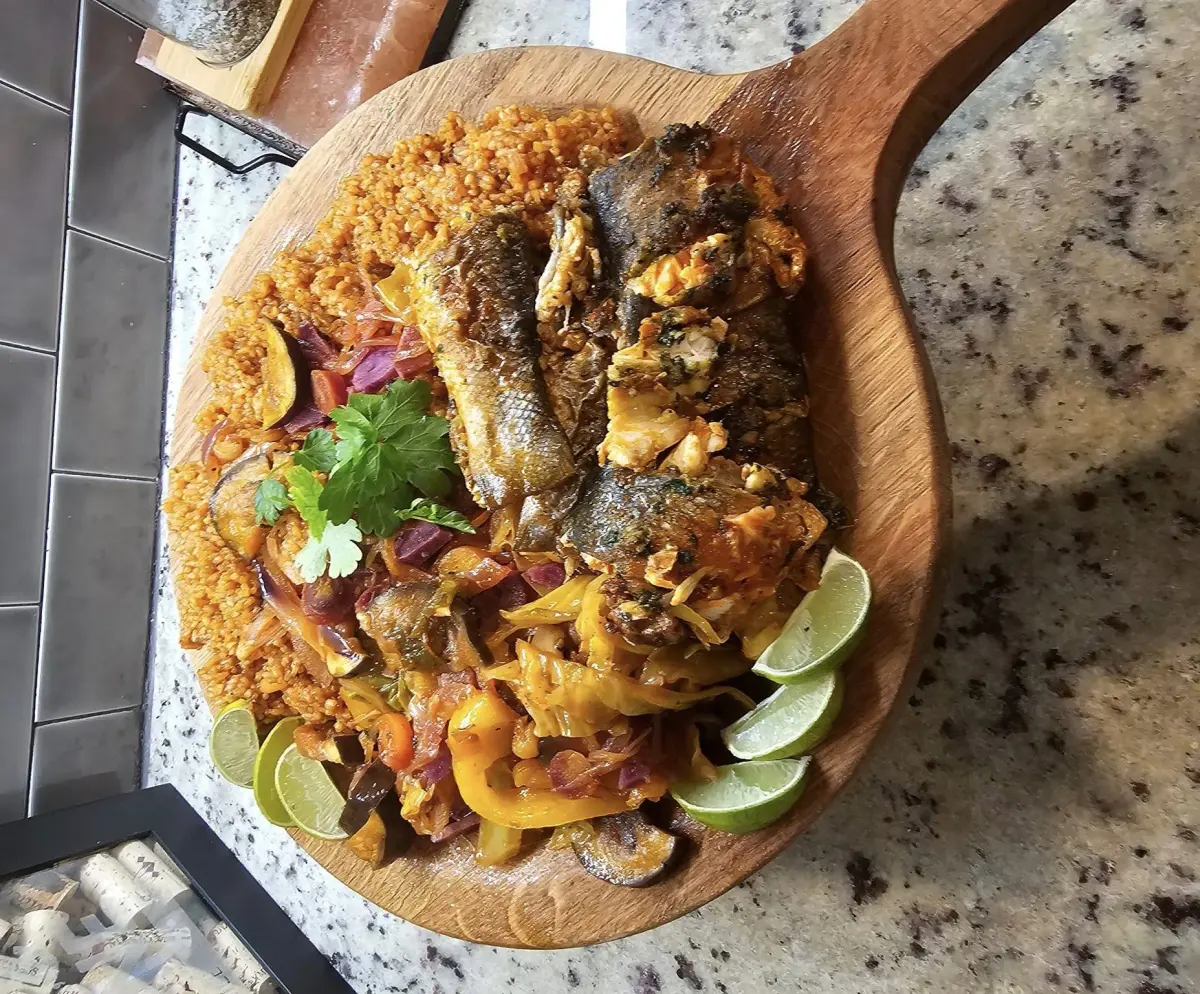
Bassi salté is Senegalese millet couscous served with a meat and vegetable sauce, studded with raisins, chickpeas and white beans. Its full name is thiéré bassi salté, and it is one of the most demanding dishes in the Senegalese repertoire. The grain is the point of difference. This is not wheat couscous but thiakry, made from millet, the ancestral West African cereal, cultivated in the Sahel for thousands of years before wheat or maize arrived. That matters both culturally and practically: millet couscous is naturally gluten-free, and it needs a binder, which is where lalo comes in. Lalo is powdered baobab leaf, and it holds the steamed grains together in a way that wheat gluten would do on its own. It is festival food. Bassi salté is traditionally eaten at Tamkharit, the Senegalese observance of Ashura, and the effort involved, steaming the couscous twice, building the sauce over hours, forming the diaga meatballs separately, is part of what makes it appropriate to the occasion. Its defining flavour is the balance between savoury and sweet. Raisins and sometimes dates go in alongside the mutton and root vegetables, which is deliberate rather than incidental. The source's ingredient list is badly scrambled and its sauce timing is not credible; both are flagged below.
AFN Heritage Note
Bassi salté, or thiéré bassi salté, is a Senegalese dish of millet couscous served with meat and vegetables. Millet was cultivated across the Sahel long before wheat or maize, and the couscous is bound with lalo, powdered baobab leaf. The dish is traditionally eaten at Tamkharit, the Senegalese observance of Ashura.
Ingredients
Dietary tags are provided by contributors as a guide, not verified by AFN, and they depend on the products you buy. If you have a serious allergy, check every ingredient yourself. Cooking, allergies and your own judgement
Directions
- 1
Marinate the mutton and chicken for 30 minutes with 3 cloves of the garlic, salt and pepper.
- 2
Brown the marinated meat and chicken in a hot oiled pot.
- 3
Dissolve the tomato purée in water and pour it into the pot. Put in the squash, cassava, carrot, turnip and sweet potato and cover with water.
- 4
Blend the onion, spring onion, remaining garlic, bell pepper, chilli, salt and pepper into a smooth paste and work it into the sauce, followed by the grated tomato. Cook gently for about an hour, until the meat and vegetables are tender.
- 5
Lift out the meat and vegetables and let the sauce reduce over low heat until concentrated. The source says three hours, which is far longer than this quantity of liquid needs, check it after 30 to 45 minutes.
- 6
Meanwhile, spread the millet couscous in a large bowl and sprinkle it with boiling water. Leave it until all the water has been absorbed, then steam it in a couscoussier for 20 minutes.
- 7
Dissolve the lalo in 12 cl of water and beat it until thick and pale. Work it through the couscous, then steam for a further 20 minutes.
- 8
Roll the minced meat into small diaga meatballs and cook them in hot oil. Set aside.
- 9
Fold the chickpeas, white beans, raisins and meatballs through the couscous, moisten it with a ladle of the sauce and mix well. Serve with the remaining sauce, meat and vegetables.
Africook’s Notes
- Steam the couscous twice. It is the step that separates properly light thiakry from a heavy, claggy mass, and it cannot be shortcut.
- Lalo is not optional if you want the traditional texture. Powdered baobab leaf binds the grains the way gluten would in wheat couscous.
- The raisins are structural to the flavour, not a garnish. Bassi salté is meant to be savoury with a definite sweetness running through it.
- Cut the root vegetables large. They cook for a long time and small pieces disintegrate into the sauce.
- Ignore the source's three-hour reduction. Check the sauce after half an hour, reducing this quantity for three hours would leave you with paste.
- Everything but the couscous can be made the day before, which makes a long dish considerably more manageable.
Questions cooks ask
What is thiakry?
Millet couscous, steamed granules made from millet rather than wheat semolina. Millet is the ancestral cereal of the Sahel, cultivated across West Africa for thousands of years before wheat or maize arrived, and thiakry remains central to Senegalese, Malian and Gambian cooking. It is naturally gluten-free, which is why it needs a binder to hold the steamed grains together. Thiakry also names a sweet millet-and-yoghurt dessert, which is a different preparation.
What is lalo?
Powdered baobab leaf, used across the Sahel as a thickener and binder. In bassi salté it does the job that gluten does in wheat couscous, beaten with water into a thick pale paste and worked through the grains, it holds them together through the second steaming. It also adds a mild vegetal flavour. It is sold at West African grocers, and there is no close substitute; without it the couscous stays loose and dry.
When is bassi salté eaten?
Traditionally at Tamkharit, the Senegalese observance of Ashura, and it is closely associated with that occasion. It is also made for other celebrations and for guests, and the labour involved is part of what makes it appropriate, steaming the couscous twice, building the sauce over hours, forming the meatballs separately. It is not an everyday dish, and Senegalese cooks generally regard it as one that takes practice to get right.
Why does the recipe say to reduce the sauce for three hours?
It should not, and this has been flagged. Reducing this quantity of sauce for three hours over any heat would leave you with a burnt paste rather than a sauce. Thirty to forty-five minutes after removing the meat and vegetables is a realistic figure for concentrating it. The source's ingredient list is also scrambled in places, a heading was absorbed into it, shifting quantities onto the wrong items, and has been rebuilt from its method.
Reviews
Be the first to rate this recipe
Cooked it? Your rating helps the next person decide whether to try it.
No reviews on this one yet. If you have cooked it, yours would be the first.