
Bouye Juice (Baobab Drink)
Abuja, Nigeria · View all recipes
Overview
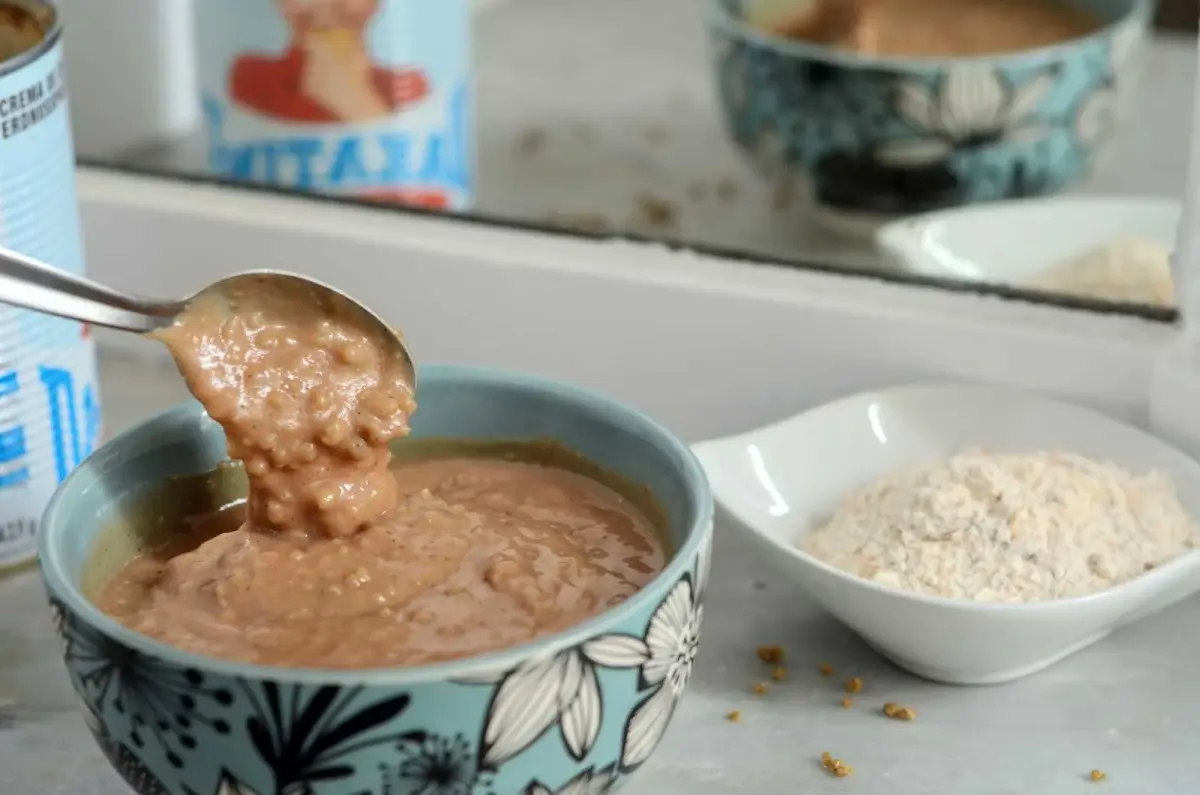
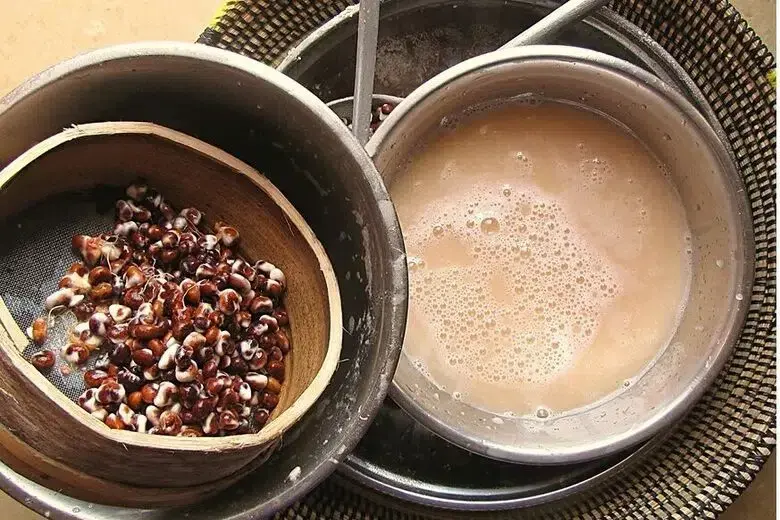
Bouye is the Wolof name for the fruit of the baobab, and bouye juice is what Senegal makes from it. The fruit hangs in hard woody pods on the most recognisable tree of the African savannah, and inside is a dry, chalky white pulp with a distinctly sour, citrus-like flavour. Baobab has been a staple across the Sahel for centuries, in Senegal and well beyond, and every part of the tree gets used: leaves as a vegetable and thickener, seeds pressed for oil, bark for rope. The English name for the fruit, monkey bread, describes the pulp reasonably well. In Hausa the fruit is kwalba, which is the name that appears in this particular recipe. The method is soaking rather than juicing. The pulp is left in water for around an hour to soften, worked with a whisk to release as much as possible, then strained. What happens next varies: drunk plain and sweetened it is bouye juice, while blending it with nono, the fermented milk of northern Nigeria and the Sahel, or with yoghurt, gives the thicker milkshake version this recipe describes. Both are drunk cold, and it freezes into ice lollies, which is how children across the region most often have it.
AFN Heritage Note
Bouye is the Wolof name for baobab fruit, a staple across the Sahel for centuries and used in Senegal and neighbouring countries. The fruit is known as kwalba in Hausa and as monkey bread in English.
Ingredients
Dietary tags are provided by contributors as a guide, not verified by AFN, and they depend on the products you buy. If you have a serious allergy, check every ingredient yourself. Cooking, allergies and your own judgement
Directions
- 1
Soak the baobab pulp in water for 1 hour to soften it.
- 2
Using a whisk, work the pulp in the water to release as much of it as possible.
- 3
Sieve or strain the liquid and set it aside, discarding the fibre and seeds.
- 4
Whisk the nono with the milk and sugar.
- 5
Combine this with the strained baobab liquid.
- 6
Pour into a container or jug, or into moulds for ice lollies.
- 7
Chill thoroughly, or freeze, and serve cold.
Africook’s Notes
- Give the pulp the full hour to soften. Baobab is dry and chalky and will not release properly in less.
- Whisk it hard in the water rather than just letting it sit. Most of the pulp comes off the fibre through agitation.
- Strain it thoroughly. The seeds are hard and the fibre unpleasant, and neither belongs in the finished drink.
- Sweeten after straining, not before, since how much you need depends on how much pulp came away.
- Frozen into lollies is how it is most often given to children across the Sahel, and it works well.
- Baobab powder, sold widely as a supplement, substitutes for the fresh pulp and skips the soaking entirely.
Questions cooks ask
What is baobab fruit and what does it taste like?
Baobab is the fruit of the tree of the same name, hanging in hard woody pods, and inside is a dry, chalky white pulp. The flavour is distinctly sour and citrus-like, closer to sherbet than to most fruit. It is called bouye in Wolof, kwalba in Hausa, and monkey bread in English.
What is nono?
Nono is fermented milk, made across northern Nigeria and the Sahel, traditionally by Fulani herders. It is tart and slightly thick, comparable to a thin yoghurt or kefir. Plain yoghurt is the substitute the recipe gives and works well, though nono is sharper and thinner than most commercial yoghurt.
Can I use baobab powder instead?
Yes, and it is far easier. Baobab powder is the dried pulp already separated from the fibre and seeds, sold widely as a health supplement, and it dissolves straight into liquid with no soaking or straining. Use a couple of tablespoons per glass and adjust to taste.
How long does it keep?
Two to three days refrigerated if it contains milk or nono, and a little longer if made with water alone. It separates as it stands, which is normal, so shake or stir before serving. Frozen as lollies it keeps for weeks, which is the most practical way to store a large batch.
Reviews
Be the first to rate this recipe
Cooked it? Your rating helps the next person decide whether to try it.
No reviews on this one yet. If you have cooked it, yours would be the first.