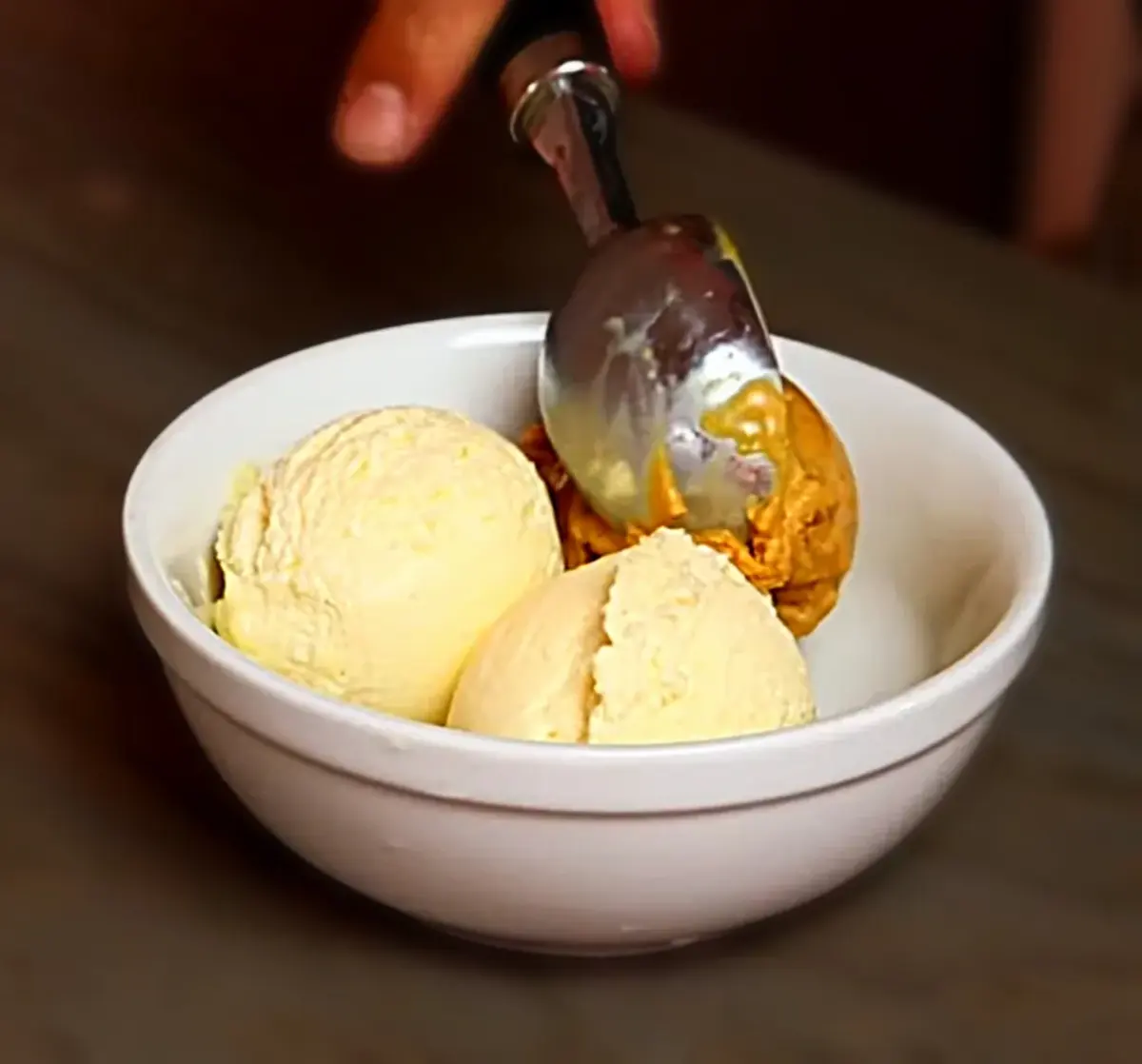
Easy Soft Serve Ice Cream (No Machine)
Overview
Ice cream made without a churn: eggs and sugar beaten over hot water into a foam, oil worked in, whipped cream folded through, and the whole thing frozen. No country is claimed. The technique is doing something specific and it is worth understanding, because it explains why no machine is needed. A conventional ice cream churn works by stirring constantly while the mixture freezes, which keeps ice crystals small and beats in air. This recipe replaces both jobs with the two foams: the eggs beaten over hot water to the ribbon stage, and the separately whipped cream. Together they carry enough air that the mixture stays soft when frozen and does not set into a solid block, and the fat from the cream and oil physically obstructs large crystals from forming. Beating the eggs over barely simmering water is also a food safety step, not just a mechanical one. It brings the eggs up in temperature while they aerate, which is what a sabayon is. Take the bowl too hot and you get sweet scrambled egg; too cool and the foam never holds. Ribbon stage is the target: lifted, the whisk should leave a trail on the surface that holds for a few seconds before sinking. The source relies heavily on a video for the visual cues, which has not been carried across.
Ingredients
Dietary tags are provided by contributors as a guide, not verified by AFN, and they depend on the products you buy. If you have a serious allergy, check every ingredient yourself. Cooking, allergies and your own judgement
Directions
- 1
Crack the whole eggs into a large heatproof bowl.
- 2
Set the bowl over barely simmering water, the water must not touch the bowl, and beat the eggs until they double in volume.
- 3
Beat in the sugar in three stages, working it in well between each addition.
- 4Keep beating until the mixture reaches ribbon stage
lifted, the whisk should leave a trail on the surface that holds for a few seconds. Take the bowl off the heat.
- 5
Stir it occasionally as it comes down to room temperature.
- 6
Drizzle in the oil slowly while whisking, then set the mixture aside.
- 7
In a separate bowl, whip the double cream with the vanilla to soft peaks.
- 8
Fold the cream carefully into the egg mixture, making sure it is evenly combined without knocking out the air.
- 9
Pour into an airtight container and freeze for at least 3 hours, or preferably overnight.
Africook’s Notes
 Personal notes from Chef Donkey
- Keep the water barely simmering and off the base of the bowl. Too hot and the eggs scramble; there is no recovering from that.
- Beat to a proper ribbon stage. This is where the air comes from, and undermixed eggs give you a hard, icy result.
- Let the egg mixture cool before the cream goes in. Warm mixture melts whipped cream and you lose the second lot of air.
- Fold, do not stir. Every heavy stroke knocks out the air that is keeping the ice cream soft.
- Whip the cream only to soft peaks. Over-whipped cream is stiff and will not fold in evenly.
- Overnight is better than three hours. It firms up properly and the texture is noticeably smoother.
Questions cooks ask
How does this work without an ice cream machine?
A churn does two things: it keeps ice crystals small by stirring constantly as the mixture freezes, and it beats air in. This recipe replaces both with foams built beforehand, the eggs beaten to ribbon stage over hot water, and the separately whipped cream. Together they hold enough air that the mixture stays soft rather than freezing into a solid block, and the fat from the cream and oil physically blocks large crystals from forming.
Are the eggs cooked?
Partly. Beating them over barely simmering water brings them up in temperature while aerating them, which is what making a sabayon involves. That is a meaningful safety improvement over a raw-egg ice cream, though it does not guarantee full pasteurisation. If you are serving anyone pregnant, very young, elderly or with a weakened immune system, use pasteurised eggs, which are widely available and behave identically here.
What is ribbon stage?
The point at which beaten eggs and sugar have taken up enough air to hold their own shape briefly. Lift the whisk and the mixture should fall back in a thick ribbon that sits on the surface for a few seconds before sinking in. Getting there takes several minutes of sustained beating and it is the single step that determines whether the finished ice cream is soft or icy, stopping early is the usual mistake.
Why is there oil in it?
Fat is what stops ice cream freezing hard, by physically getting in the way of ice crystals joining up into large ones. Neutral oil stays liquid at freezing temperatures where butterfat does not, so a small amount of it keeps the finished ice cream scoopable straight from the freezer. It is the same reasoning behind adding a spoonful of alcohol to a homemade ice cream, and it contributes no flavour of its own.
Reviews
Be the first to rate this recipe
Cooked it? Your rating helps the next person decide whether to try it.
No reviews on this one yet. If you have cooked it, yours would be the first.