

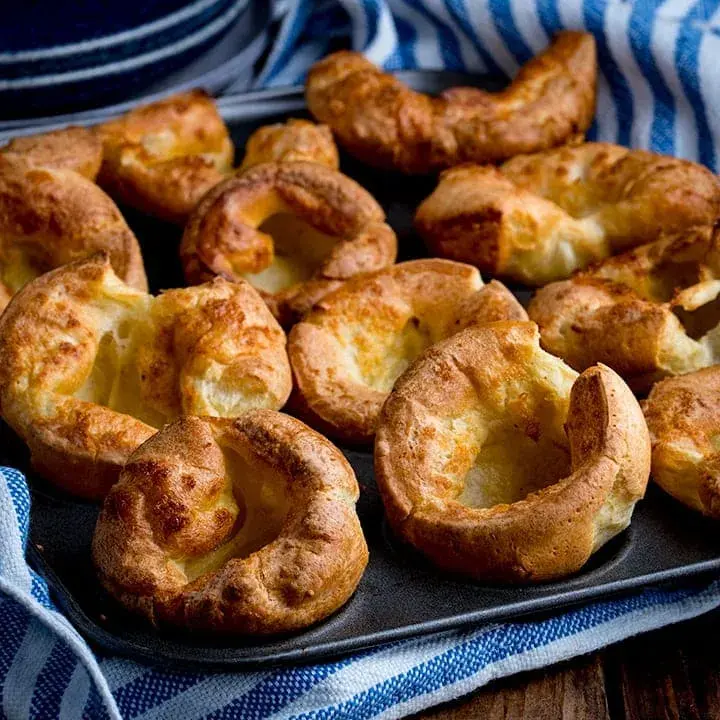
Yorkshire Pudding
London, United Kingdom · Voir toutes les recettes
Aperçu
A batter of eggs, flour, milk and water poured into smoking hot fat and baked until it quadruples in volume. It is British, and it sits in Worldwide Recipes with its URL unchanged. It is one of the few dishes where the physics is the recipe. The batter must go into fat that is genuinely smoking hot, the instant heat turns the water in the batter to steam, which inflates the structure before the egg and flour set around it. Fat that is merely hot gives you a flat, greasy disc. Preheating the tin with the fat in it for a full ten minutes is not padding. The overnight rest is the other thing that separates good Yorkshires from adequate ones. Resting lets the flour hydrate fully and the gluten relax, which produces a more dramatic rise. The source says up to three days in the fridge and it is right, the batter genuinely improves. This recipe is unusually precise, giving weights in grams alongside cup measures, which is rare in the archive and welcome. The water alongside the milk is deliberate: water produces more steam than milk, so it rises higher, while the milk gives flavour and colour. Beef dripping is traditional. Lard, shortening and vegetable oil all work. Africa has no equivalent, though popovers and Dutch baby pancakes are relatives.
Ingrédients
Préparation
- 1
Combine the eggs, flour, milk, water and salt in a medium bowl and whisk to a smooth batter.
- 2
Let the batter rest at room temperature for at least 30 minutes. Better still, transfer it to an airtight container and refrigerate overnight or for up to 3 days, resting hydrates the flour and relaxes the gluten, and the rise is noticeably better for it. Take it out while the oven heats.
- 3
Set the oven rack to the middle position and heat the oven to 450°F / 230°C.
- 4
Divide the dripping or other fat evenly between two 8-inch cast iron or oven-safe non-stick skillets, two 6-well popover tins, one 12-well muffin tin or one 24-well mini muffin tin.
- 5
Preheat the tins in the oven until the fat is smoking hot, about 10 minutes. This is not optional, the batter must hit fat hot enough to flash its water into steam.
- 6
Move the tins to a heatproof surface and divide the batter evenly between the wells, filling them between half and three-quarters full. If using skillets, fill about a quarter of the way.
- 7
Return them to the oven immediately.
- 8
Bake until the puddings have roughly quadrupled in volume, are deep brown all over, crisp to the touch and sound hollow when tapped, about 15 minutes for small ones, around 25 for popover- or skillet-sized.
- 9
Serve immediately, or cool completely, freeze for up to 3 months and reheat in a hot oven.
Notes de l’Africook
 Notes personnelles de Nympha Nzeribe
- The fat must be smoking. Merely hot fat gives you flat, greasy puddings, and this is the single thing that decides whether they rise.
- Rest the batter overnight if you can. The source allows up to three days and it genuinely improves.
- Do not open the oven while they rise. Cold air collapses them and they do not recover.
- Fill the wells between half and three-quarters. Fuller and they overflow; emptier and they will not climb.
- Water alongside the milk is deliberate, water makes more steam, which means more rise.
- Serve immediately. They begin deflating within a couple of minutes of leaving the oven.
Questions fréquentes
Why does the fat need to be smoking hot?
Because the rise is driven by steam. Batter poured into smoking fat has its water flashed instantly into steam, which inflates the structure before the egg and flour set around it, that is what produces the dramatic climb up the sides of the tin. Fat that is merely hot lets the batter warm gradually, the structure sets before enough steam forms, and you get a flat, oily disc instead.
Do I really need to rest the batter?
Thirty minutes is the minimum and overnight is genuinely better. Resting lets the flour absorb the liquid fully and the gluten developed by whisking relax, both of which produce a higher, more even rise. The source allows up to three days refrigerated, which is a real option rather than a theoretical one, the batter improves rather than deteriorating over that time.
Why is there water as well as milk?
Because water produces more steam than milk does, and steam is what makes Yorkshire puddings rise. An all-milk batter gives good flavour and colour but a lesser rise; an all-water batter rises higher but tastes thin and pale. Splitting the liquid gets both. This is a deliberate technical choice and one of several signs that this is a carefully worked recipe.
What fat should I use?
Beef dripping is traditional and gives the best flavour, historically Yorkshire puddings were cooked in the fat dripping from a roasting joint, which is where the dish comes from. Lard, vegetable shortening and plain vegetable oil all work and all reach a high enough temperature. Butter does not: its milk solids burn well below the heat needed here.
Avis
Soyez le premier à noter cette recette
Vous l’avez cuisinée ? Votre note aide la personne suivante à se décider.
Aucun avis sur cette recette pour le moment. Si vous l’avez cuisinée, le vôtre serait le premier.
Vous Aimerez Aussi
Voir toutes les recettes South Africa →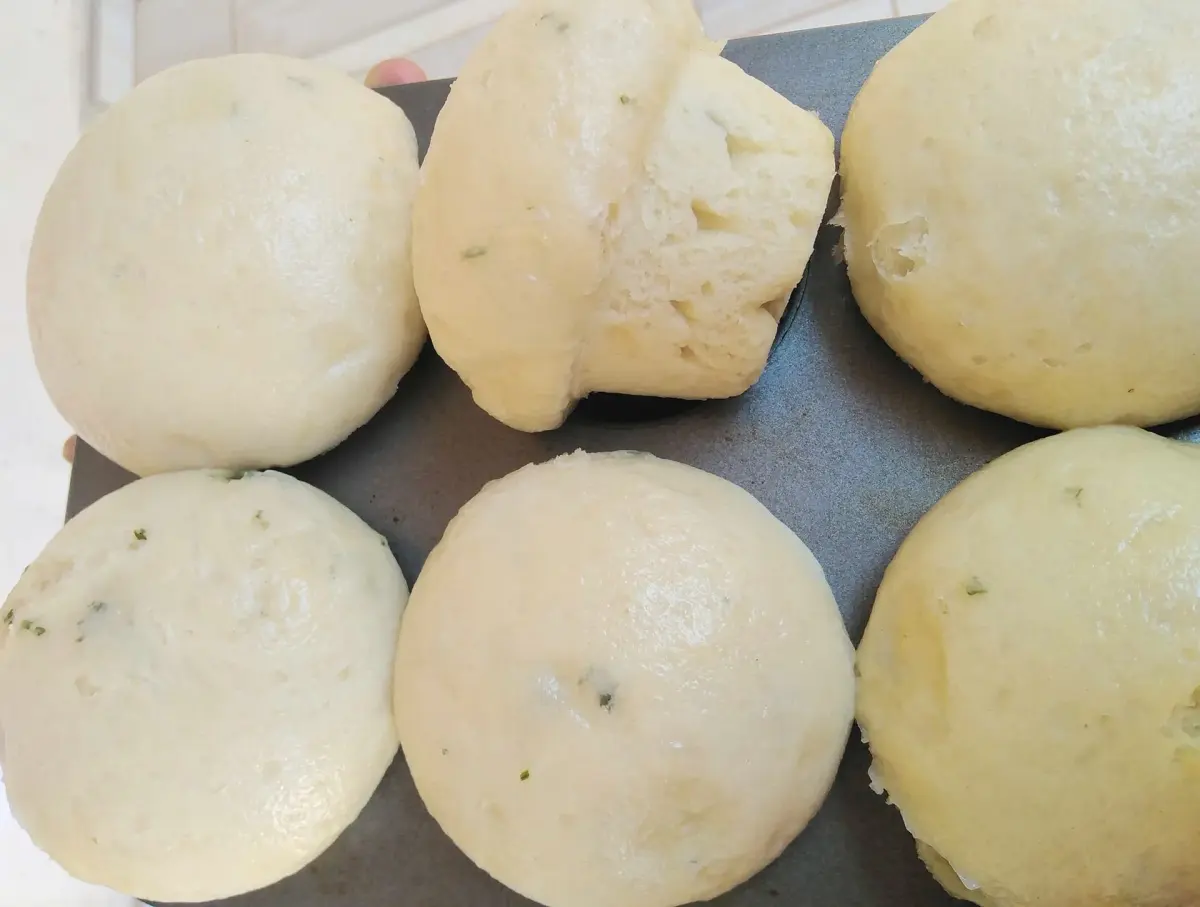
Dombolo (Dumplings or Steamed Bread)
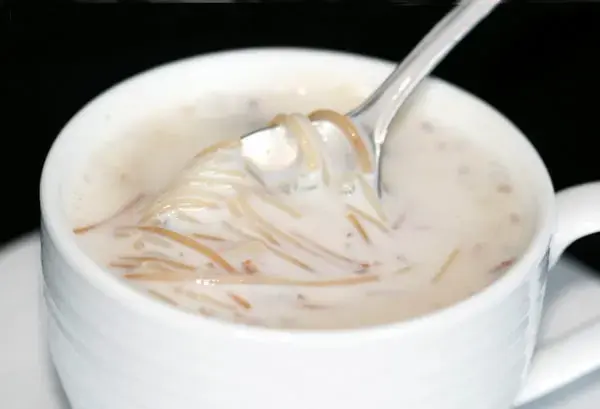
Boeber (Cape Malay Sweet Milk Drink)