
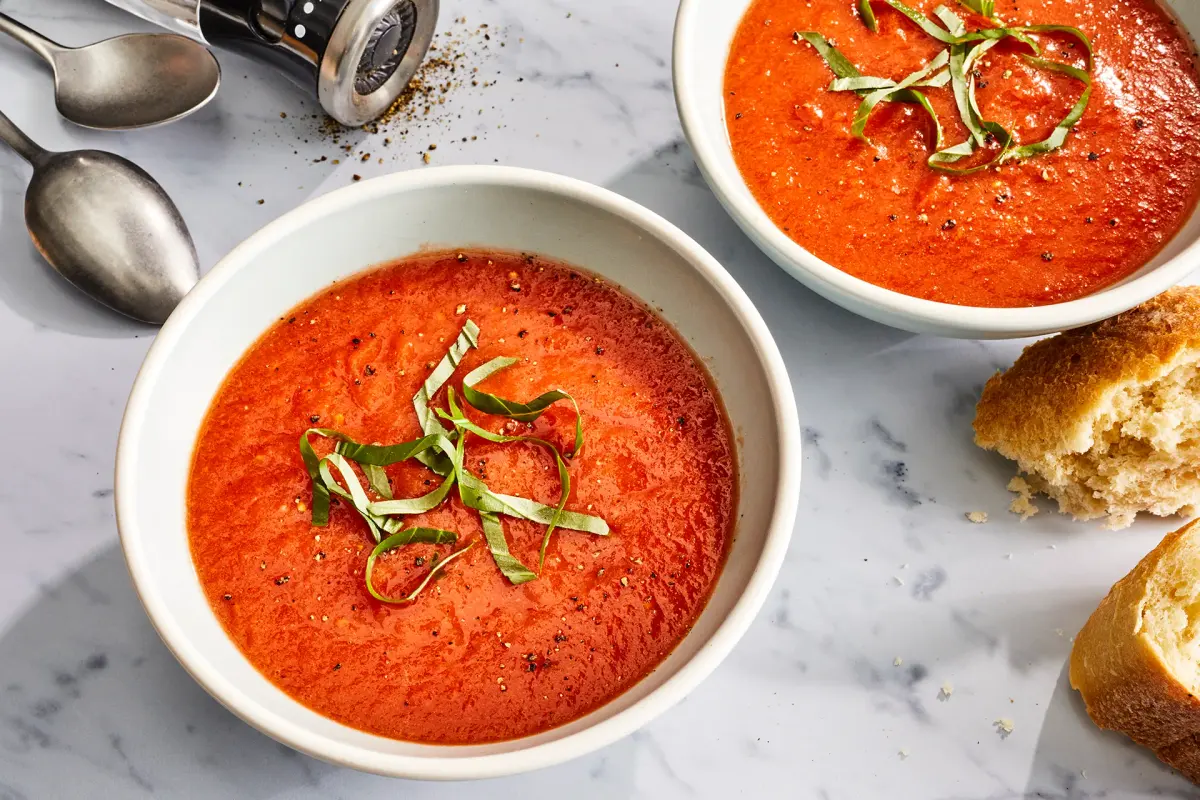
Tomato Soup
London, United Kingdom · Voir toutes les recettes
Aperçu
Fresh tomatoes cooked with onion, cloves and stock, passed through a food mill, and thickened with a browned roux. No country is claimed; this is the classic European cream-of-tomato construction. The roux is what distinguishes it from most modern tomato soups, which are simply blended and finished with cream. Cooking butter and flour together until the mixture turns a medium brown, then whisking the tomato mixture into it gradually, gives body and a faint toasted depth that blending alone does not produce. It is an older technique and it is worth knowing. Two details are easy to overlook and both matter. The whole cloves, four of them, in a soup this size, are a distinctly old-fashioned touch that gives the soup a warm, faintly medicinal background note; they are removed with everything else by the food mill. And the two teaspoons of sugar are not there to sweeten but to counteract the acidity of the tomatoes, which is why the source says to taste and adjust. Passing the soup through a food mill rather than a blender leaves skins and seeds behind and gives a smoother, cleaner result. A sieve does the same job with more effort. Africa has its own tomato-based dishes in quantity, obe ata, shakshuka, matbucha, but they are stews and salads rather than soups, and they are separate pages here.
Ingrédients
Préparation
- 1
Combine the tomatoes, onion, cloves and chicken broth in a stockpot over medium heat.
- 2
Bring to the boil and cook gently for about 20 minutes so the flavours come together.
- 3
Take the pot off the heat and pass the mixture through a food mill into a large bowl or pan. Discard whatever stays behind, this is what removes the skins, seeds and cloves and gives a clean texture.
- 4
In the now-empty stockpot, melt the butter over medium heat.
- 5
Mix in the flour to make a roux and cook until it turns a medium brown. This browning is what gives the soup its body and a faint toasted depth.
- 6
Whisk in a little of the tomato mixture at a time so no lumps form, then work in the rest.
- 7
Season with the sugar and salt, taste and adjust. The sugar is there to balance the acidity of the tomatoes rather than to sweeten the soup.
Notes de l’Africook
 Notes personnelles de Nympha Nzeribe
- Cook the roux to a medium brown. A pale roux thickens but adds nothing; a browned one gives depth.
- Whisk the tomato mixture in gradually. Poured in all at once it lumps and cannot be recovered.
- Use a food mill rather than a blender if you have one. It leaves skins and seeds behind and the texture is noticeably cleaner.
- The sugar is balancing acidity, not sweetening. Taste before adding the full two teaspoons.
- Four whole cloves is more than it sounds. They are strong, and they are meant to be a background note rather than a flavour you identify.
- Use vegetable stock and it becomes vegetarian, which the chicken broth otherwise prevents.
Questions fréquentes
Why make a roux instead of just blending it?
Because it gives body and flavour that blending does not. Butter and flour cooked together to a medium brown develop a toasted, nutty depth, and whisking the tomato mixture into that produces a soup with more substance and a rounder taste than a purée finished with cream. It is the older, more traditional construction of cream of tomato soup, and the browning is the part that matters.
What are the cloves doing?
Providing a warm, slightly medicinal background note that is characteristic of old-fashioned tomato soup and is now unfashionable. Four whole cloves in this quantity is assertive but not overwhelming, and they are removed along with the skins and seeds when the soup goes through the food mill, so you never bite into one. If cloves are not to your taste, two is a reasonable reduction.
Do I need a food mill?
Not strictly, but it gives the best result. A food mill separates the pulp from the skins, seeds and cloves in one action, producing a smooth soup without any of the bitterness that blended skins and seeds can contribute. A blender followed by a sieve achieves the same thing with more effort and more washing up. Blending alone leaves a slightly gritty texture.
Is tomato soup African?
No, and none is claimed, this is the European cream-of-tomato construction, and the page sits in Worldwide Recipes under European with its URL unchanged. Africa has a great many tomato-based dishes, from Nigerian obe ata to North African shakshuka and matbucha, but they are stews, sauces and cooked salads rather than soups. All of those have their own pages here.
Avis
Soyez le premier à noter cette recette
Vous l’avez cuisinée ? Votre note aide la personne suivante à se décider.
Aucun avis sur cette recette pour le moment. Si vous l’avez cuisinée, le vôtre serait le premier.