

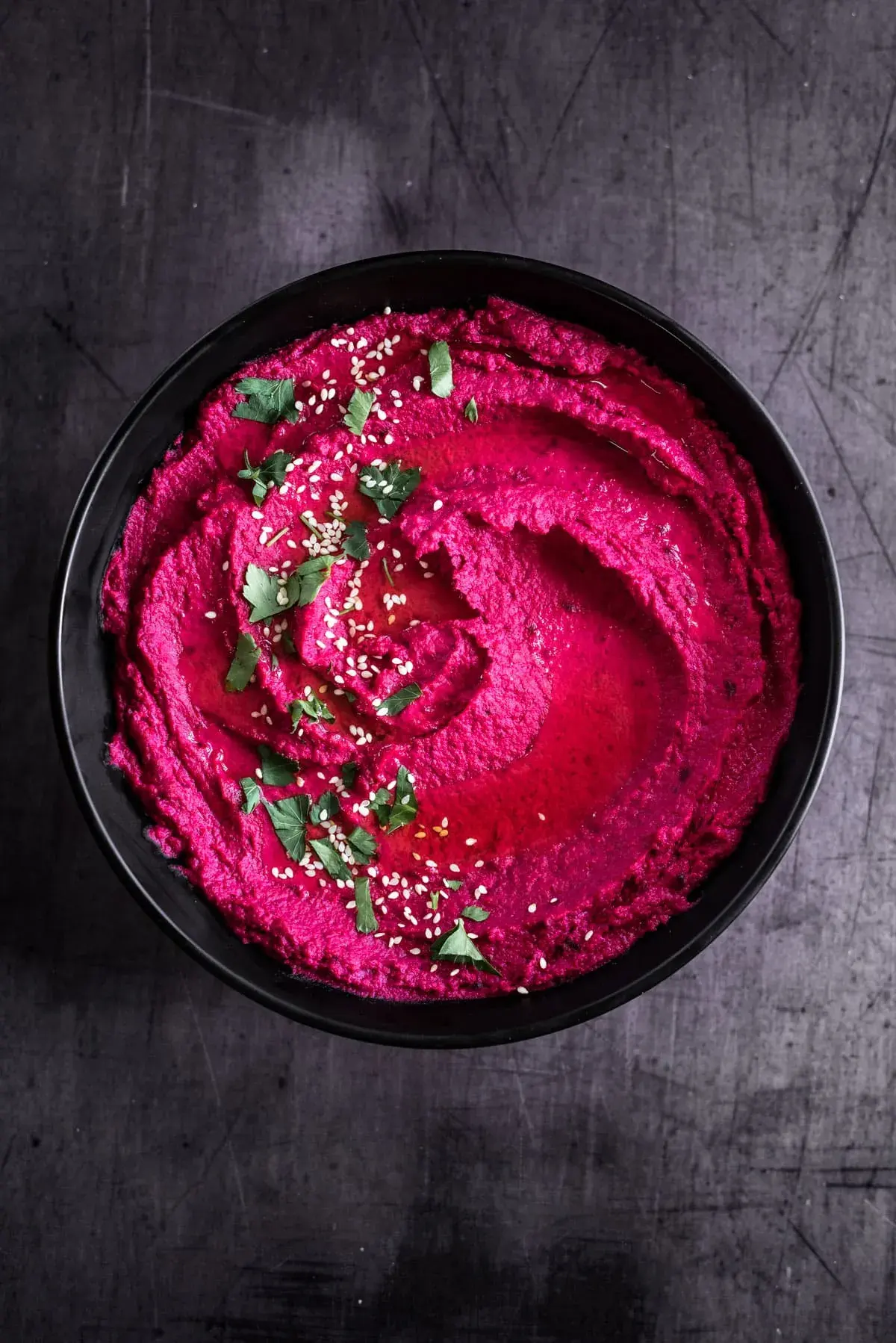
Beetroot and Tahini Dip
London, United Kingdom · Voir toutes les recettes
Aperçu
Beetroot cooked until tender and blended smooth with tahini, lemon, garlic and ice cubes. It is served with Egyptian flatbread or pita, and no single country is claimed. **It is garnished with pine nuts, which the title gives no indication of.** The title needs correcting. The source calls it beet hummus and describes it as containing chickpeas and aquafaba, its ingredient list contains neither. What it actually is, is a beetroot and tahini dip, and calling it hummus is misleading in a way that matters, since hummus means chickpeas. The title has been changed; the URL is unchanged. The ice cubes are the technique worth knowing. Blending tahini with ice-cold water is a standard Levantine trick: the cold and the shear force together emulsify the sesame paste into something noticeably lighter and paler than tahini blended with room-temperature liquid. It is the same principle used in good restaurant hummus. The source also describes the dip as oil-free while its own ingredient list includes olive oil for garnish. Minor, but part of a pattern. Beetroot is not traditional to North African or Levantine mezze in the way tahini is, which makes this a modern composition rather than an inherited one. Its claims about blood pressure and athletic performance have not been carried across.
Ingrédients
Les mentions alimentaires sont fournies par les contributeurs à titre indicatif. Elles ne sont pas vérifiées par AFN et dépendent des produits que vous achetez. En cas d’allergie grave, vérifiez vous-même chaque ingrédient. Cuisine, allergies et votre propre jugement
Préparation
- 1
Bring a medium pot of water to the boil. Put in the beetroot and cook until very tender, about an hour.
- 2
Drain and peel the beetroot, discarding the cooking liquid. The skins slip off easily once cooked.
- 3
Transfer the beetroot to a blender with the tahini, lemon juice, garlic and ice cubes.
- 4
Season with salt and pepper and purée until very smooth. The ice is not decorative, blending tahini with something ice-cold emulsifies it into a lighter, paler paste than room-temperature liquid produces.
- 5
Spoon into a shallow serving bowl.
- 6
Drizzle with olive oil, scatter with toasted pine nuts and serve with flatbread or pita for scooping.
Notes de l’Africook
 Notes personnelles de Nympha Nzeribe
- This is garnished with pine nuts. The title says nothing about it, so mention it when serving.
- Do not skip the ice cubes. Cold liquid whipped into tahini emulsifies it and lightens both the colour and the texture.
- Cook the beetroot until genuinely tender. Undercooked beetroot blends grainy and stays earthy.
- Peel after cooking, not before. The skins slip off easily and you lose far less flesh.
- Wear gloves or work quickly, beetroot stains hands and boards.
- Toast the pine nuts. Untoasted they add nothing but softness against an already soft dip.
Questions fréquentes
Is this hummus?
No, despite the source calling it beet hummus. Hummus means chickpeas, the Arabic word for the bean itself, and there are no chickpeas in this recipe at all, whatever its article says. It is a beetroot and tahini dip, which is a good thing to be, and the title has been changed to say so. The URL is unchanged so anyone searching still lands here.
What are the ice cubes for?
Emulsifying the tahini. Blending sesame paste with something ice-cold and applying shear force turns it noticeably lighter, paler and smoother than blending it with room-temperature liquid, the cold helps the emulsion form and hold. It is a standard Levantine technique used in good restaurant hummus, and it is the one genuinely clever thing in this recipe.
Should I roast the beetroot instead?
You can, and many cooks prefer it. Roasting concentrates the sugars and gives a deeper, sweeter flavour, where boiling keeps things earthier and lighter. Wrap whole beetroot in foil and roast at 200°C for about an hour, then peel. The trade-off is that roasted beetroot is drier, so you may need a splash more lemon juice or water to get the dip smooth.
What is it served with?
Egyptian flatbread or pita for scooping, which is what the source specifies. It also works spread in sandwiches and wraps, spooned onto salads, or as a dip for raw vegetables and crackers. It sits comfortably on a mezze table alongside other dips, though beetroot is a modern addition to that tradition rather than an inherited part of it, tahini is the ingredient with the history here.
Avis
Soyez le premier à noter cette recette
Vous l’avez cuisinée ? Votre note aide la personne suivante à se décider.
Aucun avis sur cette recette pour le moment. Si vous l’avez cuisinée, le vôtre serait le premier.
Vous Aimerez Aussi

How to Make Crispy Fried Chicken Feet
Garden Egg Stew (Earthenware Bowl Method)
Tapalapa