
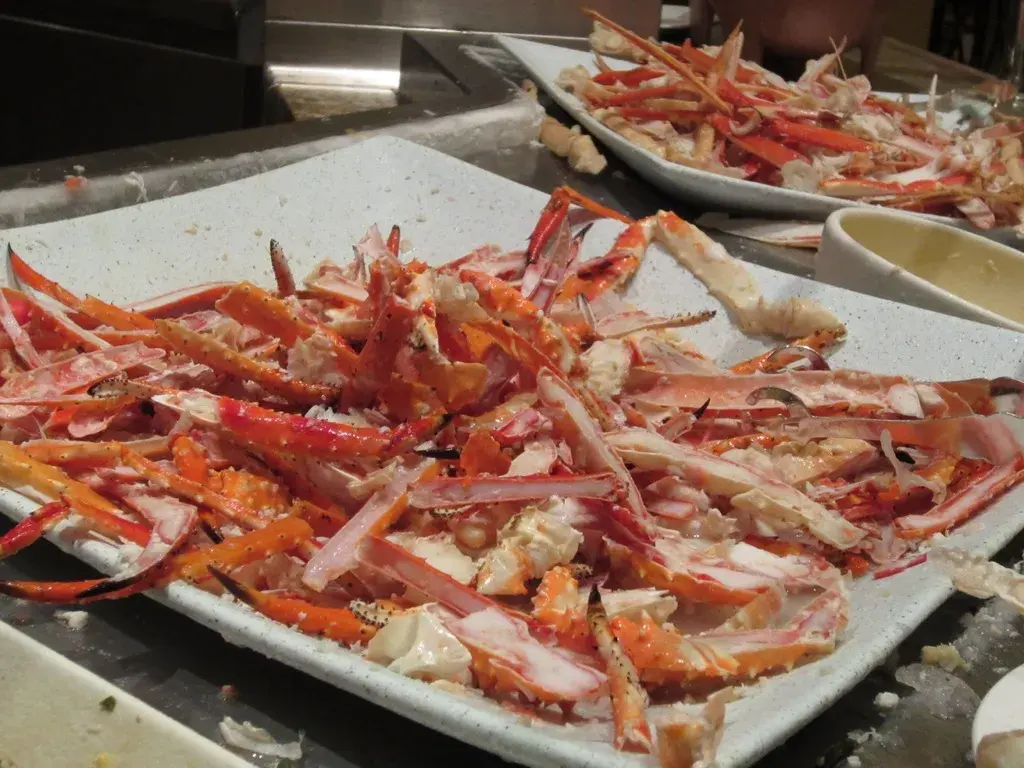
King Crab Legs with Melted Butter
Aperçu
Alaskan king crab legs, steamed briefly and served with melted butter and lemon. There is no African connection here and none is claimed: king crab is a cold-water North Pacific species fished off Alaska and the Russian Far East, and this is the standard American way of serving it. The single most useful thing to know is that king crab legs are sold already cooked. They are steamed aboard the boat or on the pier immediately after they are caught, then frozen, because crab meat spoils very quickly once the animal dies. What you are doing at home is reheating, not cooking, and that is why every instruction here is measured in a few minutes rather than tens of them. Treat them like a raw ingredient and you will get rubbery, stringy meat. The source is right to steer away from submerging them in water, which waterlogs the meat and washes out the flavour that the initial cooking sealed in. Steaming and a foil-wrapped spell in the oven both work because they warm the meat through without soaking it. Africa has a long coastline and a serious crab tradition of its own, Ghanaian akotonshi, stuffed crab served in the shell, is on this site, but it is built around warm-water species, and king crab is not one of them.
Ingrédients
Les mentions alimentaires sont fournies par les contributeurs à titre indicatif. Elles ne sont pas vérifiées par AFN et dépendent des produits que vous achetez. En cas d’allergie grave, vérifiez vous-même chaque ingrédient. Cuisine, allergies et votre propre jugement
Préparation
- 1
Melt the butter in a small pan and keep it warm on the lowest setting.
- 2
Set a steamer tray inside a large pot and pour in about an inch of water, you are reheating the crab, not cooking it through, so no more is needed.
- 3
Bring the water to the boil, lay the crab legs on the steamer tray, bending them at the joint if needed to fit, and cover the pot. If the lid will not sit properly over the basket, cover the pot with foil and crimp the edges to seal.
- 4
Steam for about 5 minutes, or about 10 minutes if the legs are still frozen. They do not need thawing first.
- 5
Alternatively, wrap the legs in a sealed foil parcel, set the parcel on a baking tray and warm through in a hot oven for 15 to 18 minutes.
- 6
Cut the shells with kitchen shears, at the joint and along the length of the leg, to expose the meat. You can open them fully or just start each one and let people finish them at the table.
- 7
Serve at once with the melted butter, lemon wedges and parsley.
Notes de l’Africook
- The legs arrive already cooked. Everything you do at home is reheating, and overheating is the only real way to ruin them.
- Do not submerge them in water. Waterlogged crab meat loses both texture and flavour, which is why steaming beats boiling here.
- Frozen legs go straight in without thawing, just allow roughly double the steaming time.
- Kitchen shears are the right tool. Snip between the joints and along the leg rather than trying to crack the shell.
- Cut the legs into shorter lengths before reheating if they will not fit your pot. It makes them easier to eat as well.
- Serve the butter warm rather than hot, and keep the lemon on the side so people can judge their own.
Questions fréquentes
Are king crab legs already cooked when you buy them?
Yes, almost always. Crab meat deteriorates very quickly once the animal dies, so king crab is cooked on the boat or at the pier within hours of being caught and then frozen. What reaches you, fresh or frozen, has already been through that. Your job at home is to warm the meat through gently, which takes only a few minutes and is the whole reason the timings here are so short.
What does king crab taste like?
Rich, sweet and briny, and closer to lobster than to most other crab. The meat is firm rather than flaky, and because the legs are large it comes out of the shell in long clean pieces instead of the small shreds you get from smaller crabs. That high yield per pound is part of why it is expensive, and part of why it is usually served plainly with butter rather than in a sauce.
Is this an African dish?
No. King crab is a cold-water North Pacific species fished off Alaska and the Russian Far East, and serving it steamed with melted butter is an American convention. It sits in Worldwide Recipes under American, with its URL unchanged so that any existing search traffic to the page is preserved. Africa has its own substantial crab cooking, built on warm-water species, Ghanaian akotonshi, crab stuffed and served in its shell, is one example on this site.
Can I boil them instead of steaming?
You can, but it is the weakest of the three methods. Submerging the legs waterlogs the meat, diluting both the texture and the briny flavour that the initial cooking sealed in. Steaming and a foil parcel in the oven both warm the meat through without letting water into it. If you do boil them, keep it very brief and salt the water well.
Avis
Soyez le premier à noter cette recette
Vous l’avez cuisinée ? Votre note aide la personne suivante à se décider.
Aucun avis sur cette recette pour le moment. Si vous l’avez cuisinée, le vôtre serait le premier.