

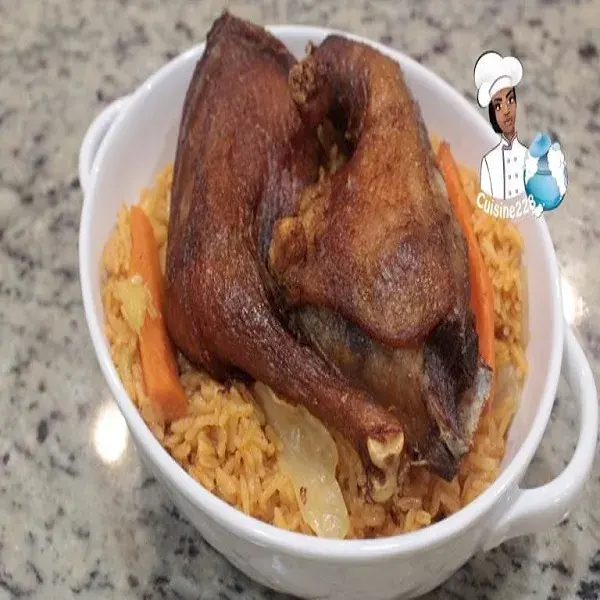
Ivorian Jollof Rice
Aperçu
Ivorian jollof is the Francophone entry in a dish the Anglophone countries argue about most loudly. It carries the same tomato base as its neighbours and seasons it with curry powder, thyme, ginger, garlic and scotch bonnet, and it commonly cooks the cabbage and carrots in the pot with the rice rather than serving them separately. Côte d'Ivoire calls it jollof, and the wider Francophone West African name for the family is riz gras, meaning fat rice. That name describes the method accurately: rice cooked in an oil rich tomato broth until it takes all of it up. In Côte d'Ivoire the dish belongs to the same occasions it does everywhere else in the region, which is to say weddings, funerals, naming ceremonies and any gathering that expects to feed a crowd from one pot. The origin is not seriously disputed by anyone who looks into it. Jollof descends from the rice tradition of the Senegambian coast, associated with the Jolof polity that held parts of present day Senegal and the Gambia between roughly 1350 and 1549, in a region documented as the Rice Coast for the grains grown along the Senegal River. One account traces its spread through the Djula traders of the Mali empire. Neither Nigeria nor Ghana invented it, which neither country lets get in the way of the argument.
Note de Patrimoine AFN
Jollof rice descends from the rice tradition of the Senegambian coast, associated with the Jolof polity that controlled parts of present day Senegal and the Gambia between approximately 1350 and 1549, in a region documented in European records as the Rice Coast. Its spread across West Africa has been attributed to the Djula traders of the Mali empire.
Ingrédients
Les mentions alimentaires sont fournies par les contributeurs à titre indicatif. Elles ne sont pas vérifiées par AFN et dépendent des produits que vous achetez. En cas d’allergie grave, vérifiez vous-même chaque ingrédient. Cuisine, allergies et votre propre jugement
Préparation
- 1
Blend the garlic, ginger and half the onion together.
- 2
Season the chicken with half the blended spices, a bouillon cube and salt. Add half a sliced onion, cover with water and cook until tender. Lift out and fry the chicken.
- 3
Add the blended tomato, tomato paste, the remaining half onion pureed, the second bouillon cube, the remaining blended spices, the cayenne, the halved carrots and the sliced cabbage, a pinch of baking soda and salt to taste.
- 4
Add 7 cups of water to the tomato mixture, then add the washed rice and salt to taste. Cook the rice.
- 5
When the water has evaporated from the rice, add the whole habanero peppers.
- 6
Serve the rice with the vegetables and the chicken.
Notes de l’Africook
- Add the habaneros whole and late. Left whole they perfume the pot without releasing their full heat, which is how West African cooks control chilli in a dish everyone at the table will eat.
- Parboil the rice for 5 to 10 minutes in salted water and drain before it goes into the tomato base. It is the step that stops the grains breaking down in the long cook.
- The pinch of baking soda softens the cabbage and helps hold its colour. Use very little, since more gives a soapy taste.
- Do not stir once the rice is in and the pot is covered. Stirring breaks the grains and turns the pot sticky.
- Chicken, turkey, beef, goat, fish or moin moin all work as the protein, and coleslaw is the standard fresh accompaniment.
Questions fréquentes
What is the difference between Ivorian jollof and Nigerian or Ghanaian jollof?
Mostly the vegetables and the seasoning. Ivorian jollof commonly cooks cabbage and carrot in the pot with the rice, where Nigerian and Ghanaian versions usually serve vegetables separately or leave them out. It also uses jasmine or parboiled rice and a curry and ginger seasoning base. Francophone West Africa calls the wider family riz gras.
What is riz gras?
Riz gras is the Francophone West African name for the family of dishes that Anglophone countries call jollof. It translates as fat rice and describes the method: rice cooked in an oil rich tomato broth until it absorbs all of it. The dish is essentially the same across the language boundary; only the name changes.
Where did jollof rice come from?
The Senegambian coast, in the region ruled by the Jolof polity between roughly 1350 and 1549, an area European records called the Rice Coast for the grains grown along the Senegal River. It spread east and south through trade and migration, with one account crediting the Djula traders of the Mali empire, and developed distinct national forms in each country.
What rice should I use for Ivorian jollof?
Parboiled rice or jasmine, and whichever you choose, parboil it briefly in salted water first and drain. That step is what keeps the grains separate through the long cook in the tomato base. Basmati works but is more commonly associated with Ghanaian jollof, and it gives a lighter, more perfumed result.
Avis
3 avis
Herh, putting the cabbage and carrots directly in the tomato stew before adding the rice is pure Ivorian style paa! In Ghana we usually serve vegetables on the side, but this riz gras method is so hearty. The ginger and garlic blend made the whole house smell amazing oo.
Cabbage and carrots inside jollof looked strange to me at first, but I tried this for Sunday lunch. Boiling the chicken first with that ginger and garlic paste gave the stock so much depth. My wife loved it o, though I will still say Nigerian jollof is number one sha.
7 cups of water for 4 cups of jasmine rice made my rice a bit too soggy. Jasmine rice doesnt need that much water abeg, it cooks very fast. But steaming the whole habaneros on top at the very end gave it a very nice aroma without making it too spicy for the kids.