

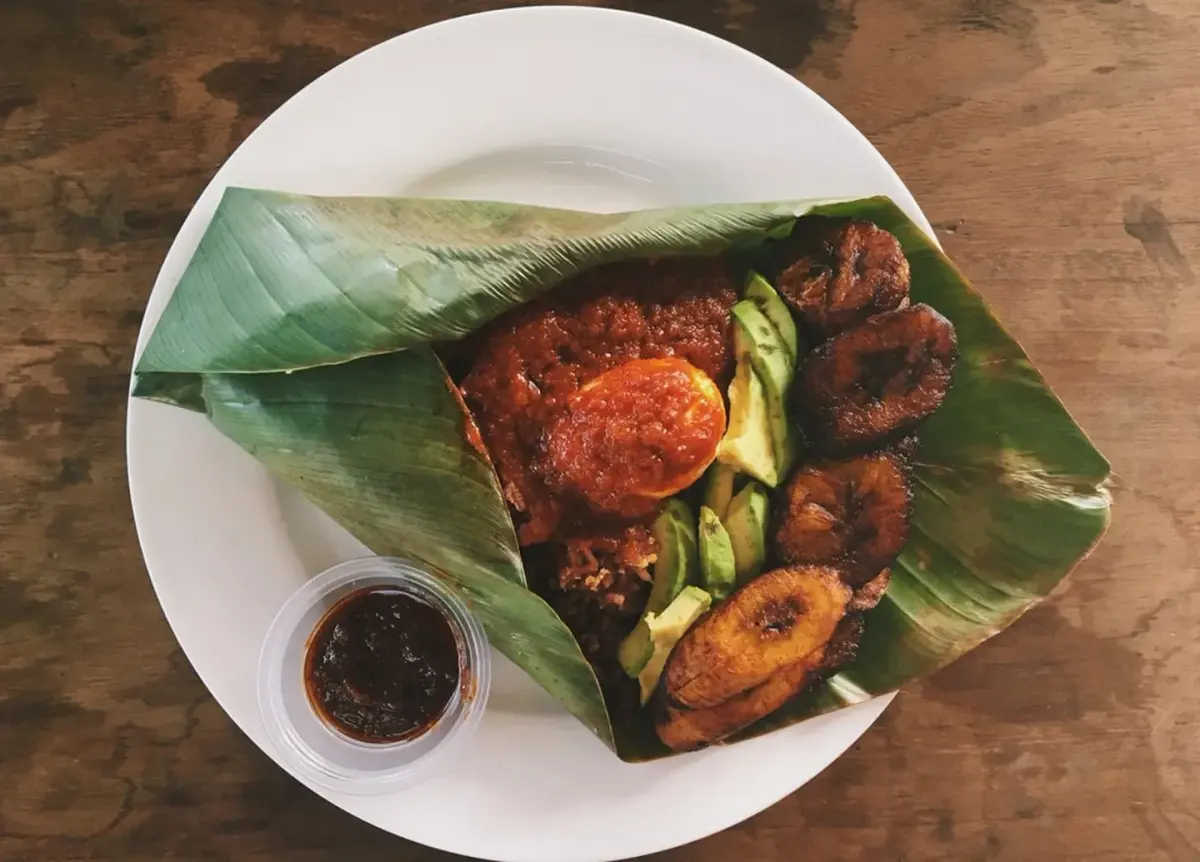
Waakye
Aperçu
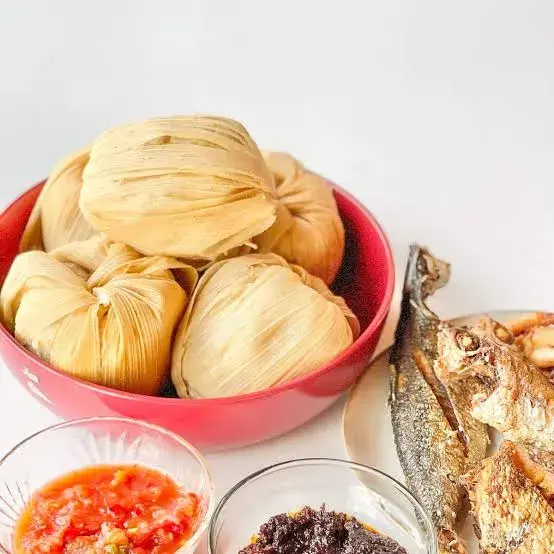
Waakye is rice and beans cooked together with dried millet or sorghum stalk leaves, which leach a deep reddish brown into the grain and give the dish both its colour and its name. It is Ghana's most loved street breakfast, and in Accra and Kumasi the waakye seller is a neighbourhood institution whose location is known, whose quality is debated and whose loyalty is genuinely held. Sellers begin before dawn and often sell out by mid morning. The dish is bought wrapped in leaves and assembled to the customer's specification from a wide spread of accompaniments: shito, the dark Ghanaian pepper and fish sauce, gari, egg, spaghetti known as talia, fried plantain, avocado, salad, stew and fried fish or meat. A full waakye plate is substantial enough to carry someone through a working day, which is precisely what it is for. The waakye leaf is the ingredient that cannot be substituted. It is the dried leaf sheath of a West African sorghum, called poporo oka in Yoruba and adako in Togo, and it functions as a colourant rather than a flavouring, with the quantity used determining how deep the colour runs. Black eyed beans are traditional and jasmine rice is the Ghanaian preference. The dish is eaten across West Africa under other names, as wanke in Lagos and ayimolou in Togo.
Note de Patrimoine AFN
The name waakye derives from the Hausa word for the dried millet or sorghum stalk used in cooking, which gives the rice its characteristic reddish brown colour. Its origin in northern Ghana and its spread south with Hausa and Frafra migrant communities is referenced in early 20th century ethnographic accounts of northern Ghanaian foodways.
Ingrédients
Les mentions alimentaires sont fournies par les contributeurs à titre indicatif. Elles ne sont pas vérifiées par AFN et dépendent des produits que vous achetez. En cas d’allergie grave, vérifiez vous-même chaque ingrédient. Cuisine, allergies et votre propre jugement
Préparation
- 1
Pick over the beans and remove any stones or grit.
- 2
Wash the beans and add them to a pressure cooker.
- 3
Wash the waakye leaves and add them to the pressure cooker. Pour in water up to the minimum level of the pot.
- 4
Close the valve and leave until it reaches full pressure, which should take no more than 15 minutes.
- 5
Once at full pressure, reduce the heat and leave for a further 10 minutes for the beans to cook.
- 6
Remove from the heat and allow it to depressurise naturally, which takes around 20 minutes.
- 7
Once cooled, unlock the lid.
- 8
Pour the beans with their cooking liquid and the waakye leaves into another pot. Wash the rice and add it to the pot.
- 9
Add more water if needed so there is enough to cook the rice. Add salt and cover the pot.
- 10
Cook until the rice is done. Timing depends on the rice you are using.
- 11
Remove the waakye leaves and serve with your chosen sides.
Notes de l’Africook
- The quantity of waakye leaves controls the colour. More leaves give a deeper reddish brown; too few and you have rice and beans that happen to be slightly tinted.
- Cook the beans first and to the point of being nearly tender before the rice goes in. Rice added to hard beans overcooks long before they soften.
- Keep the bean cooking liquid. It carries the colour leached from the leaves, and discarding it means the rice takes on none of it.
- Kaun, also called kanwa or akaun, is a West African lake salt used interchangeably with baking soda here. It softens the beans and deepens the colour. A very small amount is all that is needed.
- The rice to bean ratio is a matter of preference. Two parts rice to one part beans is common, and one to one is equally standard.
Questions fréquentes
What are waakye leaves and can I substitute them?
They are the dried leaf sheaths of a West African sorghum, sold in bundles at Ghanaian and West African grocers and known as poporo oka in Yoruba and adako in Togo. They act as a natural colourant rather than a flavouring. There is no good substitute: some cooks use a small amount of baking soda with the leaves to intensify the colour, but nothing replaces them.
What is waakye served with?
A wide spread, assembled to order. Shito, the dark Ghanaian pepper and fish sauce, and gari are close to essential. Beyond that: boiled egg, spaghetti called talia, fried plantain, avocado, salad, stew, fried fish and meat. A full waakye plate is a complete meal, which is why it carries people through a working day.
What is shito and does waakye work without it?
Shito is a dark Ghanaian condiment of dried fish, dried shrimp, tomatoes, onions and a large quantity of pepper cooked down to a thick oily paste. Its umami and heat are part of what makes the full waakye plate work, and waakye without it is a lesser version. It is sold in jars at West African grocers.
What beans should I use for waakye?
Black eyed beans are traditional, and the colour change from white to deep red as they take up the leaf colour is part of the appeal. Cowpeas are equally correct. Any bean you have will work at a push, though darker beans mask the colour that the waakye leaves are there to provide.
Avis
5 avis
Vous Aimerez Aussi
Voir toutes les recettes Ghana →
Easy and Simple Way to Make Banku
Garden Egg Stew (Earthenware Bowl Method)
Kontomire Stew
Used a quarter teaspoon of baking soda because I couldnt get kaun sha. It softened the black eyed beans nicely in the pressure cooker. Rice came out rich dark red like proper waakye. E sweet no be small thing o. Just make sure you wash those dry leaves well before cooking because some grit was hiding inside the stalks.
The pressure cooker method actually saves so much gas chale. But 10 mins after full pressure was a bit too soft for my black eyed beans, 7 or 8 minutes is enough so the beans dont mash when you add the jasmine rice later. My grandmoma always used a tiny pinch of kaun to make the red color pop from the stalk leaves oo.
Herh if you use too much baking soda it ruins the natural earthy smell of the dried sorghum leaves paa! Just stick to 3 stalks and let them boil properly with the black eyed beans. Four cups of jasmine rice to two cups of beans is the perfect ratio though, rice was not soggy at all.
couldnt find dried sorghum stalks anywhere here in Seattle so I checked the African market in White Center. They had the waakye leaves imported from Ghana! The deep purple color they give to the beans while boiling is amazing. 10 minutes in the pressure cooker was spot on.
Found the waakye leaves at an Afro-Caribbean shop here in Easton. The pressure cooker timing made this so fast compared to how long black eyed beans usually take on the stove. Paired it with a halal beef stew and gari, tasted just right.