
Hamam Mahshi (Egyptian Stuffed Pigeon)
Abuja, Nigeria · Voir toutes les recettes
Aperçu
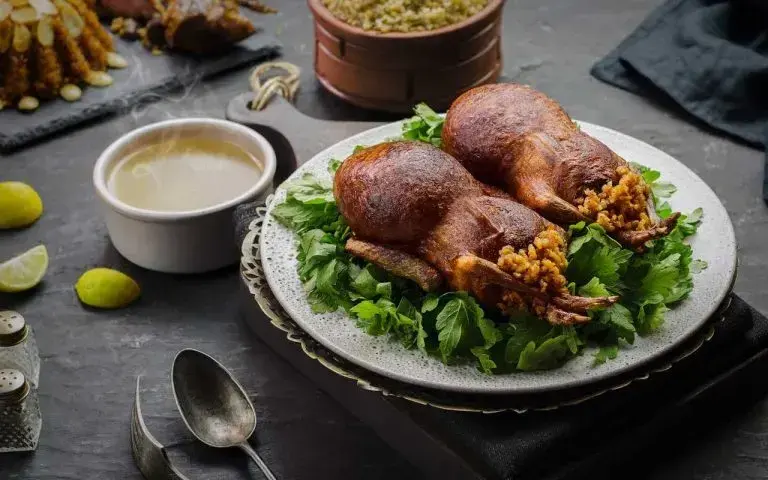
Hamam mahshi is pigeon stuffed with spiced rice or freekeh, poached and then browned in ghee. It is an Egyptian speciality and one of the dishes most closely identified with the country. **It contains mixed nuts, which the title gives no indication of.** Pigeon is farmed rather than hunted in Egypt, and has been for a very long time. Villages along the Nile keep them in distinctive mud-brick towers, structures that have been part of the Egyptian landscape since pharaonic times, and the birds are raised specifically for the table. That agricultural fact is why a dish built on pigeon is ordinary in Egypt and almost unknown elsewhere. The stuffing is what varies. Rice is common; so is freekeh, the roasted green wheat, which gives a smokier, chewier result and is the more traditional choice in many households. The source mentions grits, which is likely a rendering of freekeh or of coarse cracked wheat. The source attributes mahshi as a category to the Ottoman period, which is a reasonable and widely repeated account, though the specific claim that hamam mahshi is originally Turkish is contested and has been recorded as a claim rather than a fact. The method's step order is muddled, it fills the birds before the stuffing has been made. Reordered below.
Note de Patrimoine AFN
Hamam mahshi is an Egyptian dish of pigeon stuffed with spiced rice or freekeh. Pigeons have been farmed along the Nile since antiquity, kept in mud-brick towers, and the dish is closely associated with Egyptian cooking. Stuffed dishes of the mahshi family are generally attributed to the Ottoman period.
Ingrédients
Les mentions alimentaires sont fournies par les contributeurs à titre indicatif. Elles ne sont pas vérifiées par AFN et dépendent des produits que vous achetez. En cas d’allergie grave, vérifiez vous-même chaque ingrédient. Cuisine, allergies et votre propre jugement
Préparation
- 1
Wash the pigeons thoroughly, rubbing them with salt and flour to clean them properly, then rinse well with water.
- 2
Cook the rice in water for about 10 minutes over medium-high heat, so it is part-cooked. It will finish inside the bird.
- 3
Mix the part-cooked rice with the chopped onion, cinnamon, nutmeg, mixed spices, mixed nuts, salt and pepper to make the stuffing.
- 4
Fill the pigeons with the stuffing, taking care not to overfill, the rice expands as it finishes cooking and a tightly packed bird will burst.
- 5
Bring a saucepan of water to the boil with the bay leaves, cardamom, salt, pepper and cinnamon, and lower the pigeons into it. Cook for around half an hour, until completely done.
- 6
Do not overcook them, or the skin will come away from the bird.
- 7
Lift the pigeons out of the broth and brown them in the ghee on both sides, seasoning with salt and pepper as they colour.
- 8
Serve hot.
Notes de l’Africook
- This dish contains nuts. Nothing in its name indicates it, so say so when serving.
- Do not overfill the birds. Part-cooked rice keeps swelling and a tightly stuffed pigeon splits open.
- Part-cook the rice first. Raw rice will not cook through inside a bird in the time the meat needs.
- Watch the poaching. Overcooked pigeon loses its skin, which then cannot be browned.
- Freekeh in place of the rice is the more traditional stuffing in many households and gives a smokier, chewier result.
- Keep the poaching broth, it is well seasoned and makes a good base for soup.
Questions fréquentes
Why is pigeon eaten in Egypt?
Because it is farmed there, and has been for millennia. Villages along the Nile keep pigeons in distinctive mud-brick towers, structures that have been part of the Egyptian landscape since pharaonic times, and the birds are raised specifically for the table rather than hunted. That agricultural infrastructure is why a pigeon dish is an ordinary restaurant order in Egypt and a near-impossibility in most other countries.
What is the stuffing made of?
Rice or freekeh, mixed with onion, warm spices and nuts. Freekeh, young green wheat that has been roasted, is the more traditional choice in many Egyptian households and gives a smokier, chewier stuffing than rice. The source mentions grits, which is most likely a rendering of freekeh or of coarse cracked wheat. Either way the grain goes in part-cooked, since it finishes inside the bird.
Where does hamam mahshi come from?
Egypt, though the mahshi family of stuffed dishes as a whole is generally attributed to the Ottoman period, when stuffed vegetables and birds spread widely across the empire. The source goes further and calls hamam mahshi originally Turkish, which is contested, pigeon farming in Egypt long predates the Ottomans. That claim has been recorded here as a claim rather than presented as settled.
What is it served with?
Molokhia is the classic accompaniment, and the two are served together often enough that they are almost a single dish in Egyptian restaurants. Bread and salad complete the table. The birds are small, so one per person is normal, and the stuffing is substantial enough that little else is needed. Molokhia has its own recipe on this site.
Avis
Soyez le premier à noter cette recette
Vous l’avez cuisinée ? Votre note aide la personne suivante à se décider.
Aucun avis sur cette recette pour le moment. Si vous l’avez cuisinée, le vôtre serait le premier.
Vous Aimerez Aussi
Voir toutes les recettes Egypt →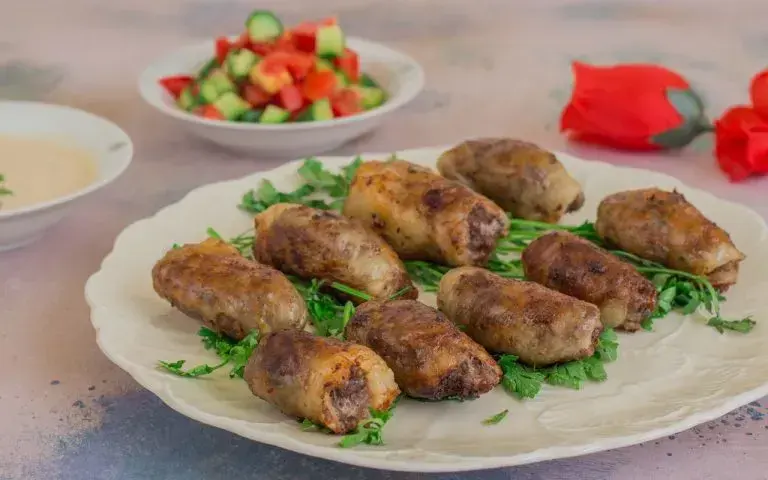
Tarb (Grilled Kofta Wrapped in Lamb Fat)
Egyptian Meshabek