
Farofa (Toasted Cassava Flour)
London, United Kingdom · Voir toutes les recettes
Aperçu
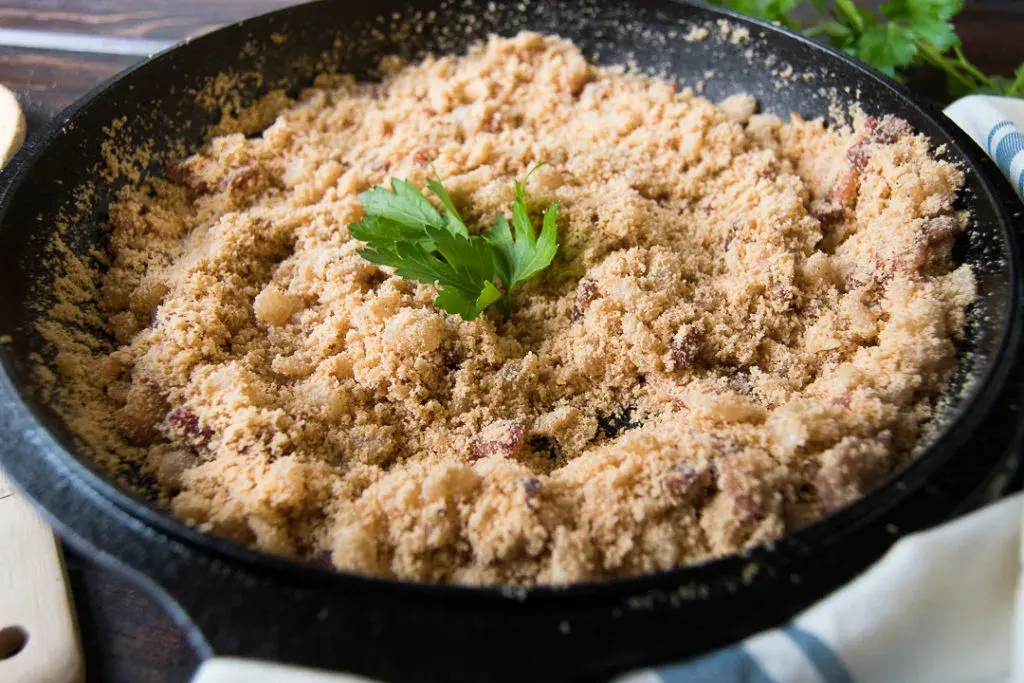
Farofa is cassava flour toasted in fat with onion, garlic and usually bacon, until it turns golden and sandy. It is Brazilian, and it appears on the table at almost every Brazilian meal that involves a stew or grilled meat. Its job is texture. Brazilian cooking produces a great deal of rich, soupy food, feijoada above all, and farofa is scattered over it to absorb the liquid and give a dry, crunchy contrast. Eaten on its own it makes little sense; eaten over a wet dish it makes complete sense, and that is how it is used. The African connection is direct and worth stating. Cassava is South American in origin, but the technique of toasting cassava meal into a dry accompaniment moved across the Atlantic in both directions with the transatlantic slave trade, and farofa's closest relatives are West African. Garri, the fermented and toasted cassava granules eaten across Nigeria, Ghana and Benin, is made by essentially the same process. Brazilian cooking, and Bahian cooking in particular, carries an enormous amount of West African influence, and farofa sits squarely in that history, which is precisely why it belongs in a Worldwide collection on an African food site rather than being simply foreign. The method is short and the one instruction that matters is to keep it moving. Cassava flour burns quickly and unevenly.
Note de Patrimoine AFN
Farofa is a Brazilian side dish of cassava flour toasted in fat, served scattered over stews and grilled meats. Cassava is South American in origin, and the technique of toasting cassava meal has close relatives in West Africa, including garri; Brazilian cooking, particularly in Bahia, carries substantial West African influence.
Ingrédients
Les mentions alimentaires sont fournies par les contributeurs à titre indicatif. Elles ne sont pas vérifiées par AFN et dépendent des produits que vous achetez. En cas d’allergie grave, vérifiez vous-même chaque ingrédient. Cuisine, allergies et votre propre jugement
Préparation
- 1
Put the diced bacon into a cold skillet and bring it up over medium heat, so the fat renders slowly rather than seizing.
- 2
As the fat begins to melt, work in one tablespoon of the butter.
- 3
Once the bacon starts to fry, put in the second tablespoon of butter.
- 4
Tip in the diced onion and cook until translucent, about 2 minutes.
- 5
Mix in the garlic and cook until golden.
- 6
Pour in the cassava flour and season with salt and pepper.
- 7
Toast it, turning gently and constantly so it does not burn, for about 2 minutes, until it is golden and sandy throughout.
- 8
Serve scattered over feijoada, grilled meat or any stew.
Notes de l’Africook
 Notes personnelles de Nympha Nzeribe
- Keep it moving constantly once the flour is in. Cassava flour catches quickly and burns unevenly, and burnt farofa is bitter throughout.
- Start the bacon in a cold pan. The fat renders gently and evenly, which is the base of the whole dish.
- Do not skimp on the fat. Farofa needs enough to coat every grain, or it stays powdery and dusty in the mouth.
- For a vegetarian version, replace the bacon with more butter or a good olive oil. It works, though the smokiness is missed.
- It is meant to go on top of something wet. Farofa alone is dry by design.
- It keeps for a few days in a sealed container and can be refreshed in a dry pan.
Questions fréquentes
What is farofa for?
Texture and absorption. Brazilian cooking produces a lot of rich, liquid food, feijoada, moqueca, stews, and farofa is scattered over it to soak up the sauce and add a dry, crunchy contrast. It is a condiment rather than a dish in its own right, and eaten on its own it makes little sense. On the table it sits alongside rice, beans and whatever the main dish is, and people help themselves.
Is farofa related to African food?
Closely. Cassava came from South America, but the technique of toasting cassava meal into a dry, storable accompaniment has direct relatives across West Africa, garri, the fermented and toasted cassava granules eaten in Nigeria, Ghana and Benin, is made by essentially the same process. Brazilian cooking, especially in Bahia, carries substantial West African influence from the transatlantic slave trade, and farofa sits squarely within that shared history.
What flour do I need?
Farinha de mandioca, Brazilian cassava flour, coarse and slightly gritty, sold at Latin American grocers and increasingly in supermarkets. It is not the same as the fine cassava flour sold for gluten-free baking, which is powdery and will turn to paste rather than toasting into grains. Garri is the closest widely available substitute and works reasonably well, though it is fermented and so slightly sour.
Can I make it without bacon?
Yes. Replace the bacon with an extra tablespoon or two of butter, or with good olive oil, and proceed as written, the onion and garlic still give it plenty of flavour. What you lose is the smokiness, which is a real part of the classic version, so a smoked paprika or a little smoked salt gets some of it back. Many Brazilian households make several versions, including egg and banana ones.
Avis
Soyez le premier à noter cette recette
Vous l’avez cuisinée ? Votre note aide la personne suivante à se décider.
Aucun avis sur cette recette pour le moment. Si vous l’avez cuisinée, le vôtre serait le premier.
Vous Aimerez Aussi
Kafteji
Kenkey
How to Make Crispy Fried Chicken Feet