
Zalabya (Egyptian Syrup Doughnuts)
Abuja, Nigeria · Voir toutes les recettes
Aperçu
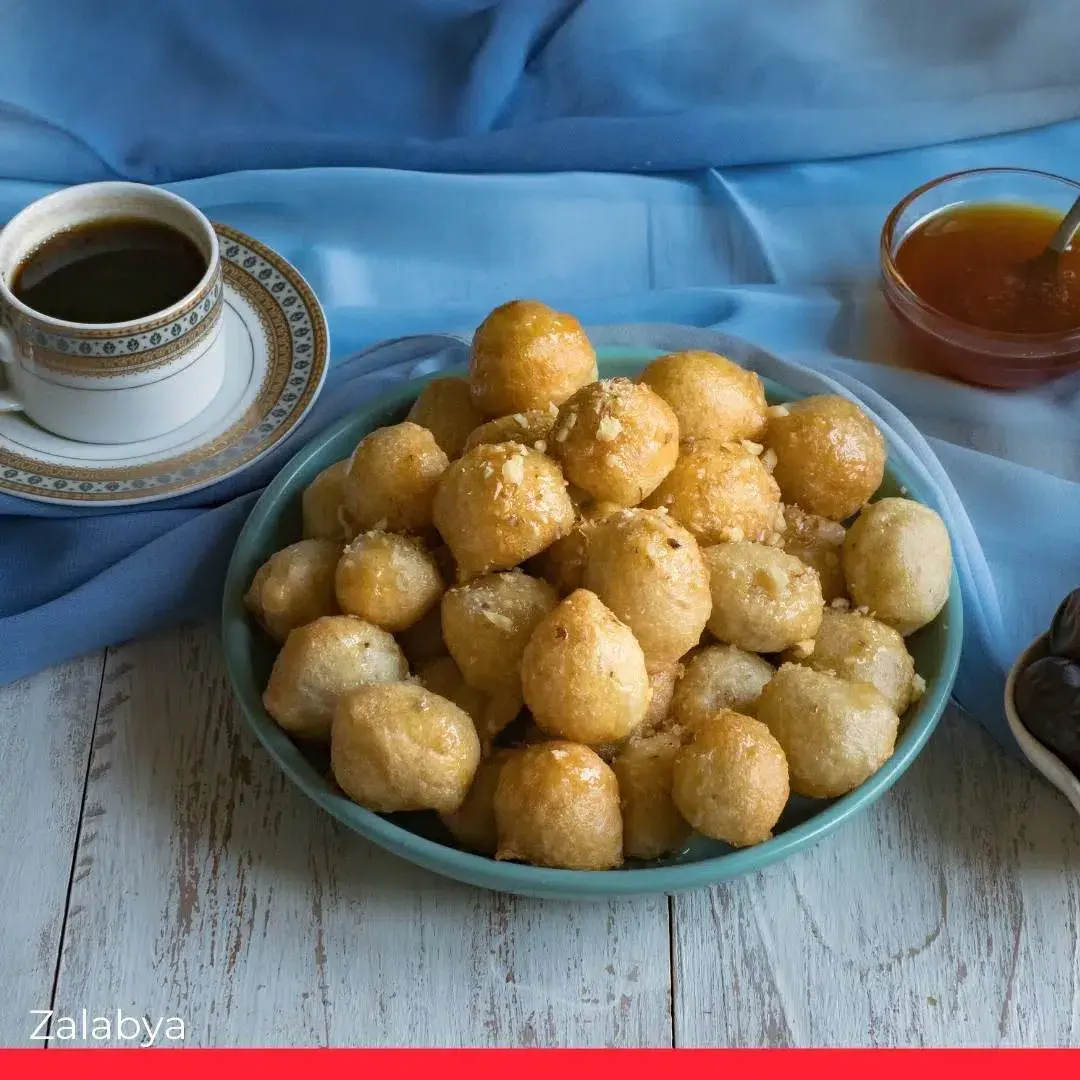
Zalabya are small round balls of yeasted batter, deep-fried until crisp and dipped briefly in cold sugar syrup. They are Egyptian street food, sold from kiosks all over the country for very little, and they are eaten most of all during Ramadan. The source's description is the best one: think of them as the round part that is missing from a doughnut. They are crunchy outside and light and airy inside, and the syrup is absorbed only into the outer layer, so biting into one gives a burst of sweetness against a plain interior rather than sweetness all the way through. The names travel. Loukoumades in Greece, lokma in Turkey, zalabya or zalabia in Egypt, and loqmet al-qadi, the judge's bite, across the Arabic-speaking world. Versions are eaten all around the Mediterranean and into South Asia, where jalebi is a related but differently shaped relative. The batter is very wet, closer to a thick pouring batter than a dough, and that is what makes them light. It is dropped by the spoonful straight into the oil rather than shaped. The syrup should be cool when the hot balls go in, for the same reason as koeksisters: the temperature difference draws it in. The source's ingredient list has run its headings into the list and one water quantity is malformed.
Note de Patrimoine AFN
Zalabya are small deep-fried balls of yeasted batter soaked in sugar syrup, sold as street food across Egypt and eaten particularly during Ramadan. They are known as loukoumades in Greece, lokma in Turkey, and loqmet al-qadi, the judge's bite, across the Arabic-speaking world.
Ingrédients
Les mentions alimentaires sont fournies par les contributeurs à titre indicatif. Elles ne sont pas vérifiées par AFN et dépendent des produits que vous achetez. En cas d’allergie grave, vérifiez vous-même chaque ingrédient. Cuisine, allergies et votre propre jugement
Préparation
- 1
Make the syrup first. Combine the sugar, water, lemon juice and orange blossom water in a saucepan over low to medium heat and cook gently, stirring, for 10 to 15 minutes. Set it aside to cool completely.
- 2
Dissolve the yeast and the teaspoon of sugar in half a cup of lukewarm water and leave it for 10 to 15 minutes until frothy.
- 3
Put the flour in a large bowl. Mix in the yeast water and the salt, then work in about 2 1/2 cups of lukewarm water gradually, beating until the batter is smooth and elastic. It should be a thick pouring batter rather than a dough.
- 4
Cover with a towel and leave to rise in a warm place for about an hour.
- 5
Heat the oil in a deep pan until very hot.
- 6
Drop small balls of batter into the oil with a tablespoon, turning them until crisp, golden and puffed.
- 7
Lift them out and dip them into the cool syrup for a few seconds, hot into cool is what draws the syrup into the outer layer.
- 8
Lift them out with a slotted spoon, dust with cinnamon and serve hot or cold.
Notes de l’Africook
- Make the syrup first so it has time to cool. Hot balls into cool syrup is what pulls it in.
- Keep the batter wet. It should be a thick pouring batter, not a dough, that is what makes them light inside.
- Dip briefly, a few seconds only. Longer and the syrup soaks all the way through and they go heavy.
- Two wet spoons make dropping the batter far easier than one.
- Do not crowd the pan. The oil temperature drops and they absorb fat rather than crisping.
- Nutella or cinnamon sugar in place of the syrup are both common now, as the source notes.
Questions fréquentes
What are zalabya called elsewhere?
A great many things, because versions are eaten all around the Mediterranean and beyond. Loukoumades in Greece, lokma in Turkey, zalabya or zalabia in Egypt, and loqmet al-qadi, the judge's bite, across the Arabic-speaking world. Indian jalebi is a related sweet made from a similar batter but piped into spirals rather than dropped as balls. The shared idea is fried batter soaked in syrup.
Why dip them in cool syrup?
Because the temperature difference controls how much syrup goes in. A hot ball dipped briefly in cool syrup absorbs it into the outer layer only, which is what gives the burst of sweetness against a plain, airy interior. Hot syrup, or a long soak, saturates the whole thing and you end up with something heavy and uniformly sweet. A few seconds is all it takes.
Why is the batter so wet?
Because the high water content is what makes them light. This is a thick pouring batter rather than a dough, too loose to shape by hand, which is why it is dropped by the spoonful straight into the oil. As it fries, the water turns to steam and opens up the interior. A stiffer batter would give you something denser and closer to an ordinary doughnut.
When are they eaten?
All year round as street food, they are sold from small kiosks across Egypt at very low prices and are an everyday sweet. But like most Middle Eastern desserts they are especially associated with Ramadan, when they appear at iftar tables in quantity. They are equally good hot from the pan or cold, which is part of why they suit both a street stall and a household making them in advance.
Avis
Soyez le premier à noter cette recette
Vous l’avez cuisinée ? Votre note aide la personne suivante à se décider.
Aucun avis sur cette recette pour le moment. Si vous l’avez cuisinée, le vôtre serait le premier.
Vous Aimerez Aussi
Voir toutes les recettes Egypt →
Tarb (Grilled Kofta Wrapped in Lamb Fat)
Egyptian Meshabek