

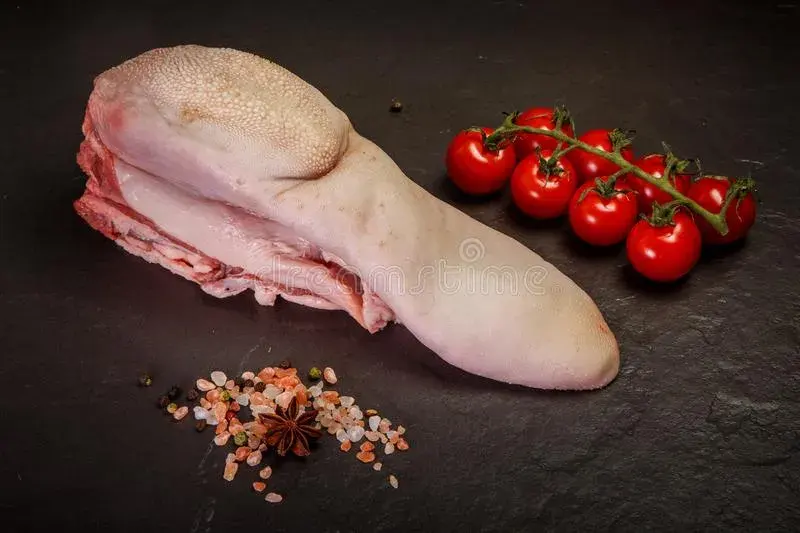
Ox Tongue
Aperçu
Ox tongue is a preparation rather than a national dish, and the source makes no claim to an African origin for it. It is eaten across a great many cuisines, and the entry is included here as a technique piece rather than as a dish belonging to any one country. It does appear in South African cooking, where tongue is a familiar cut, and it turns up in Mexican taco fillings as lengua, in American open faced sandwiches, and widely across East Asia and eastern Europe. Canada, and Alberta in particular, exports it in quantity. It belongs to the same group of cuts as trotters, kidneys and pig's ear, the ones people hesitate over and then find they have been missing. The flavour comes from the fat, which accounts for a high proportion of its calories and gives the meat a richness and a soft texture that ordinary beef does not have. The preparation is slow rather than difficult: long simmering with aromatics, then peeling the skin away while the tongue is still warm, since it becomes almost impossible once cold. What happens after that is open. Pressed and thinly sliced for sandwiches, or diced and fried in butter until the edges crisp, are the two most common finishes.
Ingrédients
Les mentions alimentaires sont fournies par les contributeurs à titre indicatif. Elles ne sont pas vérifiées par AFN et dépendent des produits que vous achetez. En cas d’allergie grave, vérifiez vous-même chaque ingrédient. Cuisine, allergies et votre propre jugement
Préparation
- 1
Scrub the tongue under cold water, then place it in a large saucepan and cover with water.
- 2
Bring to the boil, skimming off the scum that rises to the surface.
- 3
Once boiling, add the onion, carrot, garlic, thyme and peppercorns.
- 4
Continue cooking until tender. This takes about 3 hours for ox, pig and veal tongue, or 1 to 1.5 hours for lamb and smaller tongues.
- 5
When cooked, the tongue will have turned white and the top will begin to blister.
- 6
Lift the tongue out of the liquid and, once it is cool enough to handle, peel off and discard the rubbery skin. Do this while it is still warm.
- 7
Remove and discard the rough, bony end of the tongue.
- 8
Either press the tongue with a little of the cooking liquid and some gelatine and refrigerate overnight for thin slicing, or dice it and fry it in butter until crisp.
Notes de l’Africook
 Notes personnelles de Amarachi Irobi
- Peel the skin while the tongue is still warm. Cold, it is close to impossible, and this is the single most important timing in the recipe.
- Skim the scum properly at the start. It affects the clarity and the flavour of the cooking liquid, which is worth keeping.
- Judge doneness by feel rather than the clock. A skewer should meet no resistance at the thickest part.
- Frying the diced tongue in butter is the better finish if you have not eaten tongue before, since the crisp edges make the texture much less unfamiliar.
- Pressing it overnight with gelatine gives the sliceable version used in sandwiches, and it keeps several days refrigerated.
Questions fréquentes
What does ox tongue taste like?
Rich and beefy, noticeably more so than a standard cut, with a soft, almost yielding texture. The high fat content is responsible for both. It is not gamey or offal tasting in the way liver or kidney is, which is why it is often the cut recommended to people who think they dislike offal.
Why must the skin be peeled while warm?
Because it releases cleanly from warm meat and grips once cold. Left to cool completely, the rubbery outer skin has to be cut away, which wastes meat and is far more work. Peel as soon as the tongue can be handled, using a cloth if it is still hot.
Is this an African dish?
No, and the source does not claim it is. Tongue is eaten in South Africa and in many other cuisines, from Mexican lengua to eastern European and East Asian preparations. This entry documents the technique rather than a dish belonging to any particular country, and it is filed under Worldwide Recipes for that reason.
What can I do with the cooking liquid?
Strain it and keep it. It is a well flavoured stock, having simmered for three hours with onion, carrot, garlic and thyme, and it makes a good base for soup or for braising. Chill it and lift the fat off the top before using.
Avis
5 avis

Couldn't get ox tongue here in Columbus so I used beef tongue from Saraga International Market chale. The peppercorns and thyme made the broth smell so good while simmering. Boiling took full 3 hours to peel properly, worth the wait paa.
Cooked a 1.5kg tongue yesterday. Skimmed the scum off every 10 mins at the start then left it to simmer with the whole carrot and quartered onion. Tossed it in 30g of butter after peeling for a lekker golden crust. Perfect tender meat.
First time cooking offal so I was terrified when scrubbing it under the cold tap! Mine took about 3 hours and 15 mins until the top blistered properly. Is it supposed to be super salty if you fry it in salted butter at the end?
The texture came out soft after skimming all the scum and boiling for 3 hours, no be small thing. But thyme and garlic alone is too plain for me sha, you must add fresh pepper when pan frying in the butter.
my wife was doubting the 3 hours boiling time but that is what makes it soft. once the top started blistering we peeled the outer skin and fried with butter. e sweet well well o.