
Kitcha
Abuja, Nigeria · Voir toutes les recettes
Aperçu
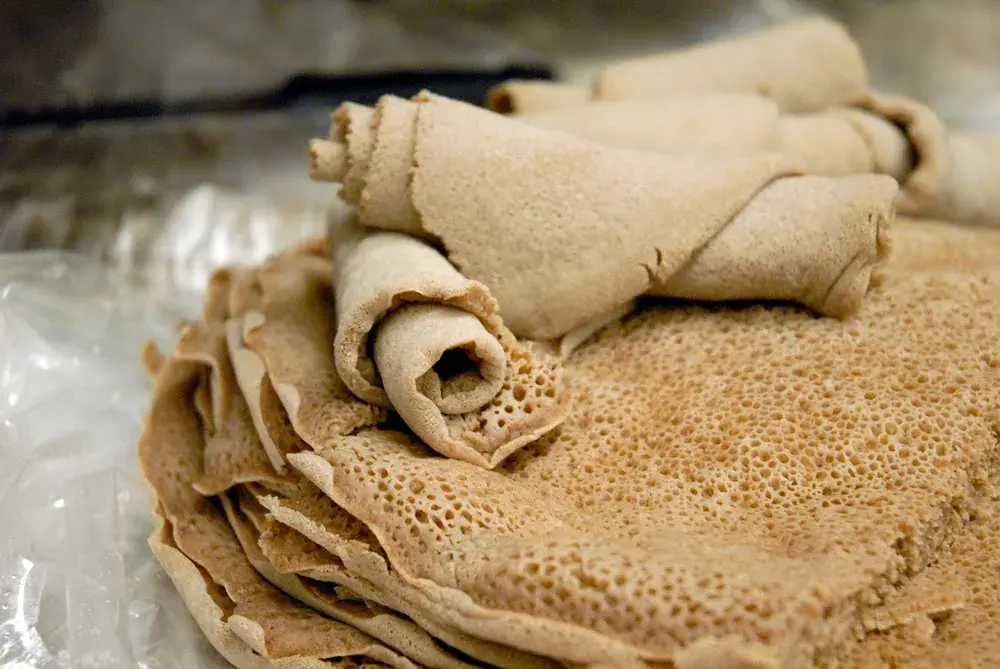
Kitcha is an unleavened Ethiopian and Eritrean flatbread, wheat flour, water and salt, rolled thin and cooked dry in a pan on both sides until it colours in characteristic dark spots. It is written ቂጣ in Amharic and ቂቻ in Tigrinya, and it belongs to both traditions. Its simplicity is the point: no yeast, no rising time, three ingredients. It is the bread you make when bread is needed now, and it is one of the first things many people learn to cook. It is usually served warm with melted spiced butter, which turns something plain into something rich. Chilli and cardamom are sometimes worked into the dough itself. Its most important role is as the base of fit-fit, also called fir-fir, where the bread is torn into pieces and mixed with spiced butter, berbere and sometimes stew, and eaten with the hands. Kitcha fit-fit is a breakfast staple across Ethiopia and Eritrea, and it is the reason kitcha is often made in quantity: the bread is the ingredient rather than the finished thing. The dark spots that appear during cooking are correct, not a mistake.
Note de Patrimoine AFN
Kitcha is an unleavened flatbread of Ethiopian and Eritrean cuisine, written ቂጣ in Amharic and ቂቻ in Tigrinya. It serves as the base for kitcha fit-fit, in which the bread is torn and mixed with spiced butter and berbere.
Ingrédients
Les mentions alimentaires sont fournies par les contributeurs à titre indicatif. Elles ne sont pas vérifiées par AFN et dépendent des produits que vous achetez. En cas d’allergie grave, vérifiez vous-même chaque ingrédient. Cuisine, allergies et votre propre jugement
Préparation
- 1
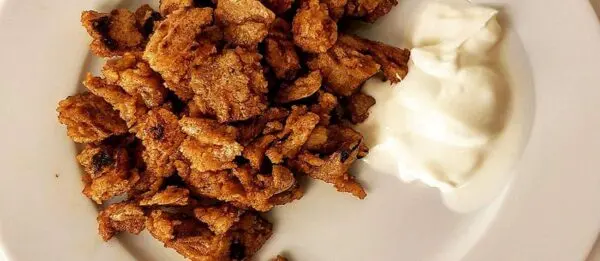
Place the butter in a large nonstick skillet set over medium heat. Once the butter melts, add the berbere and cook, stirring, until the spices sizzle and smell fragrant, about 30 seconds.
- 2
Add the kicha pieces and sprinkle with the salt. Cook, stirring, until all the pieces of kicha are coated with the spiced butter and warmed through, about 3 minutes. Transfer the mixture to a serving platter or individual bowls, top with the yogurt, and serve immediately.
- 3
Place the whole wheat and all-purpose flours and salt in a large bowl and whisk well to combine. Using your hands, mix in the water. The batter will be like a very thick pancake batter.
- 4
Line a plate with paper towels and set aside. Set a 12-inch nonstick skillet over medium heat and add 1 tablespoon of the oil, tilting the pan so the oil lightly greases the bottom of the pan. Once the oil is hot, add half the dough to the skillet and use wet fingertips to gently and carefully press the dough into a wide circle that covers the surface of the skillet. Cover the skillet and cook until the top of the dough is glossy and the underside is golden brown, about 3 minutes. Carefully flip the bread over, cover, and cook until the second side is browned, another 2 to 3 minutes.
- 5
Transfer the flatbread to the prepared plate, adding the remaining 1 tablespoon oil to the pan, and repeat the process with the remaining dough.
- 6
Serve immediately while the breads are warm, or let cool to room temperature to use for Kicha Fit Fit. Leftover breads can be stored in a plastic bag at room temperature for a day and rewarmed in a skillet over low heat.
Notes de l’Africook
- Cook it dry on a hot pan. Oil in the pan changes the texture and stops the spots forming.
- Roll it thin and even. Thick patches stay doughy in the middle while the edges colour.
- The dark spots are the sign it is cooking properly. Do not turn the heat down to avoid them.
- Serve warm. Kitcha stiffens as it cools, though that matters less if it is going into fit-fit.
Questions fréquentes
What is fit-fit?
Fit-fit, also written fir-fir, is a dish made by tearing bread into small pieces and mixing it with spiced butter, berbere and often stew. Kitcha fit-fit uses this bread; injera fit-fit uses injera. It is eaten with the hands and is one of the most common breakfasts in Ethiopia and Eritrea.
Is kitcha the same as injera?
No. Injera is a large spongy fermented pancake made from teff, raised over days by a starter, and it is soft and sour. Kitcha is small, unleavened, made from wheat flour, cooked dry and firm. They are used differently, injera is the plate as well as the bread, while kitcha is more like a flatbread you tear or fold.
Why does mine have no spots?
The pan is probably not hot enough, or there is oil in it. Kitcha is cooked dry on a properly hot surface, which is what produces the characteristic dark blistering. A cooler pan cooks it through evenly and pale, which is edible but not right.
Avis
Soyez le premier à noter cette recette
Vous l’avez cuisinée ? Votre note aide la personne suivante à se décider.
Aucun avis sur cette recette pour le moment. Si vous l’avez cuisinée, le vôtre serait le premier.
Vous Aimerez Aussi
Voir toutes les recettes Ethiopia →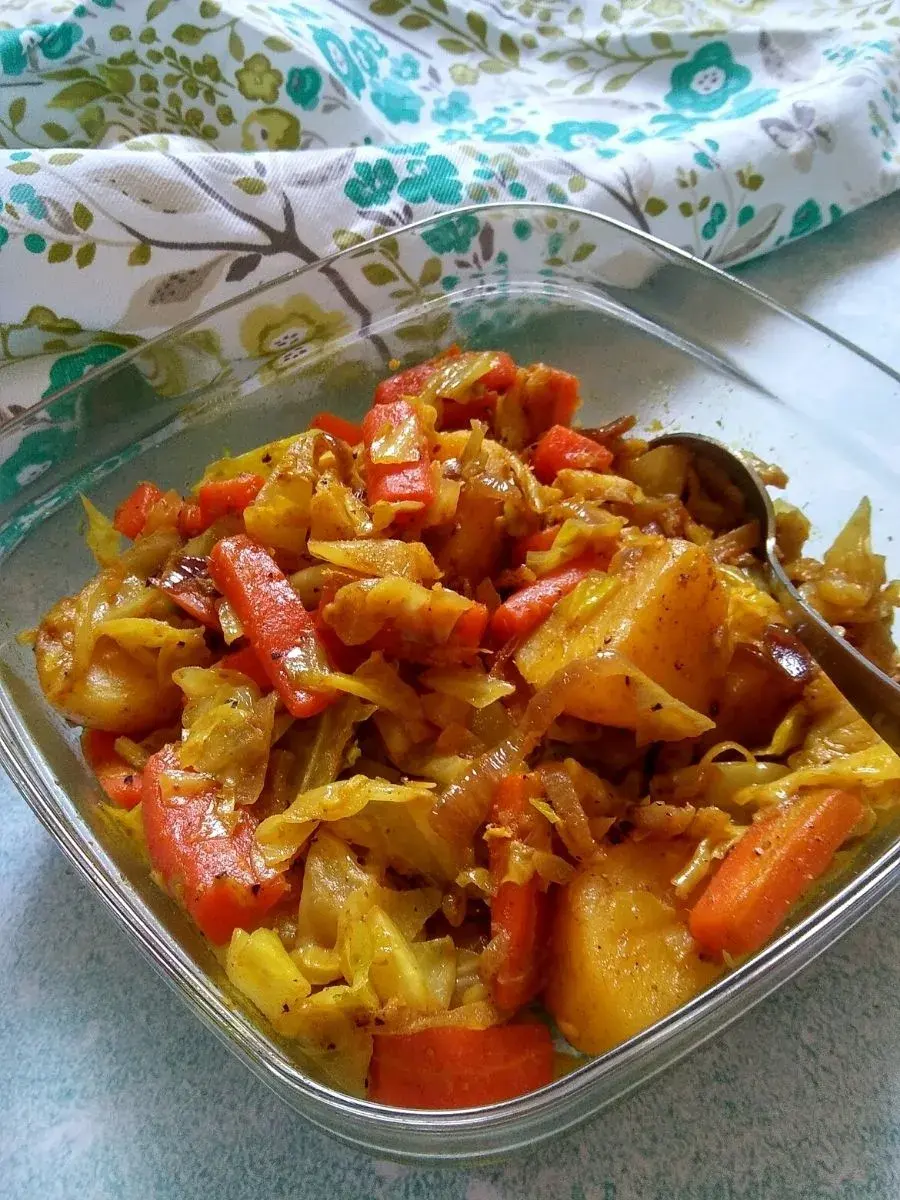
Ethiopian Berbere Cabbage - Atakilt Wat
Shiro Wat (Ethiopian Chickpea Stew)