

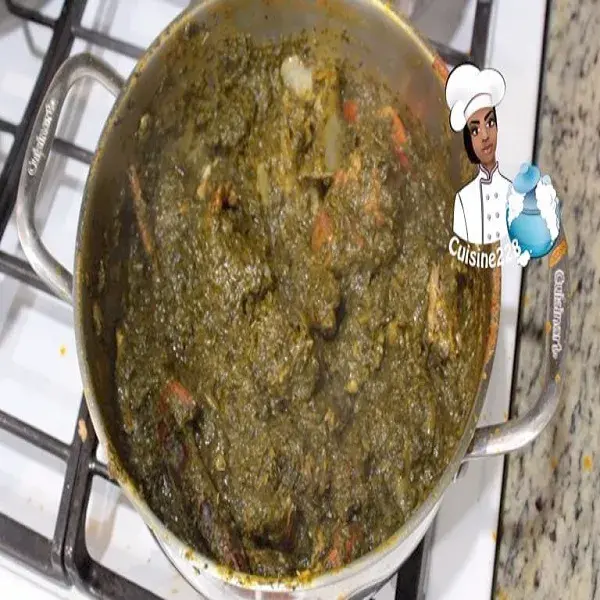
Cassava Leaf Soup
Overview
Cassava leaf soup is eaten from Liberia and Sierra Leone through to Central Africa, where it is known as saka saka or pondu, and it is one of the most widely shared dishes on the continent. Wherever cassava is grown for its root, the leaves are eaten too, and a great many countries have arrived independently at some version of this. Calling it a soup understates it. It is closer to a thick stew: pounded cassava leaves cooked down with palm oil, smoked meat or fish and ground crayfish until the whole thing is dense and dark green. The leaves themselves carry little flavour of their own and take on whatever they are cooked with, which is why the smoked protein and the palm oil matter so much to the result. The West African version this recipe follows differs from the Central African one in its details. Liberian and Sierra Leonean cooks commonly use groundnut paste alongside the palm oil, and smoked turkey or fish rather than the salted fish more common further east. What holds across all of them is the pounding, the long cook and the requirement that the leaves be thoroughly cooked, since cassava leaves are not safe raw. It is eaten over rice.
AFN Heritage Note
Cassava leaf soup is eaten across West and Central Africa, known as saka saka and pondu in the Congo basin and simply as cassava leaf in Liberia and Sierra Leone. Cassava was carried to Africa from South America through Portuguese Atlantic trade from the 16th century, and its leaves entered regional cooking alongside its root.
Ingredients
Dietary tags are provided by contributors as a guide, not verified by AFN, and they depend on the products you buy. If you have a serious allergy, check every ingredient yourself. Cooking, allergies and your own judgement
Directions
- 1
If you are starting from raw cassava leaves rather than the frozen or tinned leaves sold ready-prepared, they must be pounded and boiled thoroughly first, raw cassava leaves are toxic and the 8 to 10 minutes in the soup is not enough on its own.
- 2
Heat the palm oil in a large saucepan over medium heat, add the onions and fry until fragrant, about 1 to 2 minutes.
- 3
Add the tomato, cayenne pepper, garlic, ginger and tomato paste.
- 4
Add the precooked smoked meat, then about a cup of stock, and cook for another 5 minutes.
- 5
Add the drained cassava leaves and continue cooking for 8 to 10 more minutes.
- 6
Adjust the seasoning with bouillon and salt, and the consistency with water and oil. Add the scotch bonnet to taste.
- 7
Serve warm over rice.
Africook’s Notes
- Frozen pounded cassava leaves are what to buy. They are sold by African grocers, already pounded and blanched, and they are far closer to the real thing than any fresh substitute.
- The cook time here is short because the frozen leaves have been processed already. If you start from fresh leaves they need boiling for at least 45 minutes with the first water discarded, since raw cassava leaves are not safe to eat.
- A cup of palm oil sounds like a great deal and is correct for the quantity of leaves. The oil is what carries the flavour through a leaf that has almost none of its own.
- Smoked protein is doing most of the flavour work. Smoked turkey, smoked fish or both are standard, and fresh meat gives a noticeably flatter result.
- Groundnut paste is common in the Liberian and Sierra Leonean versions and adds body. Stir it in loosened with a little hot liquid.
Questions cooks ask
Where can I buy cassava leaves?
Frozen, from African, Caribbean and some Asian grocers, usually sold already pounded in one pound bags. That is what most cooks use, including in West Africa, because the pounding is laborious. Fresh cassava leaves are harder to find outside growing regions and need considerably more preparation, including a long boil for safety.
Is cassava leaf soup the same as saka saka or pondu?
They are the same dish under different names, saka saka and pondu being the Congo basin usage. The details differ by region: West African versions often include groundnut paste and smoked turkey or fish, while Central African ones lean more on palm oil and salted fish. The base of pounded cassava leaves cooked long and slow is common to all.
Is it safe to eat cassava leaves?
Yes, once thoroughly cooked. Raw cassava leaves contain naturally occurring cyanogenic compounds, which cooking removes. Frozen leaves sold commercially have generally been blanched already, which is why this recipe's cook time is short. If you start from fresh leaves, boil them for at least 45 minutes and discard the first water.
Can I make cassava leaf soup without palm oil?
Not with the same result. Palm oil supplies both the colour and much of the flavour, and cassava leaves have so little taste of their own that removing it leaves the dish hollow. If it is genuinely unavailable, a neutral oil with groundnut paste gives some body, but the dish will be noticeably different.
Reviews
3 reviews
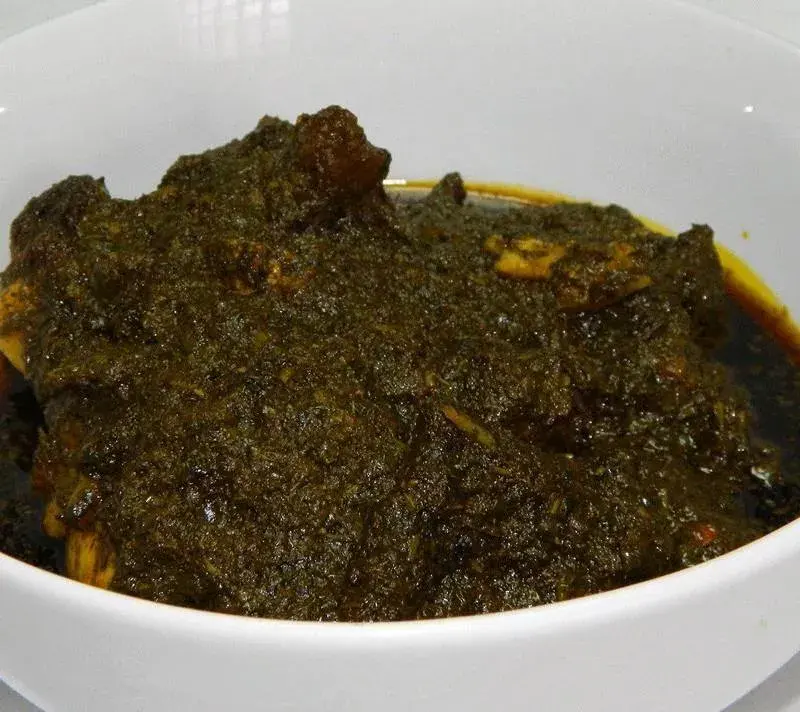
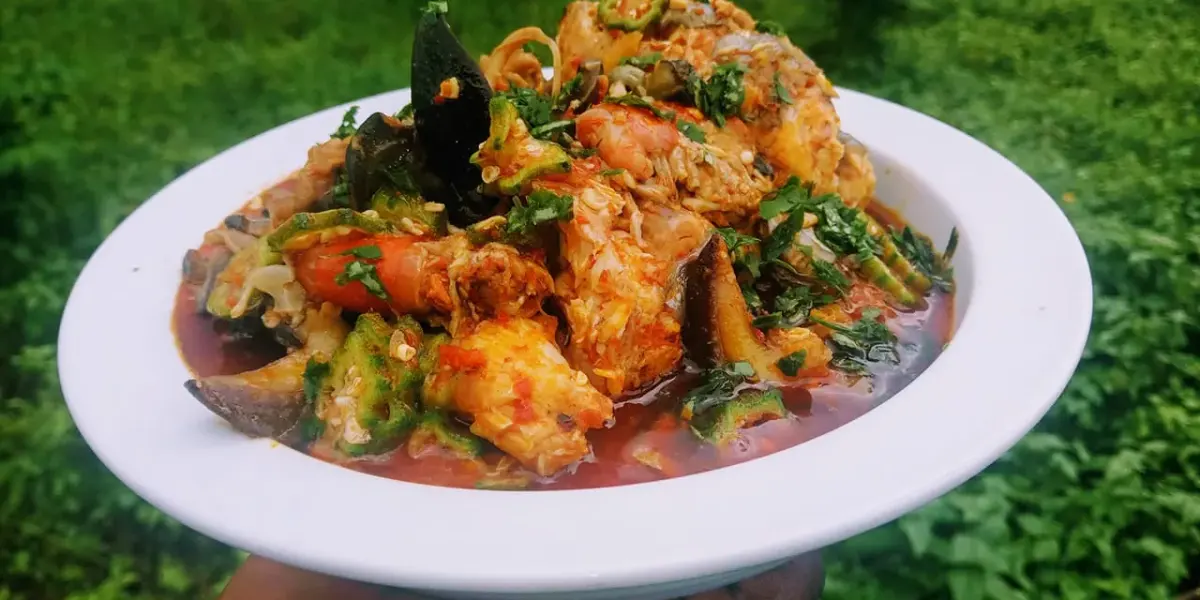
Couldn't find fresh cassava leaves in Cape Town so I sommer bought the frozen ones from the African shop in Woodstock. Added smoked turkey like you said. The garlic and ginger aroma in the palm oil while frying onions was brilliant my broer. Tasted just like my Liberian neighbor's pot.
1 cup of palm oil was a bit too much oil floating on top for me sha. Also 8 minutes cooking time for the cassava leaves after adding to the stew is too short, mine needed at least 20 minutes to lose that raw bitter taste even after thawing. Taste was okay after adjusting.
I made this yesterday night with smoked catfish and ground crayfish. The red palm oil gave it that rich color sha. Just make sure your scotch bonnet is well blended because mine was too spicy for my kids o. But e sweet well well!