
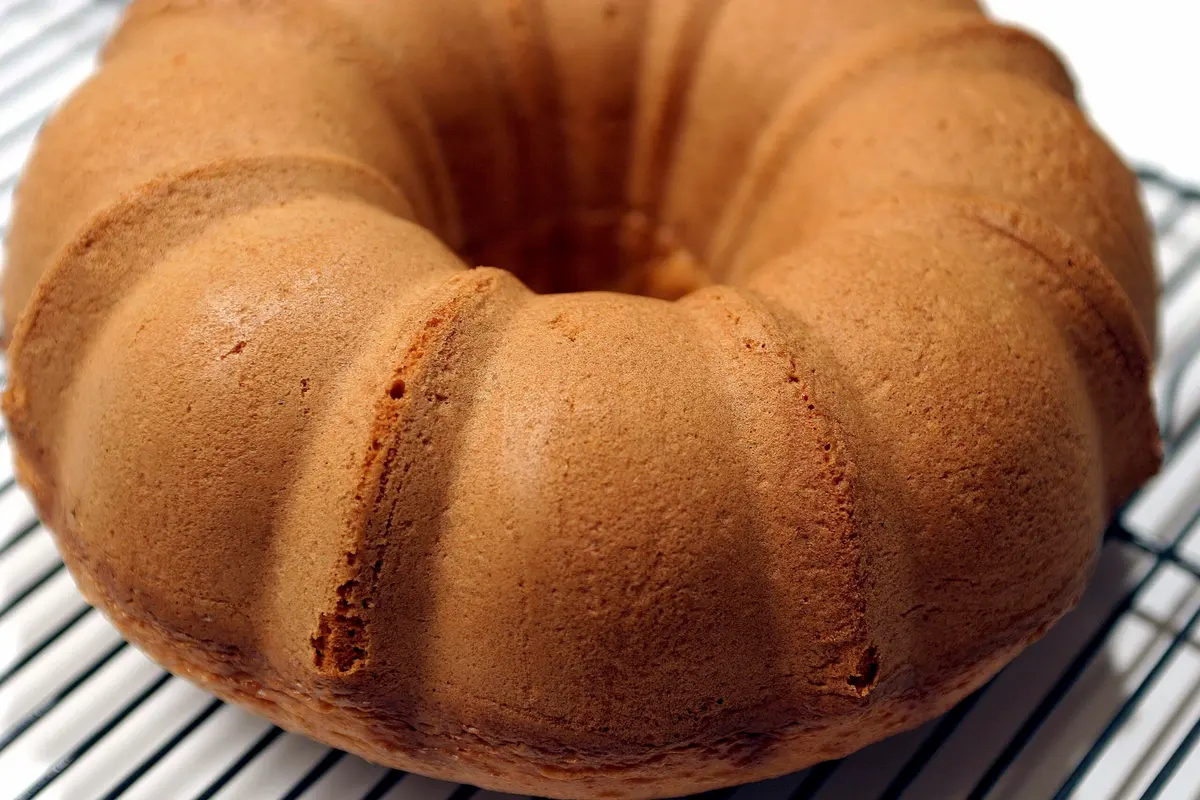
Mescouta (Moroccan Yoghurt Cake)
London, United Kingdom · Voir toutes les recettes
Aperçu
Meskouta is the everyday Moroccan cake, a plain, moist yoghurt cake scented with lemon, made constantly at home and served with mint tea. Its most charming feature is how it is measured. Many Moroccan households still bake by volume using whatever container is to hand, and meskouta is built around the empty yoghurt pot: one pot of yoghurt, then that same pot used to measure the oil, sugar and flour. No scales, no conversion, nothing to look up. It is why the cake is so often the first thing children are taught to bake, and why the recipe travels between families without ever being written down properly. The result is a simple, tender cake with a fine crumb, more like a pound cake than anything frosted. Lemon zest is standard, though lime works and is a common substitution. It is served plain, or with jam alongside to spread on the slice, which is the usual way at teatime. It is not a celebration cake and does not pretend to be, it is what is in the kitchen when someone calls round.
Note de Patrimoine AFN
Meskouta is a Moroccan yoghurt cake traditionally measured using the empty yoghurt container as the unit for oil, sugar and flour, a method that persists in Moroccan home baking and allows the recipe to be made without scales.
Ingrédients
Les mentions alimentaires sont fournies par les contributeurs à titre indicatif. Elles ne sont pas vérifiées par AFN et dépendent des produits que vous achetez. En cas d’allergie grave, vérifiez vous-même chaque ingrédient. Cuisine, allergies et votre propre jugement
Préparation
- 1
Preheat your oven to 350 F (180 C). Grease and flour a Bundt or small tube pan.
- 2
If desired, separate the eggs. In a large bowl, beat the egg whites with an electric mixer until stiff. Set aside. (This step is optional; you can add whole eggs in the next step if you prefer.)
- 3
In another large bowl, beat together by hand or with a mixer the yogurt (reserve the empty container to use as your measure), the vegetable oil, sugar and egg yolks (or whole eggs, if you chose not to separate the eggs).
- 4
Stir in the vanilla, flour, baking powder and salt; beat briskly by hand or with an electric mixer until smooth.
- 5
If you separated the eggs, gently fold the beaten egg whites into the cake batter, being careful to incorporate all of the whites evenly.
- 6
Pour the batter into the prepared cake and bake for 40 to 45 minutes, or until the cake tests done.
- 7
Allow the cake to cool in the pan for five to 10 minutes before inverting onto a plate. The cake may be served warm, but it will improve in flavor and texture as it sits. Allow it to cool completely before storing in an airtight container.
Notes de l’Africook
 Notes personnelles de Nympha Nzeribe
- Use the yoghurt pot as your measure if you want the traditional proportions, it is more reliable than converting.
- Zest the lemon rather than juicing it. The oils in the zest carry the flavour; juice mostly adds liquid.
- Do not overmix once the flour is in, or the crumb tightens.
- Test with a skewer. Yoghurt cakes hold moisture and can look done before they are.
Questions fréquentes
Why is it measured in yoghurt pots?
Because it works, and because Moroccan home baking has long been done by volume rather than weight. One small pot of yoghurt goes in, and the empty pot then measures the oil, sugar and flour. It removes the need for scales entirely and makes the recipe easy to pass on and easy for children to follow.
Can I use lime instead of lemon?
Yes, and it is a common substitution. Lime gives a sharper, more aromatic result. Orange zest also works. The citrus is there to lift what is otherwise a very plain cake, so any of them does the job.
What is it served with?
Usually just mint tea, and often with jam on the side to spread on the slice. It is teatime food rather than a dessert course, and it is deliberately plain, no icing, no filling. It also keeps well for a few days wrapped.
Avis
Soyez le premier à noter cette recette
Vous l’avez cuisinée ? Votre note aide la personne suivante à se décider.
Aucun avis sur cette recette pour le moment. Si vous l’avez cuisinée, le vôtre serait le premier.
Vous Aimerez Aussi
Voir toutes les recettes Morocco →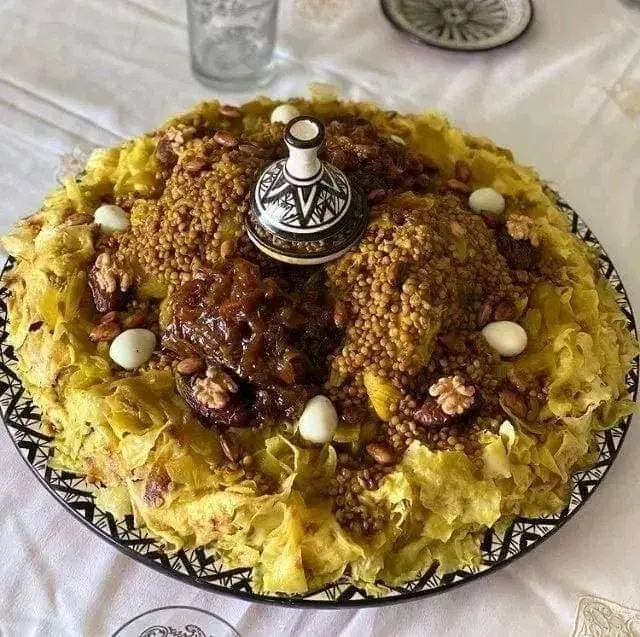
Moroccan Chicken Rfissa
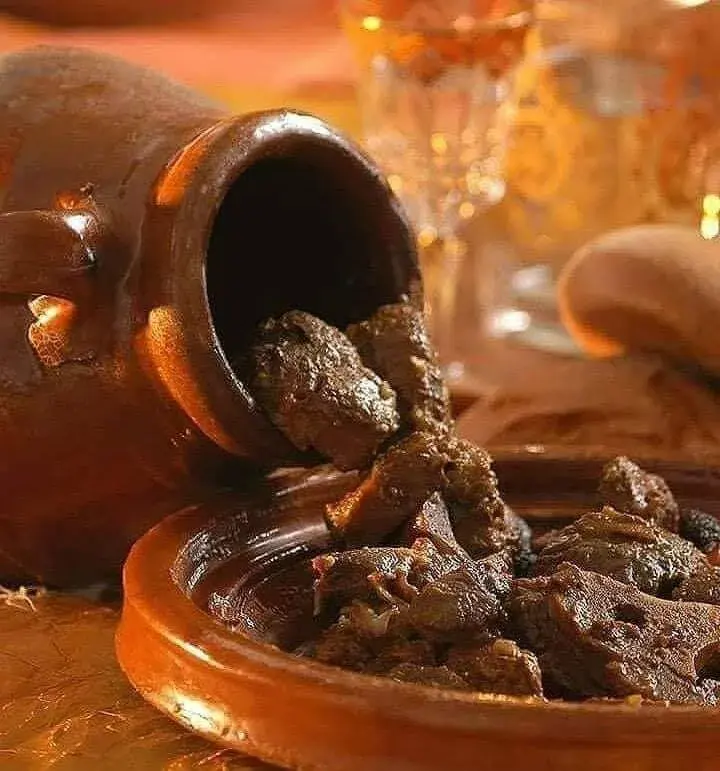
Tanjia Marrakchia
Chebakia (Moroccan Sesame Cookies)