
Boiled Chicken Thighs
Abuja, Nigeria · Voir toutes les recettes
Aperçu
Chicken thighs simmered in seasoned water until cooked through, served with lemon and parsley. The source presents it as a guide to timing rather than as a dish, and its title is phrased as a question, which is why the display title here is a plain one. The slug and URL are unchanged. The timing is the substance of it. Bone-in thighs take roughly half an hour or a little more over gentle heat; boneless thighs take rather less. What matters more than the clock is the internal temperature, and here the source is inconsistent: its prose gives the standard safe minimum for poultry while its method gives a higher figure. Both are safe, and thighs are often taken above the minimum because the extra heat breaks down more connective tissue and improves the texture. The technique worth noting is that the water should barely bubble. A hard rolling cook toughens the protein and makes the meat stringy; gentle heat keeps it tender. Aromatics in the water, garlic, onion, herbs, flavour both the chicken and the resulting stock, which is worth keeping. Boiled or poached chicken is used across African cooking as a first stage before frying or stewing rather than as a finished dish, which is a different role from the one here.
Ingrédients
Les mentions alimentaires sont fournies par les contributeurs à titre indicatif. Elles ne sont pas vérifiées par AFN et dépendent des produits que vous achetez. En cas d’allergie grave, vérifiez vous-même chaque ingrédient. Cuisine, allergies et votre propre jugement
Préparation
- 1
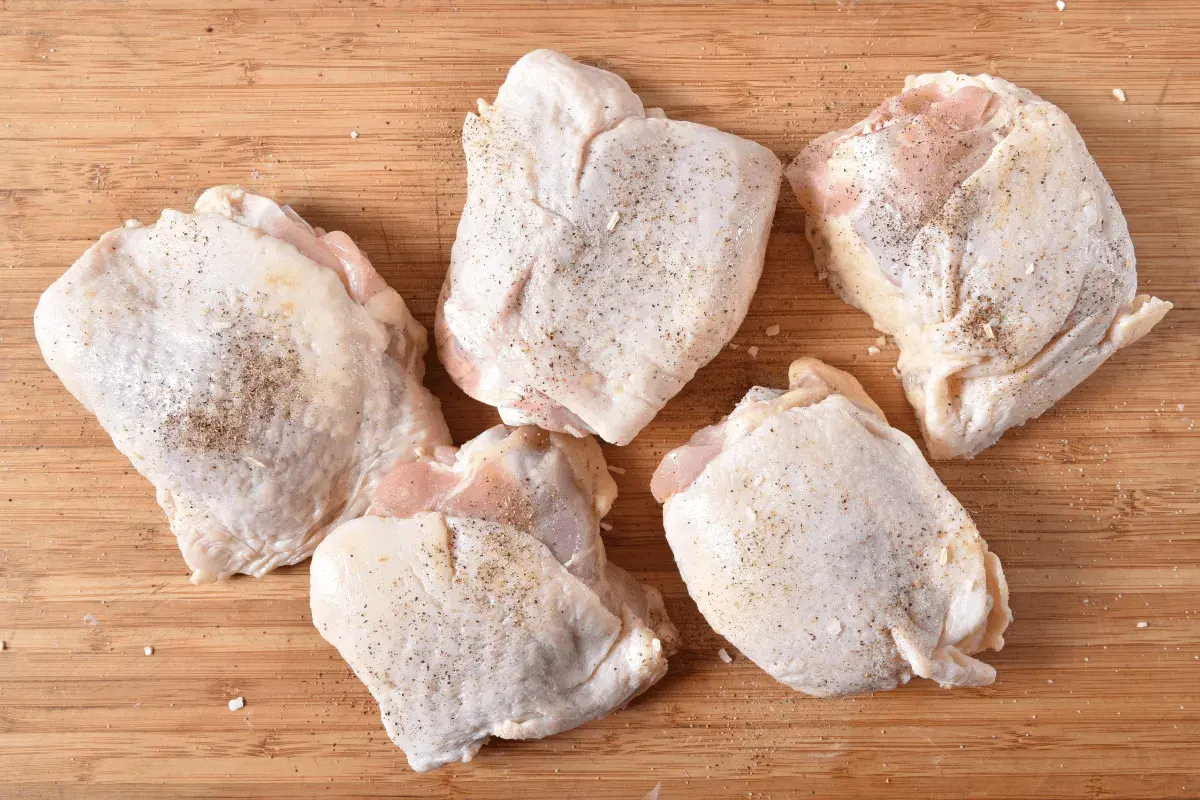
Pat the chicken thighs dry with paper towels and season them evenly on both sides with the salt, garlic powder and pepper.
- 2
Fill a large pot with enough water to cover the chicken completely and bring it to the boil over high heat.
- 3
Once boiling, use tongs to lower the thighs slowly into the pot. Reduce the heat to medium-low to maintain a gentle simmer.
- 4
Cover the pot and cook for 20 to 25 minutes, until the thighs reach a safe internal temperature.
- 5
Let the thighs rest for 5 minutes before serving.
- 6
Serve warm with lemon wedges and a garnish of fresh parsley.
Notes de l’Africook
 Notes personnelles de Deborah Olayiwola
- Simmer, do not boil. A hard boil toughens the meat and makes it stringy; a gentle simmer keeps it tender.
- Cook to temperature rather than to the clock. 74°C is the safe minimum for poultry; thighs are often taken a little higher, which improves the texture.
- Keep the cooking liquid. It is a light stock and is worth far more than the water it cost.
- Add garlic, onion or herbs to the water for extra flavour in both the chicken and the stock.
- Boneless thighs need 15 to 20 minutes rather than 30 to 40. Under pressure, boneless thighs take 8 to 10 minutes with a natural release.
- Refrigerate leftovers within two hours and reheat thoroughly before serving again.
Questions fréquentes
How long do chicken thighs take to boil?
Bone-in thighs take around 30 to 40 minutes at a gentle simmer; boneless thighs take 20 to 30. Size varies a good deal, so temperature is a more reliable guide than time. The juices should run clear and the meat should come away from the bone easily.
What internal temperature should they reach?
74°C, or 165°F, is the safe minimum for poultry. The source gives that figure in its prose and 175°F in its method; both are safe, and thighs are often taken a little above the minimum because the extra heat breaks down more connective tissue and gives a better texture than breast meat would.
Should the water boil or simmer?
Simmer. Bring the water to the boil first, lower the chicken in, then reduce the heat so it barely bubbles. A hard rolling boil agitates the meat and toughens the protein, giving stringy chicken. The gentler the cook, the more tender the result.
What can I do with the cooking liquid?
Keep it: it is a light chicken stock. Strain it and use it as the base for soup, for cooking rice, or in any stew. Adding aromatics such as garlic, onion, bay and peppercorns to the water at the start makes it considerably more useful.
Avis
Soyez le premier à noter cette recette
Vous l’avez cuisinée ? Votre note aide la personne suivante à se décider.
Aucun avis sur cette recette pour le moment. Si vous l’avez cuisinée, le vôtre serait le premier.