

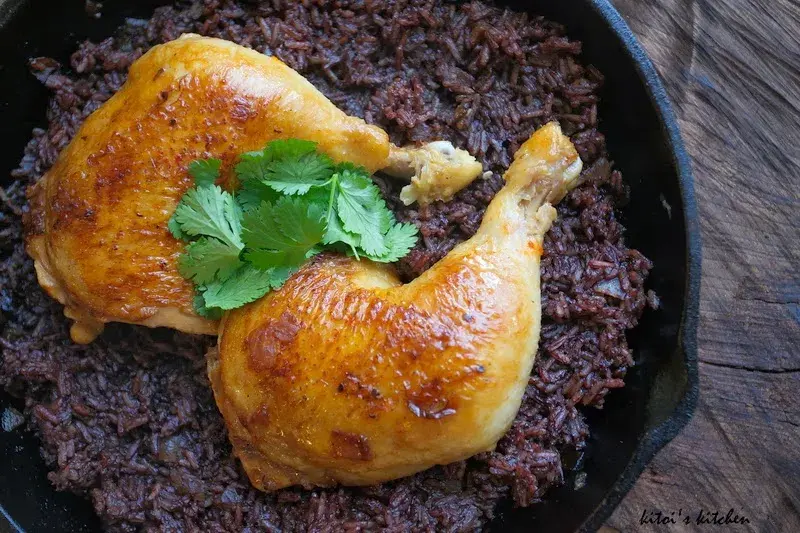
Cabidela (Chicken and Rice with Blood)
London, United Kingdom · Voir toutes les recettes
Aperçu
Arroz de cabidela is a Portuguese dish of chicken and rice finished with blood and vinegar, which turns the rice a deep reddish brown. It comes from the Minho region in the north of Portugal and has been recorded in writing there since the sixteenth century. The blood is the dish, and there is no way to make cabidela without it. Traditionally the bird's own blood is collected at slaughter and mixed immediately with vinegar, which stops it clotting; it goes into the pot at the very end, off the heat, because boiling it would make it grainy. This is a nose-to-tail practice found across many older food cultures, and Portugal is one of the places where it survives in a named, everyday dish rather than as a curiosity. Two notes about this version. It uses pig's blood rather than chicken blood, which is a common substitution outside a farm setting and is what is generally available. And the source names a specific brand of hot sauce, which has been described generically here. The dish is not African. It is filed under Worldwide Recipes with its URL unchanged. Portugal's colonial reach did carry cabidela to Angola, Mozambique, Cape Verde and Goa, where local versions exist, but the source describes the Portuguese original.
Note de Patrimoine AFN
Arroz de cabidela is a dish of the Minho region of northern Portugal, in which chicken and rice are finished with blood mixed with vinegar. It has been documented in Portuguese writing since the sixteenth century and versions exist across the former Portuguese colonial world.
Ingrédients
Les mentions alimentaires sont fournies par les contributeurs à titre indicatif. Elles ne sont pas vérifiées par AFN et dépendent des produits que vous achetez. En cas d’allergie grave, vérifiez vous-même chaque ingrédient. Cuisine, allergies et votre propre jugement
Préparation
- 1
Cook the rice in the water for 15 to 20 minutes, using a little more water if you prefer it softer.
- 2
Take the rice off the heat, then mix the blood and vinegar through it. Do this off the heat, blood cooked at a rolling boil turns grainy. Set aside.
- 3
Soften the onions and garlic in the lard in a large pan.
- 4
Put in the chicken and brown it well, then pour over the wine and hot sauce.
- 5
Cover and cook gently for about 30 minutes, or until the juices run clear.
- 6
Once the chicken is done, fold the rice and blood mixture through and cook for a further 5 to 10 minutes, just until heated through.
- 7
Taste for salt and adjust the hot sauce.
- 8
Scatter with coriander and serve. Traditionally the chicken is mixed into the blood and rice rather than served on top.
Notes de l’Africook
 Notes personnelles de Nympha Nzeribe
- Mix the vinegar into the blood immediately. It is what stops it clotting, and clotted blood cannot be worked into the rice smoothly.
- Keep the blood off direct heat. Boiled blood goes grainy and the sauce loses its silkiness entirely.
- Chicken blood is traditional but pig's blood is what is generally available and works the same way. Butchers will often order it.
- Do not skip the wine. It is doing acid and depth work that the vinegar alone cannot.
- Cook the chicken until the juices genuinely run clear before the rice goes in, since it will not cook much further afterwards.
- Eat it the day it is made. Blood-thickened dishes do not reheat well and the texture degrades noticeably.
Questions fréquentes
What does the blood do?
It thickens and colours the dish, turning the rice a deep reddish brown and giving it a rich, faintly metallic depth that nothing else reproduces. It is mixed with vinegar as soon as it is collected so that it does not clot, and it goes into the pot off the heat because boiling makes it grainy. Cabidela without blood is simply chicken and rice, the blood is what the dish is named for and built around.
Where is cabidela from?
The Minho region of northern Portugal, where it is documented in writing from the sixteenth century onwards. Cooking with blood is an old and widespread practice, found from British black pudding to Filipino dinuguan, and Portugal is one of the places where it survives in a named everyday dish. Portuguese colonial reach carried it to Angola, Mozambique, Cape Verde and Goa, where local versions are still cooked.
Can I use a different blood?
This recipe uses pig's blood, which is what most butchers can supply and is a normal substitution outside a farm setting. Chicken blood is the traditional choice and gives a slightly milder result. Duck blood is also used. Whichever you use, buy it fresh from a butcher, keep it cold, mix it with vinegar as soon as you get it home, and use it promptly, blood is highly perishable.
Is this an African dish?
No. It is Portuguese, from the Minho, and the page sits in Worldwide Recipes under European with its URL unchanged. It does have a genuine African connection through Portuguese colonisation, versions of cabidela are cooked in Angola, Mozambique and Cape Verde, sometimes under local names, but the recipe as given here is the Portuguese original, and that is how it has been filed.
Avis
Soyez le premier à noter cette recette
Vous l’avez cuisinée ? Votre note aide la personne suivante à se décider.
Aucun avis sur cette recette pour le moment. Si vous l’avez cuisinée, le vôtre serait le premier.
Vous Aimerez Aussi
Isombe
Tripe (Mogodu)
Garden Egg Stew (Earthenware Bowl Method)