
Baked Potato
London, United Kingdom · Voir toutes les recettes
Aperçu
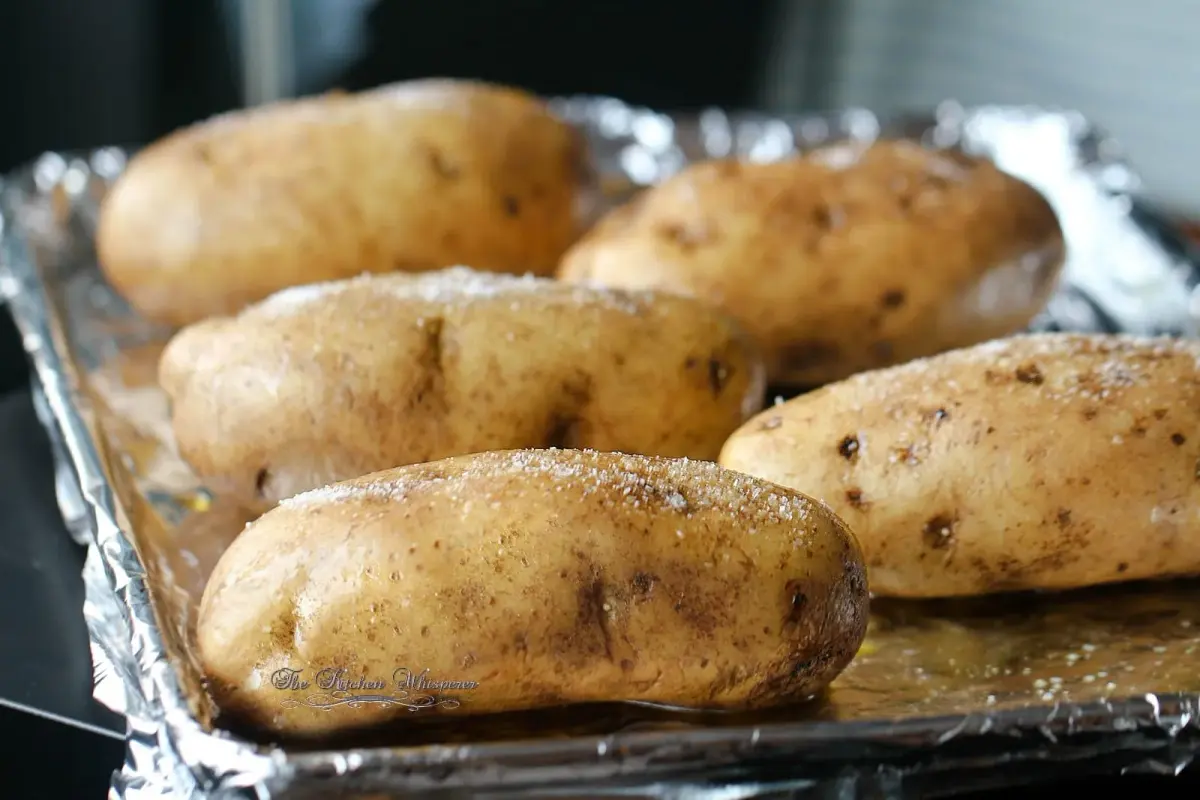
A whole potato baked in its skin, oiled and salted for a crisp surface, and served with whatever you like on it. There is no country attached to this and none is implied. Russet potatoes are what to use, and the reason is starch. Russets are high-starch, low-moisture potatoes, sometimes sold as baking or mealy potatoes, and that composition is what produces the light, flaky interior a baked potato is judged on. Waxy potatoes hold their moisture and stay dense. Two pieces of advice in the source are worth repeating because they are both right and both commonly ignored. Pierce the potato deeply several times on each side: skipping it can genuinely make a potato burst in the oven. And do not wrap it in foil. Foil traps the moisture inside, which means the potato steams rather than bakes, and steaming gives an entirely different and softer texture with no crisp skin at all. Africa has its own baked and roasted potato and tuber traditions, roasted yam, sweet potato and plantain sold from street braziers across the continent, but a russet baked potato is not one of them.
Ingrédients
Les mentions alimentaires sont fournies par les contributeurs à titre indicatif. Elles ne sont pas vérifiées par AFN et dépendent des produits que vous achetez. En cas d’allergie grave, vérifiez vous-même chaque ingrédient. Cuisine, allergies et votre propre jugement
Préparation
- 1
Adjust the oven rack to the middle position and preheat to your chosen temperature. Higher temperatures give a shorter cooking time and a crisper skin.
- 2
Rinse and scrub each potato under cold running water with a stiff brush, since you will be eating the skin. Do not soak them, and do not use hot water.
- 3
Dry each potato thoroughly with a clean towel.
- 4
Look the potatoes over and cut out any bruises or discoloured spots with the tip of a knife.
- 5
Pierce each potato deeply with a fork or sharp knife four times on each side, at roughly 2cm intervals, so steam can escape. Unpierced potatoes can burst.
- 6
For a crisp skin, rub the outside with oil or butter, then roll lightly in coarse salt.
- 7
Bake directly on the oven rack until tender.
- 8
Turn the potatoes over halfway through so the undersides do not brown against the rack.
- 9
Check for doneness rather than relying on the clock, and do not overcook, since the inside dries out.
Notes de l’Africook
 Notes personnelles de Nympha Nzeribe
- Do not wrap in foil. It traps moisture and steams the potato, which gives a soft skin and none of the flaky interior that makes a baked potato worth eating.
- Pierce it properly. This is a genuine safety point rather than a formality: an unpierced potato can burst in the oven.
- Use russets. High starch and low moisture is what gives the light, flaky inside; waxy potatoes stay dense.
- Dry the potato thoroughly after scrubbing. A wet skin will not crisp however much oil goes on it.
- Bake it alongside whatever else is in the oven and adjust the time to the temperature. Hotter oven, shorter time, crisper skin.
- Larger potatoes take considerably longer, so check with a skewer rather than assuming a fixed time.
Questions fréquentes
What potato is best for baking?
Russet potatoes, also sold as starchy, baking or mealy potatoes. Their high starch and low moisture content is what produces the light, flaky interior. Any potato can be baked, but waxy varieties hold their moisture and give a dense, close texture rather than a fluffy one.
Should I wrap it in foil?
No. Foil traps the moisture in the potato, so it steams rather than bakes. The result is a soft skin and a heavier interior, which is a different thing from a baked potato. The source is emphatic about this and it is right: skip the foil and save the expense.
Why do I need to pierce it?
Because steam builds up inside as it cooks and needs somewhere to go. An unpierced potato can genuinely burst in the oven, which makes a considerable mess. Four deep piercings on each side at about 2cm intervals is what the source recommends.
What temperature and how long?
It depends on the oven and the size of the potato, and the source deliberately leaves it open. Higher temperatures mean a shorter cook and a crisper skin. Around 200°C for an hour suits a medium potato. Check with a skewer rather than relying on timing.
Avis
Soyez le premier à noter cette recette
Vous l’avez cuisinée ? Votre note aide la personne suivante à se décider.
Aucun avis sur cette recette pour le moment. Si vous l’avez cuisinée, le vôtre serait le premier.
Vous Aimerez Aussi
Boeber (Cape Malay Sweet Milk Drink)
Mufete
Dombolo (Dumplings or Steamed Bread)