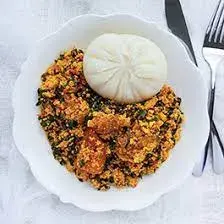

Egg Sauce
Overview
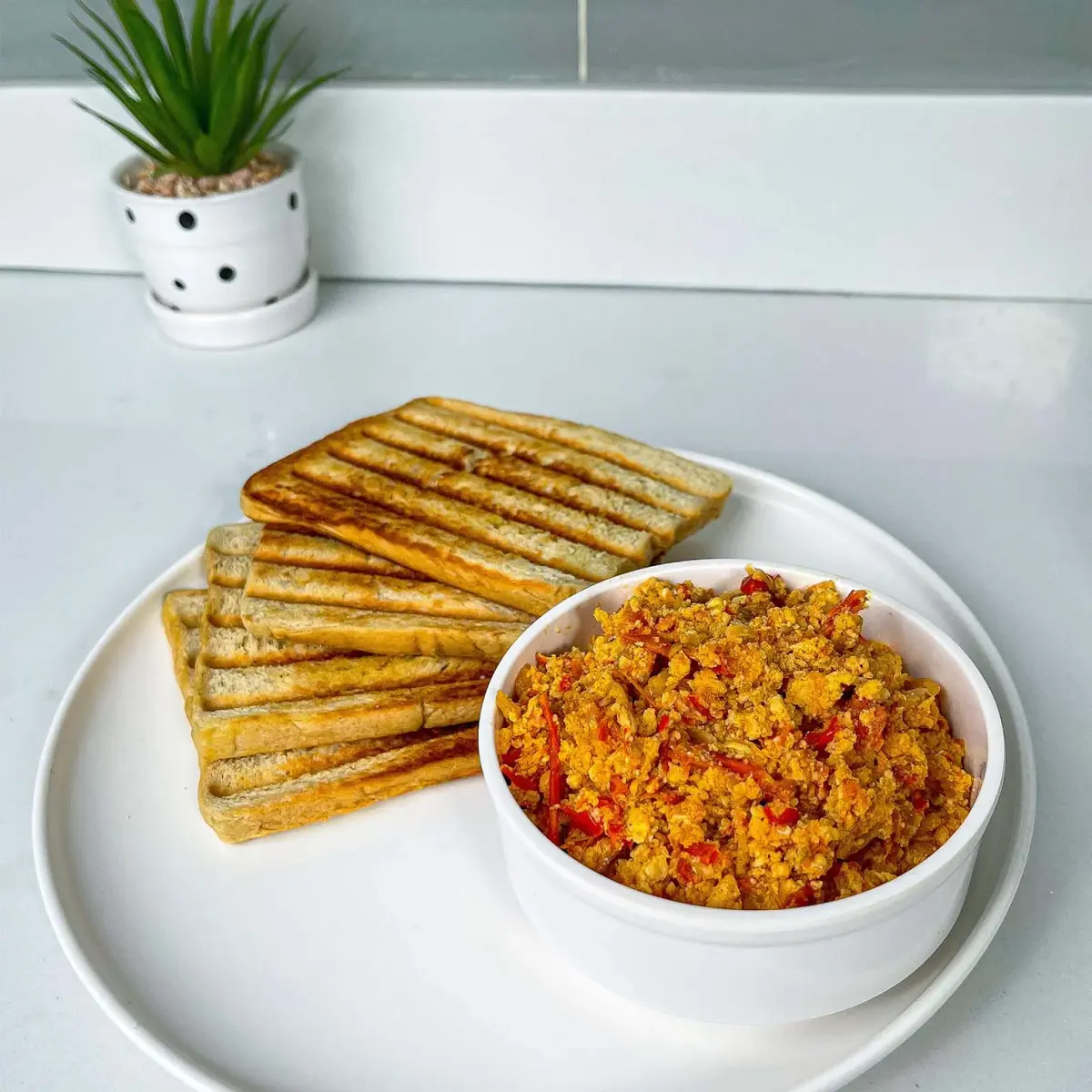
Egg sauce is a Nigerian breakfast staple: eggs cooked into a base of tomato, onion and scotch bonnet until scrambled through it. It is what plain yam is most often eaten with, and it is one of the fastest hot meals in the Nigerian repertoire. What separates it from an omelette or from scrambled eggs is that the tomato base comes first. Onion and pepper are softened, tomatoes cooked down until they release their juices and soften, the seasoning goes in, and only then do the beaten eggs. The eggs are stirred through so the whole thing becomes one sauce rather than eggs with sauce on top. Two ingredients in this version are worth noticing. Sesame oil in place of vegetable oil is unusual in a Nigerian kitchen and gives a distinctly nutty background, and curry powder alongside is a Nigerian habit rather than an Indian one. Both are the contributor's choices rather than the standard. Egg sauce is genuinely close to what is elsewhere called egg stew, and the two names are used for much the same dish across Nigeria and Ghana, with the difference usually being consistency rather than method.
AFN Heritage Note
Egg sauce is a Nigerian breakfast dish of eggs cooked into a tomato, onion and pepper base, conventionally served with boiled yam.
Ingredients
Dietary tags are provided by contributors as a guide, not verified by AFN, and they depend on the products you buy. If you have a serious allergy, check every ingredient yourself. Cooking, allergies and your own judgement
Directions
- 1
Crack the eggs into a bowl and beat them lightly.
- 2
Chop the onions, scotch bonnet peppers and tomatoes.
- 3
Heat the sesame oil in a large skillet over medium heat.
- 4
Add the chopped onions and scotch bonnet and sauté until the onions are translucent and the peppers softened, about 3 to 4 minutes.
- 5
Add the roughly chopped tomatoes and stir well to combine.
- 6
Sprinkle in the curry powder, ginger powder, garlic powder, seasoning cubes and salt, and stir to distribute evenly.
- 7
Let the tomatoes cook down until soft and releasing their juices.
- 8
Pour the beaten eggs into the skillet.
- 9
Stir gently to combine, and continue stirring occasionally until the eggs are fully cooked and scrambled through.
- 10
Take the skillet off the heat and serve hot with boiled yam, rice or bread.
Africook’s Notes
 Personal notes from Sobecooks
- Cook the tomatoes down properly before the eggs go in. An underdone tomato base tastes sharp and raw and the eggs will not fix it.
- Beat the eggs before they go in the pan. Cracked straight in they set unevenly into lumps.
- Take it off the heat while the eggs still look slightly underdone. They keep cooking in the hot pan and overcooked egg goes rubbery.
- Sesame oil is the contributor's choice and unusual here. Vegetable or palm oil is more standard and gives a plainer, more familiar result.
- Two scotch bonnets is genuinely hot. Reduce or deseed them if you want it milder.
- Boiled yam is the classic partner. Bread, rice and plantain all work.
Questions cooks ask
What is the difference between egg sauce and egg stew?
Very little, and the two names are used for much the same dish across Nigeria and Ghana. Where a distinction is made it is usually about consistency: a sauce is thicker and spooned over a starch, a stew looser. Both are eggs cooked into a tomato and pepper base rather than eggs served alongside one.
What is it served with?
Boiled yam above all, which is the classic Nigerian pairing and what most people would name first. Bread, rice, plantain and potatoes all work. It is a breakfast dish by convention but is eaten at any time, and it takes under fifteen minutes, which is much of its appeal.
Should the eggs be scrambled through or left in pieces?
Scrambled through, in this version: the eggs are stirred so the whole thing becomes one sauce. Left mostly undisturbed they set into curds through the tomato base, which is also made and is a matter of preference. Neither is wrong, and the second gives more texture.
Is sesame oil traditional?
No. Vegetable oil or palm oil is what a Nigerian kitchen would normally use, and sesame oil here is the contributor's own choice. It gives a distinctly nutty background that is not typical of the dish. Curry powder alongside, however, is entirely standard in Nigerian cooking.
Reviews
Be the first to rate this recipe
Cooked it? Your rating helps the next person decide whether to try it.
No reviews on this one yet. If you have cooked it, yours would be the first.
You Might Also Like
Browse all Nigerian recipes →
Edo Black Soup

Nigerian Fisherman Soup
Igbo Yam Porridge