
How to Make Awara (Tofu, Soyabean Cake)
Lagos, Nigeria · Voir toutes les recettes
Aperçu
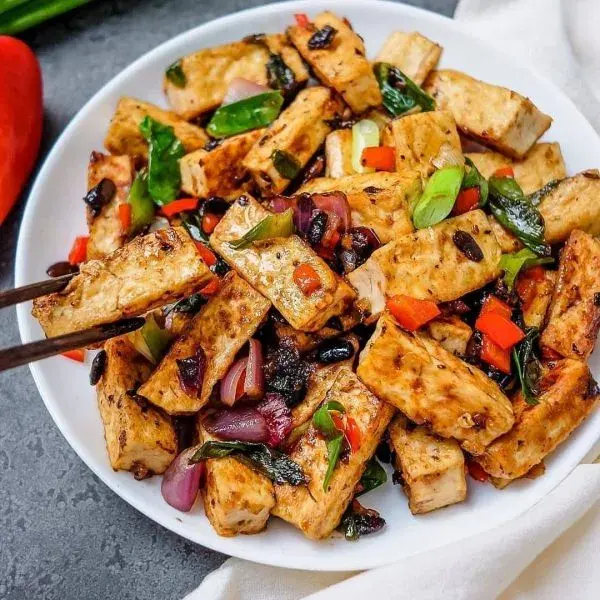
Awara is Northern Nigerian soy bean cake, and it is one of the clearest examples of an introduced crop becoming a genuinely local food. Soy beans are not indigenous to West Africa. Awara, as the Hausa make and eat it, is not found anywhere the crop came from. What separates awara from tofu is the frying. The process to the curd stage is the same: beans are soaked, ground, strained to a milk, heated, and set with an acid or a mineral coagulant, then pressed. Where East Asian tofu is usually finished at the press, awara is cut, seasoned and fried until the outside is golden and firm. That frying step is the dish, and it produces something with a texture and a flavour of its own. It is street food and snack food, sold ready made across the north because the process at home is long. Awara is served hot with ground pepper and oil, and increasingly with sliced fresh pepper, cabbage and cucumber alongside. It is eaten with pap or kunu at breakfast, and at any hour after that. It is also the north's most practical answer for anyone eating no meat, which is a role it has held far longer than the word vegetarian has been in common use in Nigeria.
Note de Patrimoine AFN
Awara is documented as a Hausa preparation of Northern Nigeria, where soy beans, introduced to West Africa as a commercial crop in the 20th century, are curdled and pressed in the manner of tofu and then fried. The frying stage distinguishes it from the East Asian preparations from which the curd technique derives.
Ingrédients
Les mentions alimentaires sont fournies par les contributeurs à titre indicatif. Elles ne sont pas vérifiées par AFN et dépendent des produits que vous achetez. En cas d’allergie grave, vérifiez vous-même chaque ingrédient. Cuisine, allergies et votre propre jugement
Préparation
- 1
Soak the soy beans overnight. Drain, then grind in a blender or food processor with about 3 cups of water.
- 2
Strain the ground beans through cheesecloth or a fine sieve.
- 3
Pour the strained milk into a large pot and boil over medium heat for 45 minutes to 1 hour, stirring frequently. Watch it closely, as the milk boils over easily.
- 4
Reduce the heat and add the lime or lemon juice without stirring. The curd should start to form. Turn off the heat, cover the pot and set aside for 1 hour.
- 5
Transfer the curds into a moulding container lined with cheesecloth.
- 6
Fold the cloth over the curds and place a small weight on top to press out the liquid.
- 7
Leave under the weight for 20 to 30 minutes, or until the block holds together. Remove the block from the mould.
- 8
Cut the awara into the shape you want. Mix your spices with a little water in a bowl, toss the awara to coat, and shallow fry until golden brown.
- 9
Make a sauce with the onions, pepper and vegetables, add the awara and mix. Serve hot.
Notes de l’Africook
 Notes personnelles de Jennifer Ezeokoli
- Do not stir after the coagulant goes in. Stirring breaks the curd as it forms and gives a crumbly block that will not hold together under the press.
- The amount of coagulant sets the texture. More gives a firmer awara, less a softer one, so adjust to what you want rather than following the quantity blindly.
- For a more fibrous, meatier texture, cover the pressed block in water in a sealed container and freeze it, then thaw before use. The ice crystals open up the structure.
- Magnesium chloride, apple cider vinegar, Epsom salt and calcium sulphate all work as coagulants in place of citrus.
- It does not keep. Awara is best eaten within 24 hours, and refrigeration extends it a few days at a real cost to the flavour. Make what you will eat.
Questions fréquentes
Is awara the same as tofu?
The curd is the same and the finished dish is not. Both are made by curdling soy milk and pressing the result, so awara is accurately translated as tofu. The difference is the last step: awara is seasoned and fried until golden, which gives it a firm crust and a savoury depth that plain pressed tofu does not have. In Northern Nigeria the frying is not optional, it is what makes it awara.
What can I use as a coagulant for awara?
Fresh lemon or lime juice is used here and is the most accessible. Magnesium chloride, sold as nigari, gives the cleanest flavour and firmest set. Apple cider vinegar, Epsom salt and calcium sulphate all work. The amount matters more than the choice: more coagulant gives a firmer block, less gives a softer one.
How is awara served in Northern Nigeria?
Hot, with ground pepper and oil, which is the standard treatment. Sliced fresh pepper, cabbage and cucumber are now commonly added alongside. It is eaten with pap or kunu at breakfast, and on its own as a snack at any point in the day. There is no fixed occasion for it.
How long does awara keep?
Not long. It is best within 24 hours of being made, which is why most people in the north buy it ready made rather than keeping it. Refrigerated it will last a few days but the flavour drops off noticeably. If you are storing it beyond a day, keep it covered in water in a sealed container.
Avis
Soyez le premier à noter cette recette
Vous l’avez cuisinée ? Votre note aide la personne suivante à se décider.
Aucun avis sur cette recette pour le moment. Si vous l’avez cuisinée, le vôtre serait le premier.
Vous Aimerez Aussi
Voir toutes les recettes Nigeria →
Edo Black Soup
Nigerian Fisherman Soup
Igbo Yam Porridge