
Red-Red Stew
Aperçu
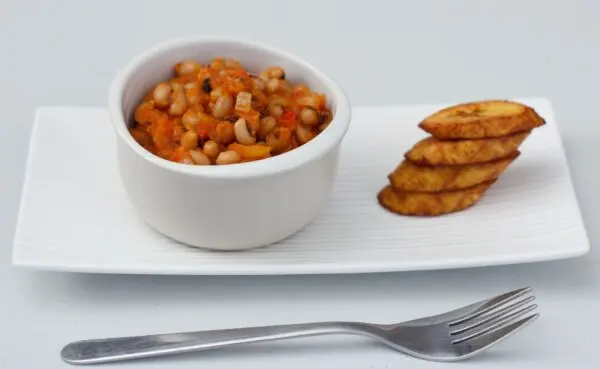
Red red is a Ghanaian black-eyed pea stew, and the name is a plain description of what it looks like. The beans are cooked in red palm oil, zomi, with tomato, and both give the dish the deep rust colour it is named for. It is usually vegetarian, which is worth noting because it is unusual among West African stews in being so by default rather than by adaptation. The beans carry it, and the palm oil provides the richness that meat would otherwise supply. Some households add fish or meat, but the standard version does not need it. Zomi is not interchangeable with ordinary red palm oil. It is palm oil that has been heated and infused, and it carries a deeper, slightly smoky flavour that is much of what makes red red taste Ghanaian rather than generically bean-stewed. The classic accompaniment is fried plantain, and the pairing is close to inseparable, the sweetness of ripe plantain against the savoury, oily beans is the whole balance of the meal. Gari is often served alongside too. It is cheap, filling and slow-cooked, and it is street food as much as home food across Ghana. Black-eyed peas are the usual bean, but the dish tolerates others without complaint.
Note de Patrimoine AFN
Red red is a Ghanaian stew of black-eyed peas cooked in red palm oil, taking its name from the colour imparted by the oil and tomato. Zomi, the infused palm oil traditionally used, contributes the flavour that distinguishes it from bean stews made with neutral oil.
Ingrédients
Les mentions alimentaires sont fournies par les contributeurs à titre indicatif. Elles ne sont pas vérifiées par AFN et dépendent des produits que vous achetez. En cas d’allergie grave, vérifiez vous-même chaque ingrédient. Cuisine, allergies et votre propre jugement
Préparation
- 1
Rinse dry black-eyed pea beans and pick through and discard any foreign object. (I did not have to do this because I used the package beans,). Add beans to a large pot covering with 3-4 inches of cold water.
- 2
Cover and let sit overnight or 6 to 8 hours.
- 3
Drain the soaked beans, rinse, and place the beans in a Dutch oven or pressure cooker. Follow instructions for cooking beans in your pressure cooker. It takes roughly between 8 to 12 minutes to cook. If not using a pressure cook, cook the beans for about 50- 60 mins or until tender.
- 4
Drain the cooked beans and set aside
- 5
If using canned beans you should start from here.
- 6
Heat oil (palm and canola) in large saucepan over medium heat until hot. Sauté the onions in the oil for 3-4 minutes, stirring often and scraping any browned bits off the bottom of the pot.
- 7
Add tomatoes, tomatoes paste , ginger, garlic, paprika and bouillon powder/ cubes. Cook while stirring for about 60 seconds.
- 8
Through in the Cray fish and let it simmer, for about 10-15 minutes, add water/ stock if needed to prevent burns. Continue to cook the sauce, stirring occasionally.
- 9
Finally add the beans, green onions and the remaining stock/water and bring to a boil and simmer for another 10-15 minutes.
- 10
Adjust for seasonings, and beans consistency with water and serve.
Notes de l’Africook
- Use zomi if you can find it. Ordinary palm oil works but the infused version is where much of the flavour lives.
- Cook the beans until genuinely soft before the tomato goes in. Acid slows bean cooking considerably.
- Do not salt the beans early, it toughens the skins and lengthens the cooking.
- Fried ripe plantain is not optional in practice. The sweetness against the savoury beans is the point of the meal.
- It thickens as it stands and is better the next day.
Questions fréquentes
Why is it called red red?
Because of the colour, twice over. The red palm oil and the tomato both contribute a deep rust-red, and the doubled name is a straightforward description of how the finished dish looks. It is one of the more literal dish names in West African cooking.
What is zomi?
Zomi is Ghanaian infused palm oil, red palm oil that has been heated and flavoured, giving it a deeper and slightly smoky character. It is not the same as plain red palm oil, and it is a significant part of why red red tastes the way it does. Plain palm oil is a workable substitute if zomi is unavailable.
Is red red vegetarian?
Usually yes, and by default rather than by adaptation, which is unusual among West African stews. The beans and palm oil carry it without needing meat. Some households add fish or meat, so it is worth asking if you are eating out, but the standard preparation is vegetarian and often vegan.
What is it served with?
Fried ripe plantain, almost always, the pairing is close to fixed, and the sweetness of the plantain against the savoury beans is what makes the meal work. Gari, the dried cassava granules, is commonly served alongside as well. Rice is possible but is not the traditional accompaniment.
Avis
Soyez le premier à noter cette recette
Vous l’avez cuisinée ? Votre note aide la personne suivante à se décider.
Aucun avis sur cette recette pour le moment. Si vous l’avez cuisinée, le vôtre serait le premier.
Vous Aimerez Aussi
Voir toutes les recettes Ghana →
Easy and Simple Way to Make Banku
Garden Egg Stew (Earthenware Bowl Method)
Kontomire Stew