
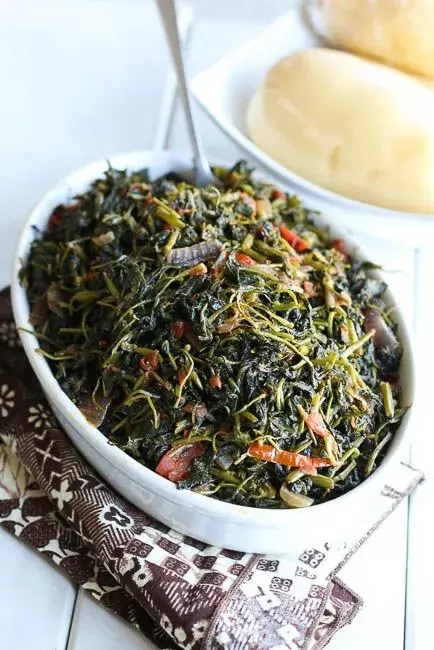
Njama Njama (Cameroonian Greens)
Abuja, Nigeria · Voir toutes les recettes
Aperçu
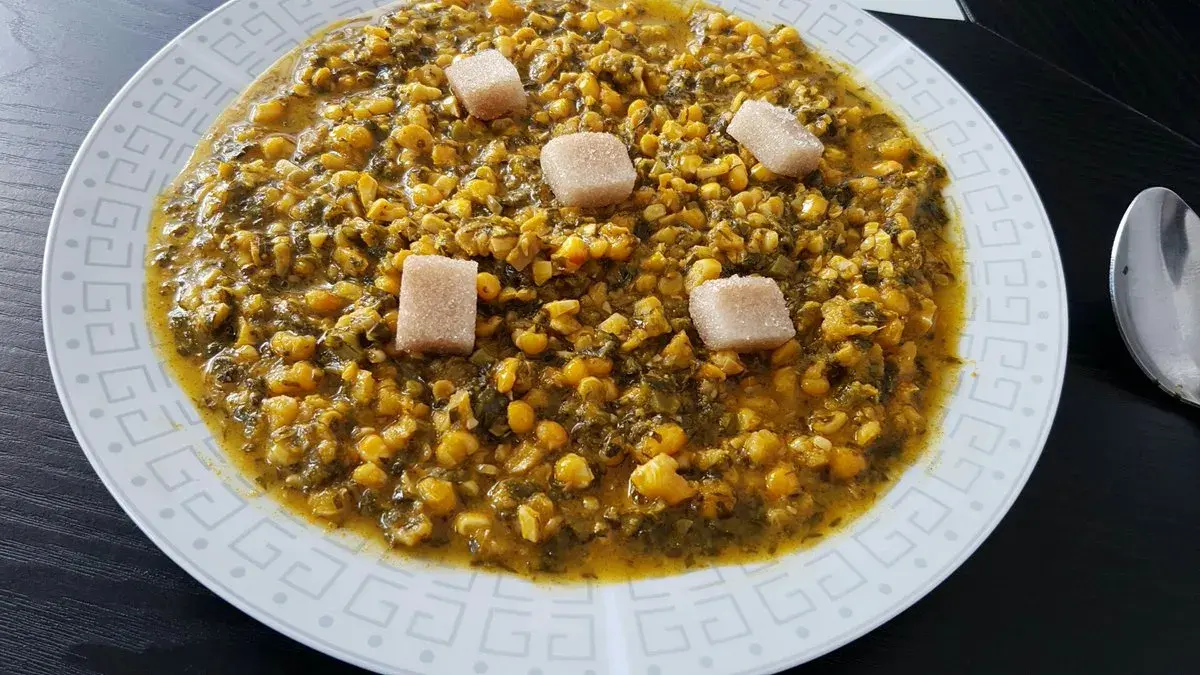
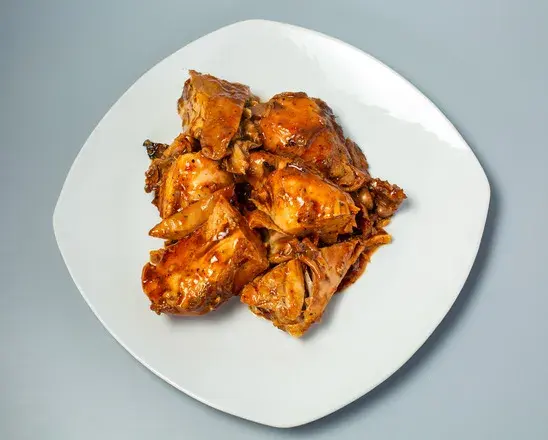
Njama njama is greens blanched, squeezed dry and then cooked through a tomato, onion and chilli base. It is one of the most eaten vegetable dishes in Cameroon, particularly in the North West Region, and it is usually served with corn fufu. The plant it is named after is African nightshade, *Solanum scabrum*, also called huckleberry, a leafy green grown across Cameroon and to a lesser extent Nigeria and Kenya. It is not the same as the toxic nightshades the name might suggest; the cultivated leaf is a staple vegetable and has been for a very long time. The source is honest about a substitution that most sources would hide, and it deserves credit for it: this recipe uses turnip greens rather than actual njama njama, because the real thing is hard to find outside Cameroon. Collard greens and watercress are named as alternatives. The result is a good dish but it is not, strictly, njama njama, and that has been flagged. The technique is worth taking seriously. Blanching, then an ice bath, then squeezing out as much water as possible, is what keeps the greens green and stops them watering down the tomato base. Four bunches of raw greens reduce to about three cups cooked. Khati khati, grilled chicken in tomato sauce, is the usual partner.
Note de Patrimoine AFN
Njama njama is the Cameroonian name for African nightshade, Solanum scabrum, a leafy green also called huckleberry, and for the dish made from it. It is a staple vegetable dish of the North West Region of Cameroon, usually served with corn fufu.
Ingrédients
Les mentions alimentaires sont fournies par les contributeurs à titre indicatif. Elles ne sont pas vérifiées par AFN et dépendent des produits que vous achetez. En cas d’allergie grave, vérifiez vous-même chaque ingrédient. Cuisine, allergies et votre propre jugement
Préparation
- 1
Rinse the greens thoroughly in cold water two or three times. Pull out the large tough veins and slice the leaves.
- 2
Bring a large pot of water to the boil, put in the greens and cook for 7 to 10 minutes, until just tender.
- 3
Transfer them straight into an ice bath. Once cool enough to handle, drain them in a colander and squeeze out as much water as you possibly can. Four bunches will give you about three cups. Set aside.
- 4
Put the onions and diced tomatoes into a large skillet and bring them to a gentle bubble over medium heat. Drop in the whole peppers, stalks attached. Cook, turning occasionally, until the tomatoes reduce into a chunky sauce, about 10 minutes.
- 5
Pour in the oil and fry for 3 to 5 minutes. Take the peppers out and set them aside. Season generously with salt, slightly over-season, since the greens will absorb it.
- 6
Mix in the greens and cook for another 4 to 5 minutes, or until they are as tender as you want them.
- 7
Adjust the seasoning and serve with the whole peppers on the side.
Notes de l’Africook
- Squeeze the greens really dry after blanching. Water left in them dilutes the tomato base and the dish goes watery.
- The ice bath is not optional if you want them green. It stops the cooking dead and locks in the colour.
- Leave the peppers whole with their stalks on. They flavour the sauce without releasing all their heat, and they lift out cleanly.
- Over-season the sauce slightly before the greens go in. The greens absorb a lot of salt.
- Roma tomatoes rather than cherry, fewer seeds, and they reduce into a chunky sauce rather than a watery one.
- Palm oil in place of the canola oil makes it noticeably more Cameroonian.
Questions fréquentes
What is njama njama?
The Cameroonian name for African nightshade, Solanum scabrum, a leafy green also known as huckleberry, grown across Cameroon and to a lesser extent Nigeria and Kenya. Despite the family name it is a cultivated food plant rather than one of the toxic nightshades, and it has been a staple leaf vegetable in the region for a very long time. The dish takes its name directly from the plant.
Is this recipe actually njama njama?
Not strictly, and the source says so, which is to its credit. It uses turnip greens because genuine njama njama is difficult to find outside Cameroon, and names collard greens and watercress as further alternatives. The result is a good dish cooked by the right method with the right seasoning, but the defining leaf is missing. African grocers occasionally stock frozen njama njama, which is the closest you will get.
Why blanch and squeeze the greens?
Two reasons. Blanching followed by an ice bath stops the cooking and locks in the colour, so the greens stay green rather than turning olive. And squeezing out the water, which is a substantial amount, stops them diluting the tomato base into something thin and watery when they go in. Four bunches of raw greens reduce to roughly three cups after this treatment.
What is it served with?
Corn fufu most classically, which is the North West Region pairing, or boiled or fried plantain. It is also commonly served with khati khati, spicy fire-grilled chicken in a tomato-based sauce, and the two together make a full meal. The greens are a side dish rather than a main course, though a substantial one, and they need a starch alongside.
Avis
Soyez le premier à noter cette recette
Vous l’avez cuisinée ? Votre note aide la personne suivante à se décider.
Aucun avis sur cette recette pour le moment. Si vous l’avez cuisinée, le vôtre serait le premier.