

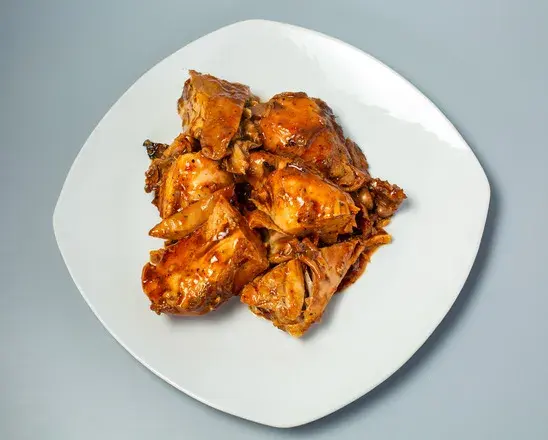
Kati Kati
Aperçu
Kati kati is grilled chicken finished in palm oil, and it belongs to the Nkom people of the Northwest region of Cameroon. It is one of the older and more distinctive dishes of that area, and the method is unusual: the chicken is charred over an open flame first, then simmered in palm oil with seasoning. Made traditionally it is stark. Freshly butchered chicken, salt and freshly ground pepper only, roasted over open fire until well coloured, then lightly simmered in palm oil with a stock cube. Everything else is a later addition. This version uses granulated garlic, onion powder and cayenne before grilling, which the contributor is clear is their own adjustment rather than the traditional preparation. The contributor also makes a point worth passing on: do not throw any part of the chicken away. Neck, gizzard, feet and back are, in their view, the best parts, and breast and thigh the least interesting. That is a common position across West and Central African cooking and it runs directly counter to how chicken is usually sold and eaten elsewhere. Rooster is recommended over hen for being lean and the most flavourful while still cooking through on the grill. It is served with corn fufu and njama njama, the huckleberry greens of the region.
Note de Patrimoine AFN
Kati kati is a dish of the Nkom people of the Northwest region of Cameroon, in which chicken is roasted over an open flame and then simmered in palm oil. It is conventionally served with corn fufu and njama njama.
Ingrédients
Les mentions alimentaires sont fournies par les contributeurs à titre indicatif. Elles ne sont pas vérifiées par AFN et dépendent des produits que vous achetez. En cas d’allergie grave, vérifiez vous-même chaque ingrédient. Cuisine, allergies et votre propre jugement
Préparation
- 1
Trim the chicken of excess fat and pat it dry with a cloth or paper napkin.
- 2
In a small bowl, combine the salt, onion powder, garlic powder, white pepper, cayenne and bouillon powder.
- 3
Season the chicken with the spice rub.
- 4
Preheat a hot barbecue, grill, griddle or frying pan.
- 5
Grill the chicken for about 20 to 30 minutes, turning, until browned and almost cooked through.
- 6
Blend the tomatoes and set aside.
- 7
Heat a large saucepan over medium heat, add the palm oil and the tomato purée, and sauté for 4 to 5 minutes, stirring occasionally.
- 8
Transfer the chicken to the saucepan and bring to a simmer over low heat, spooning the sauce over to coat.
- 9
Add about half to one cup of water, cover and cook until the chicken has taken on the sauce and is cooked through, 4 to 5 minutes.
- 10
Adjust the seasoning and oil, remove from the heat and serve warm with fufu and njama njama.
Notes de l’Africook
- Char the chicken properly on the grill. The dish is built on that burnt edge, and pale grilled chicken gives a much flatter result.
- Use every part of the bird. Neck, gizzard, feet and back are, in the contributor's view, the best of it, and this is a common position in Cameroonian cooking.
- Rooster is recommended over hen: lean, the most flavourful of the three, and unlike hen it will cook through on the grill.
- The traditional version uses only salt and pepper before grilling. The garlic, onion powder and cayenne here are the contributor's own addition.
- If you would rather not use palm oil, skip it and serve the grilled chicken with a starchy side. The contributor offers this directly.
- Njama njama, the huckleberry greens of northwest Cameroon, is the traditional accompaniment along with corn fufu.
Questions fréquentes
What does kati kati mean and where is it from?
It is a dish of the Nkom people of the Northwest region of Cameroon, sometimes described in English as African grilled chicken. It is among the older and more distinctive dishes of that region, and its defining feature is chicken charred over open flame and then finished in palm oil.
Why grill the chicken before simmering it?
Because the char is the flavour. Roasting over open flame first gives a smoky, slightly burnt exterior that the palm oil simmer then carries through the whole dish. Simmering raw chicken in palm oil gives a perfectly good stew, but it is not kati kati.
What is njama njama?
Njama njama is the huckleberry green eaten across northwest Cameroon, cooked down with onion and palm oil as a side dish. It is the traditional accompaniment to kati kati along with corn fufu. Spinach or collard greens are the nearest substitutes outside the region.
Can I make it without palm oil?
Yes, and the contributor says so directly. Grill the chicken with its rub and serve it with a starchy side, and it is still a good dish. What you lose is the colour and the particular sweetness palm oil gives, which is a substantial part of what makes kati kati distinctive.
Avis
2 avis
finding good palm oil here in Berlin was a hassle until I checked the afroshop in Wedding, but this came out so good. Since I cant grill with charcoal inside my flat i just used a heavy griddle pan on high heat to brown the chicken skin first. The white pepper fragrance brought back memories o.
That white pepper and cayenne rub gave the chicken serious heat. I grilled mine over charcoal outdoors before tossing with the tomatoes and palm oil, e sweet no be small. Tastes just like the one my Cameroonian neighbour in Calabar used to make o.