
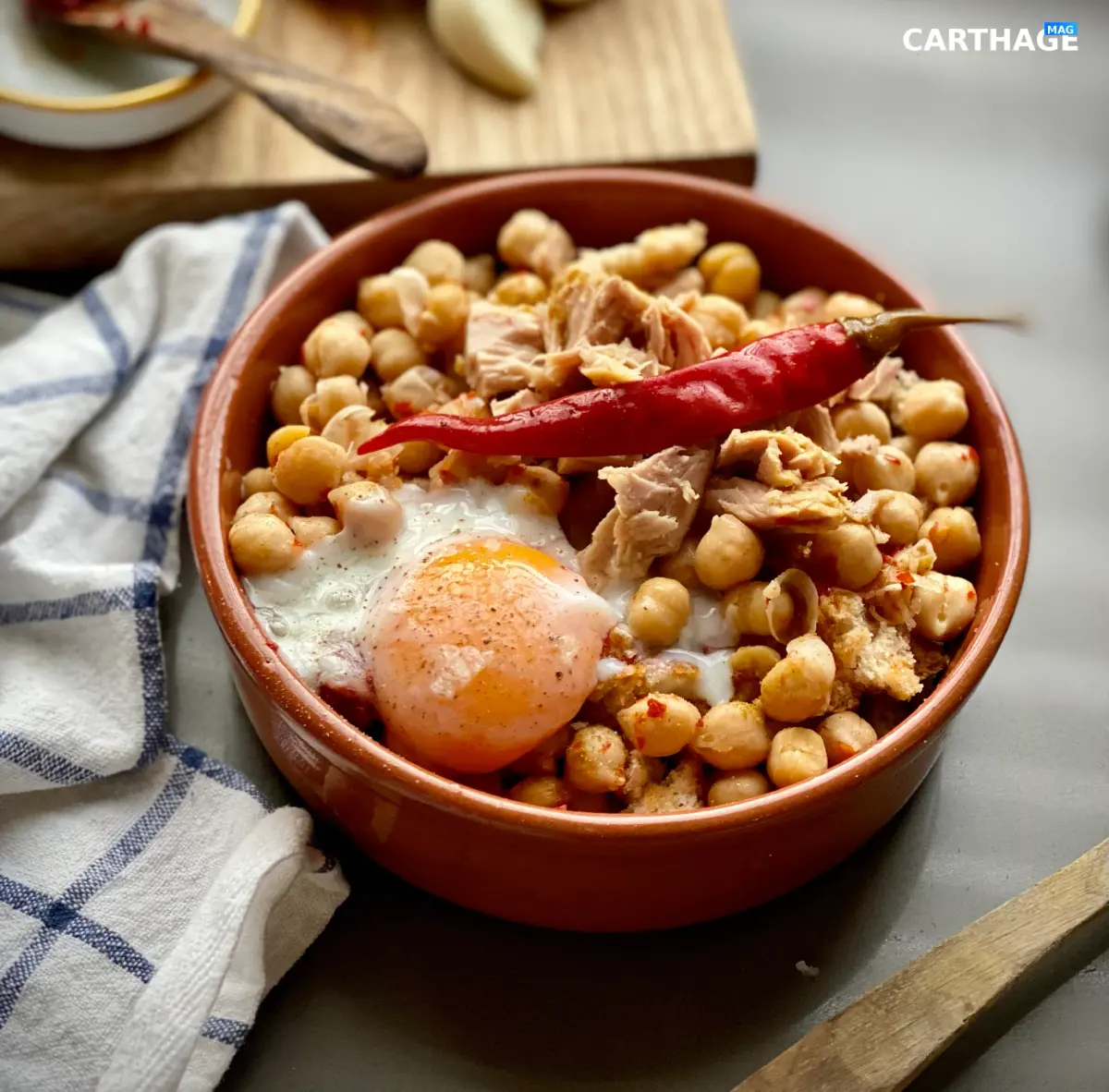
Lablabi (Tunisian Chickpea Soup)
Abuja, Nigeria · Voir toutes les recettes
Aperçu
Lablabi is Tunisia's chickpea breakfast: a thin, heavily spiced chickpea broth ladled over torn stale bread, finished with a soft egg, tuna, olives, harissa, cumin, lemon and olive oil. It is served in casual counter-service places across the country and eaten with two spoons, mashing the bread down into the broth as you go. It is frugal food by design. Stale bread and dried chickpeas are the base, and everything else is a topping. The broth is not thickened or enriched, the flavour comes from cooking the chickpeas slowly in their own water with cumin, caraway and harissa, and that cooking liquid is the dish. This is the reason the source insists on dried chickpeas rather than tinned: the broth is a by-product you cannot buy. If you do use tinned chickpeas, stock in place of water is the compensation. The name travels. There is an Assyrian chickpea dish also called lablabi, an Iraqi version finished with lemon juice, and the Turkish nohut çorbası, which is made with lamb. The Tunisian one is distinguished by harissa and by the bread at the bottom of the bowl. Traditionally it is breakfast, eaten to start a cold morning. It is now eaten at any hour, and the modern habit of piling on colourful toppings has made it considerably more photogenic than it used to be.
Note de Patrimoine AFN
Lablabi is a Tunisian chickpea soup traditionally eaten at breakfast, served over pieces of stale bread and topped with egg, tuna, olives and harissa. Related chickpea dishes carrying the same or a similar name are found in Assyrian, Iraqi and Turkish cooking.
Ingrédients
Les mentions alimentaires sont fournies par les contributeurs à titre indicatif. Elles ne sont pas vérifiées par AFN et dépendent des produits que vous achetez. En cas d’allergie grave, vérifiez vous-même chaque ingrédient. Cuisine, allergies et votre propre jugement
Préparation
- 1
Put the dried chickpeas in a large bowl with plenty of water and a tablespoon of salt. Cover with a cloth and leave overnight.
- 2
After about 24 hours the chickpeas should be fully swollen, with a thin layer of foam on top. Rinse them well. Keep back what you need and freeze the rest.
- 3
Transfer the soaked chickpeas to a pot, cover generously with fresh water and bring to the boil. Cover, lower the heat and cook gently for an hour or more, until very soft. Season the cooking water with cumin, caraway, harissa and salt as it cooks, this broth is the dish, not a by-product.
- 4
Tear the stale bread into small pieces and put a handful into each serving bowl.
- 5
Cook the eggs to your preference. Poaching them directly in the chickpea pot works well and flavours them; otherwise cook them separately.
- 6
Ladle the chickpeas and plenty of their broth over the bread.
- 7
Top each bowl with the egg, the olive oil-preserved tuna, olives and as much harissa as you want.
- 8
Finish with cumin, lemon juice, black pepper, salt and a good pour of extra virgin olive oil. Mix it all together with two spoons and eat while hot.
Notes de l’Africook
- Use dried chickpeas. The cooking liquid is the soup, and tinned chickpeas give you no broth worth eating. If you must use tinned, replace the water with a well-seasoned stock.
- Buy the bread a day ahead, or tear fresh bread into the bowl a few hours before so it dries out. Fresh soft bread dissolves into mush.
- Season the chickpeas while they cook rather than at the end. The broth needs the time to take on the cumin and caraway.
- Cook eggs thoroughly if you are serving anyone pregnant, very young, elderly or unwell, soft yolks carry a salmonella risk.
- Harissa varies enormously in heat between brands. Start with less than you think and add at the table.
- Cooked chickpeas freeze well, so cook the whole batch and freeze what you do not need.
Questions fréquentes
Why does the recipe insist on dried chickpeas?
Because the broth is the dish. Cooking dried chickpeas slowly produces a starchy, faintly sweet liquid that carries the cumin, caraway and harissa, and it is what you are actually eating once the bread has soaked it up. Tinned chickpeas come with brine, not broth. You can still make a decent bowl with them by using a well-seasoned stock in place of the water, but the character is different.
What kind of bread should I use?
Stale bread, and preferably a firm crusty loaf, a French-style baguette or a country loaf. The bread has to hold its shape long enough to soak up the broth without disintegrating, which is exactly what stale bread does and fresh bread does not. Buying it the day before is the traditional approach; tearing fresh bread into the bowl several hours ahead achieves much the same thing.
Is the egg raw?
Not raw, but often only lightly cooked. The traditional bowl carries an egg poached in the chickpea broth or boiled for around three minutes, which leaves the yolk soft and runny. A soft yolk carries a small salmonella risk, so cook the eggs through if you are serving anyone pregnant, very young, elderly or with a weakened immune system. The dish works perfectly well with a firm yolk.
Is lablabi only eaten at breakfast?
It began as breakfast and is still strongly associated with it, particularly on cold mornings, but it is now eaten throughout the day and is found in casual restaurants across Tunisia at any hour. It is substantial enough to be a meal on its own. Similar chickpea dishes appear under related names in Assyrian, Iraqi and Turkish cooking, though the harissa and the bread base are what mark out the Tunisian version.
Avis
Soyez le premier à noter cette recette
Vous l’avez cuisinée ? Votre note aide la personne suivante à se décider.
Aucun avis sur cette recette pour le moment. Si vous l’avez cuisinée, le vôtre serait le premier.