

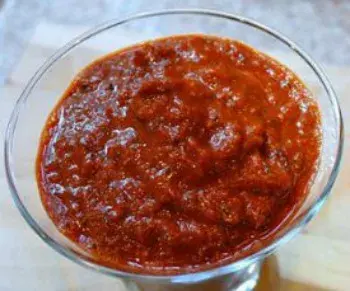
African Pepper Sauce
Abuja, Nigeria · Voir toutes les recettes
Aperçu
Pepper sauce is the West African condiment: blended hot pepper cooked down in oil or water until thick, spooned onto anything that needs lifting. It goes with puff puff, grilled meat, fish and eggs, and there is scarcely a dish it is not served alongside somewhere in the region. What distinguishes it from a hot sauce elsewhere is what it does not have. There is no vinegar, no fermentation and usually no sugar. The base is pepper, salt, oil and often a stock cube, and the texture is thick and coarse rather than pourable. Recipes vary with the cook, but hot pepper is the constant, and habanero and scotch bonnet are the usual choices. Heat is adjustable and worth adjusting. Most West African pepper sauces are fierce, and this one uses three habaneros against four bell peppers, which is moderate by regional standards. Deseeding the habaneros, using fewer, or leaving them out entirely all work. The other choice is water or oil: water reduces away and gives a lighter sauce that keeps about a week; oil floats to the top when the sauce is done and seals it, which keeps it considerably longer. No country is named, and the sauce belongs to the whole region rather than to one.
Note de Patrimoine AFN
Pepper sauce is a West African condiment of blended hot pepper cooked down in oil or water, served with puff puff, grilled meat, fish and eggs across the region.
Ingrédients
Les mentions alimentaires sont fournies par les contributeurs à titre indicatif. Elles ne sont pas vérifiées par AFN et dépendent des produits que vous achetez. En cas d’allergie grave, vérifiez vous-même chaque ingrédient. Cuisine, allergies et votre propre jugement
Préparation
- 1
Remove the stems and seeds from the bell peppers and chop them into quarters.
- 2
Remove the stems from the habanero peppers.
- 3
Put them in a blender or food processor with the tomatoes, half an onion, and either half a cup of water or oil depending on the sauce you want.
- 4
Blend or pulse to the consistency you want. Traditionally the sauce is a little coarse, so pulse for about a minute rather than blending smooth.
- 5
Transfer to a medium pot and simmer over a low to medium flame for about 20 to 30 minutes.
- 6
If you used oil, it will float to the top when the sauce is done. If you used water, the sauce will reduce by half.
- 7
Turn off the heat once the water has evaporated and the top starts forming large bubbles that pop.
- 8
Store in an airtight container in the fridge and use within a week, or top with oil to keep it longer.
Notes de l’Africook
- Pulse rather than blend. The sauce is meant to be a little coarse, and a smooth purée is a different thing.
- Oil or water is a real choice. Water gives a lighter sauce that keeps about a week; oil floats to the top when done and seals the sauce, which keeps it much longer.
- Watch for the large bubbles that pop. That is the sign the water has gone and the sauce is ready.
- Deseed the habaneros or use fewer to bring the heat down. Three in this quantity is moderate by West African standards and still hot.
- Keeping it unseasoned makes it more versatile: season it when you cook with it, to suit whatever you are making.
- Top the stored sauce with a layer of oil so it has no contact with air, and always use a clean dry spoon.
Questions fréquentes
What is the difference between pepper sauce and hot sauce?
Pepper sauce has no vinegar, no fermentation and usually no sugar. It is blended fresh pepper cooked down in oil or water with salt, and it is thick and coarse rather than pourable. Most Western hot sauces are vinegar-based and thin, which makes them sharp where pepper sauce is rich.
How hot is it and can I reduce the heat?
Three habaneros against four bell peppers is moderate by West African standards and still genuinely hot. To bring it down, take the seeds and membrane out of the habaneros, use fewer, or leave them out entirely and rely on the bell peppers, which gives a sweet red pepper sauce.
Should I use oil or water?
Both are made and they give different sauces. Water reduces away entirely, leaving a lighter sauce that keeps about a week refrigerated. Oil stays in and rises to the surface when the sauce is cooked, which seals it from air and keeps it considerably longer.
What is it served with?
Puff puff, grilled meat, fish and eggs are the standard partners in West Africa, and it goes with rice, yam, plantain and beans equally well. It functions as an all-purpose condiment rather than a sauce for one dish, which is why it appears on so many tables.
Avis
Soyez le premier à noter cette recette
Vous l’avez cuisinée ? Votre note aide la personne suivante à se décider.
Aucun avis sur cette recette pour le moment. Si vous l’avez cuisinée, le vôtre serait le premier.
Vous Aimerez Aussi
Isombe
Tripe (Mogodu)
Garden Egg Stew (Earthenware Bowl Method)