
Sfenj (Moroccan Doughnuts)
London, United Kingdom · Voir toutes les recettes
Aperçu
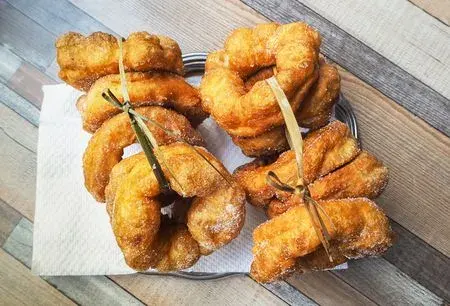
Sfenj are Moroccan doughnuts made from a very wet yeasted dough, shaped into rings by hand and deep-fried. They are crisp outside, chewy inside, and sold hot from street stalls across the country. The dough is the whole difficulty and the whole point. It is deliberately too sticky to knead or roll, closer to a thick batter than a bread dough, and that high hydration is what produces the light, chewy, open interior. Working it with dry hands is impossible, which is why the method has you keep a bowl of water beside you and wet your hands before touching it. Adding flour to make it manageable would be the obvious mistake and would give you a dense, ordinary doughnut. The street version is worth picturing. Vendors lift the finished sfenj from the oil with skewers and thread them onto a ribbon of palm leaf so customers can carry several at once. Some ask for them flattened and returned to the oil for a second fry, which makes them crisper still. Timing matters more than most fried things. Sfenj are eaten hot; cold, they go tough and lose the contrast entirely. The source's stated oil temperature is worth following, it is more specific than most.
Note de Patrimoine AFN
Sfenj are Moroccan doughnuts made from an unkneaded, high-hydration yeasted dough, shaped into rings and deep-fried. They are sold hot by street vendors, who thread them onto ribbons of palm leaf, and are eaten plain or dusted with sugar.
Ingrédients
Les mentions alimentaires sont fournies par les contributeurs à titre indicatif. Elles ne sont pas vérifiées par AFN et dépendent des produits que vous achetez. En cas d’allergie grave, vérifiez vous-même chaque ingrédient. Cuisine, allergies et votre propre jugement
Préparation
- 1
Dissolve the yeast in 1/4 cup of the warm water in a small bowl and leave it to proof for 10 to 15 minutes.
- 2
Combine the flour with the salt and the remaining cup of warm water in a large bowl. Work in the yeast mixture and beat vigorously with your hand or a heavy wooden spoon until smooth. The dough should be far too sticky to knead or shape, almost a thick batter. Do not add flour to make it manageable.
- 3
Cover the bowl with a towel and leave the dough to rise for 3 to 4 hours, until doubled or tripled in bulk.
- 4
Heat 2 to 3 inches of vegetable oil in a wide, deep pot over medium heat to 365°F / 185°C.
- 5
Set out a bowl of water. Dip your hands in it, pull off a piece of dough about the size of a small plum, make a hole in it with your fingers, stretch the hole wide into a ring, and lower it into the hot oil.
- 6
Repeat until the pot is comfortably full without crowding, wetting your hands as often as you need so the dough does not stick to them.
- 7
Fry until golden brown, turning once or twice.
- 8
Lift the sfenj onto a plate lined with kitchen paper to drain, and repeat until the dough is used up.
- 9
Dip the hot sfenj in granulated sugar or dust with icing sugar if you like.
- 10
Serve hot or warm, they lose their texture entirely once cold.
Notes de l’Africook
 Notes personnelles de Nympha Nzeribe
- Do not add flour to make the dough workable. The stickiness is the recipe, and flouring it gives you a dense, ordinary doughnut.
- Keep a bowl of water beside you and wet your hands constantly. It is the only way to handle dough this wet.
- Use a thermometer. 365°F is the source's figure and it is a good one, too cool and they soak up oil, too hot and the outside burns.
- Let the oil come back up to temperature between batches. It drops sharply each time dough goes in.
- Eat them hot. Cold sfenj are tough and lose the crisp-outside, chewy-inside contrast that makes them worth making.
- Flattening a fried sfenj and returning it to the oil briefly gives an extra-crisp version, which is a genuine Moroccan street request.
Questions fréquentes
Why is the dough so sticky?
Because it is deliberately very high in water, closer to a thick batter than a bread dough, and that hydration is what gives sfenj their light, open, chewy interior. It is too wet to knead or roll, which is why the method has you wet your hands and shape each ring directly from the bowl. Adding flour until the dough behaves is the obvious instinct and it produces a dense, ordinary doughnut instead.
How are sfenj eaten in Morocco?
Hot from the stall, usually plain. Vendors lift them from the oil with skewers and thread several onto a ribbon of palm leaf so customers can carry them home, which is a distinctive sight in Moroccan medinas. They are eaten for breakfast or as an afternoon snack with mint tea. Some customers ask for them flattened and returned to the oil for a second frying, which makes them crisper.
What temperature should the oil be?
365°F, or about 185°C, the source is unusually specific and the figure is a good one. Below that the dough absorbs oil and the sfenj come out heavy and greasy; above it the outside browns before the wet interior has cooked. The oil temperature drops sharply each time dough goes in, so let it recover between batches and use a thermometer rather than guessing.
How are they different from other doughnuts?
The dough is unsweetened and unenriched, just flour, water, yeast and salt, with no sugar, egg or butter in it at all, which is unusual among doughnuts. That makes sfenj chewier and less cakey than an American doughnut and much plainer than a Somali or twisted doughnut. Any sweetness comes from sugar added after frying, or from honey, and many Moroccans eat them entirely plain.
Avis
Soyez le premier à noter cette recette
Vous l’avez cuisinée ? Votre note aide la personne suivante à se décider.
Aucun avis sur cette recette pour le moment. Si vous l’avez cuisinée, le vôtre serait le premier.
Vous Aimerez Aussi
Voir toutes les recettes Morocco →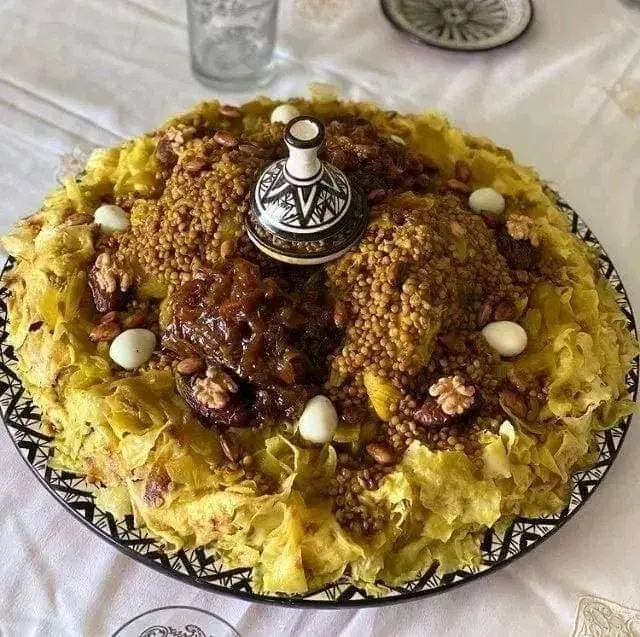
Moroccan Chicken Rfissa
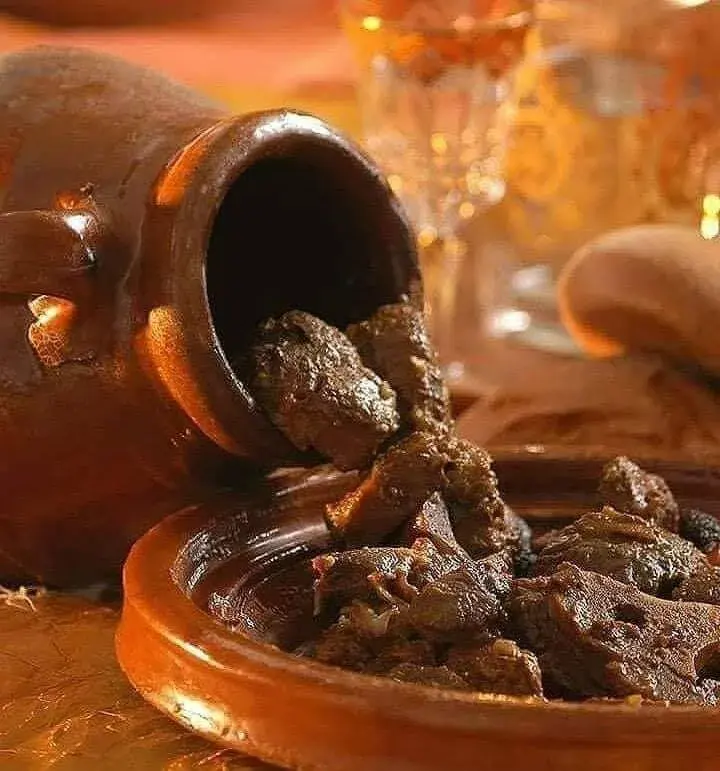
Tanjia Marrakchia
Chebakia (Moroccan Sesame Cookies)