
M'hanncha (Moroccan Snake Cake)
London, United Kingdom · Voir toutes les recettes
Aperçu
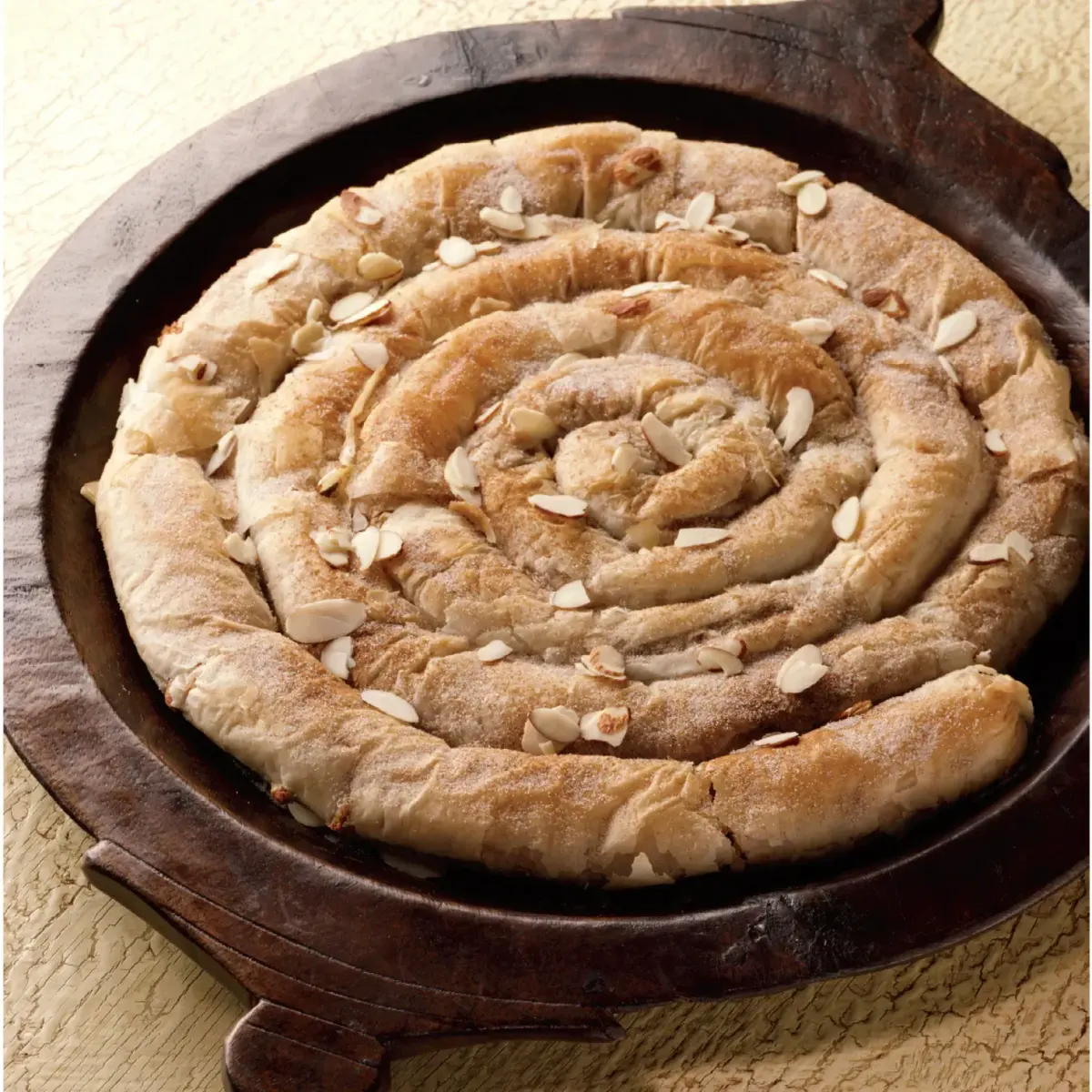
M'hanncha is almond paste rolled inside thin pastry and coiled into a spiral. The name means snake, which is exactly what it looks like. It is Moroccan, and it is celebration food. **It is built on almonds, which the title gives no indication of.** The flavourings tell you where it sits historically. Orange flower water and cinnamon with almonds is a distinctly North African combination, and it reflects the Persian and Arab influence that runs through Moroccan sweets, the same lineage that gives the region its almond pastries, its rose and orange blossom waters, and its habit of scenting sweet things rather than simply sweetening them. Mastic, which some recipes include, comes from the same direction. The coil is functional as well as decorative. Made large for a gathering, guests break portions off the end rather than cutting slices, which is how it is meant to be served. Warqa is the traditional pastry, a Moroccan sheet made by dabbing loose dough onto a hot pan, thinner and more pliable than filo. Filo is the standard substitute and is what this recipe uses. The source's ingredient list is badly scrambled: quantities have shifted onto the wrong ingredients, so it calls for two cups of melted butter and half a teaspoon of ground almonds. Rebuilt from the method.
Note de Patrimoine AFN
M'hanncha is a Moroccan pastry of almond paste rolled in thin pastry and coiled into a spiral, the name meaning snake. It is flavoured with orange flower water and cinnamon, reflecting Persian and Arab influence on Moroccan sweets, and is served at social gatherings and festive occasions.
Ingrédients
Les mentions alimentaires sont fournies par les contributeurs à titre indicatif. Elles ne sont pas vérifiées par AFN et dépendent des produits que vous achetez. En cas d’allergie grave, vérifiez vous-même chaque ingrédient. Cuisine, allergies et votre propre jugement
Préparation
- 1
Make the almond paste first. Blend the melted butter with the ground almonds and almond essence. Mix in the sugar, egg yolk and rose or orange flower water if using, then knead until soft and pliable. Chill for about 10 minutes.
- 2
Break the almond paste into 10 even balls and roll each into a sausage about 4 inches long. Chill again.
- 3
Set the oven to 350°F / 180°C.
- 4
Lay two sheets of filo on the work surface so they overlap into a rectangle of about 7 x 22 inches. Brush the overlap to secure it, then brush the whole thing with melted butter. Cover with two more sheets and brush again.
- 5
Lay five of the almond sausages along the lower edge of the filo and roll the pastry up tightly around them, tucking in the ends.
- 6
Shape the roll into a loose coil. Repeat with the remaining filo and almond paste so you have two coils.
- 7
Brush a large baking sheet with butter and set the two coils together so they form one continuous snake.
- 8
Beat the egg with half the cinnamon and brush it over the pastry.
- 9
Bake for 20 to 25 minutes, until golden brown.
- 10
Carefully invert the snake onto another baking sheet and return it to the oven for 5 to 10 minutes more, until golden on the underside too.
- 11
Dust with icing sugar and the remaining cinnamon, and scatter with sliced or ground almonds.
Notes de l’Africook
 Notes personnelles de Nympha Nzeribe
- This is an almond pastry. Nothing in its name says so, so say it when serving.
- Chill the almond paste before rolling. Warm paste is sticky and tears the filo as you roll.
- Keep unused filo under a damp cloth. It dries and cracks within minutes of being exposed.
- Coil it loosely. A tight coil has nowhere to expand and splits in the oven.
- Inverting it partway through is worth the awkwardness, otherwise the underside stays pale and soft.
- Made large for a gathering, guests break portions off the end rather than slicing it. That is how it is meant to be served.
Questions fréquentes
Why is it called a snake cake?
Because m'hanncha means snake in Moroccan Arabic, and the coiled pastry looks exactly like one. The name is purely descriptive rather than symbolic. The shape is also functional: made in a large coil for a gathering, guests break portions off from the end rather than cutting slices, which suits communal eating and is how it is traditionally served.
What is warqa, and can I use filo?
Warqa is the traditional Moroccan pastry for this, a very thin sheet made by repeatedly dabbing a loose, wet dough onto a hot pan until a translucent film forms. It is more pliable and slightly chewier than filo. Making it is a genuine skill and it is hard to buy outside Morocco, so filo is the standard substitute and is what this recipe uses. The result is crisper and a little more brittle.
What does orange flower water do?
It scents the almond paste, which is the defining move in this style of Moroccan pastry. Orange flower water is a distillate of bitter orange blossom, intensely floral rather than citrusy, and a tablespoon perfumes the whole filling. That habit of scenting sweets with flower waters rather than simply sweetening them reflects Persian and Arab influence on Moroccan cooking. Rose water does a similar job with a different character.
When is m'hanncha eaten?
At celebrations and social gatherings, weddings, Eid, and when guests are being received properly. Almond pastries occupy a particular place in Moroccan hospitality, and m'hanncha is among the most impressive-looking of them, which is part of the point. It is served with sweet mint tea, which is not optional in any real sense: the pairing is fixed.
Avis
Soyez le premier à noter cette recette
Vous l’avez cuisinée ? Votre note aide la personne suivante à se décider.
Aucun avis sur cette recette pour le moment. Si vous l’avez cuisinée, le vôtre serait le premier.
Vous Aimerez Aussi
Voir toutes les recettes Morocco →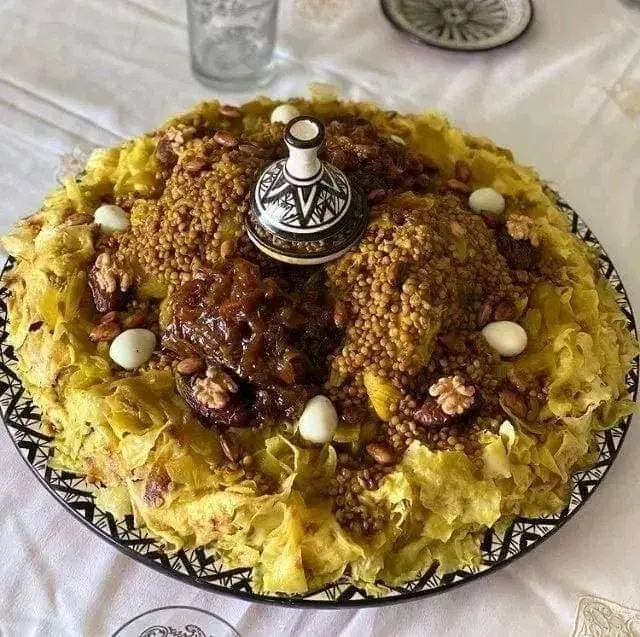
Moroccan Chicken Rfissa
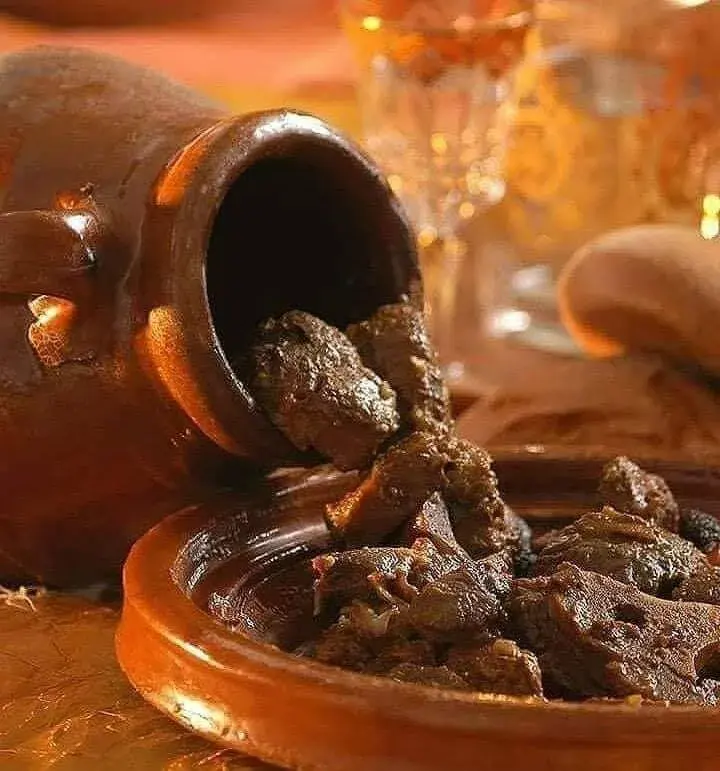
Tanjia Marrakchia
Chebakia (Moroccan Sesame Cookies)