
Mechoui
London, United Kingdom · Voir toutes les recettes
Aperçu
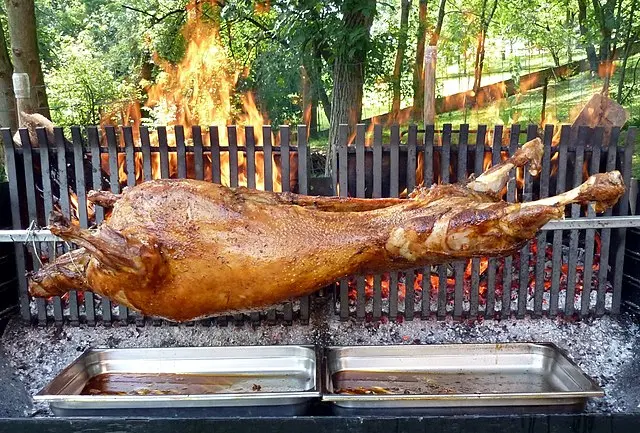
Mechoui is whole lamb or sheep, roasted slowly until the meat pulls away from the bone with no effort at all. The word comes from the Arabic for grilling or roasting, and the dish is found across the Maghreb, with the details shifting between countries. In Morocco it usually means a whole animal cooked in a clay oven over wood, a pit or domed oven that surrounds the lamb with even, indirect heat over several hours. In Algeria and more broadly in Maghrebi cooking it more often means spit-roasting over a fire. Both produce the same result by different routes: skin that crisps, and meat underneath that collapses. How it is served is inseparable from what it is. Mechoui appears at a diffa, a feast, and often at the beginning of the meal rather than the end. The host takes pieces with the right hand and offers them to guests. No cutlery is used, and none is needed, the meat comes apart between the fingers, which is both the test of whether it is properly cooked and the reason it is eaten this way. In Marrakech it is closely associated with the pit ovens of the medina, where it has been cooked commercially for generations. It is celebration food by construction: nobody roasts a whole lamb for four people on a Tuesday.
Note de Patrimoine AFN
The word mechoui derives from the Arabic for grilling or roasting. In Morocco it refers to a whole lamb or sheep cooked in a clay oven over wood; elsewhere in the Maghreb it more commonly describes spit-roasting. It is traditionally served at the start of a diffa, or feast, and eaten by hand.
Ingrédients
Les mentions alimentaires sont fournies par les contributeurs à titre indicatif. Elles ne sont pas vérifiées par AFN et dépendent des produits que vous achetez. En cas d’allergie grave, vérifiez vous-même chaque ingrédient. Cuisine, allergies et votre propre jugement
Préparation
- 1
Preheat the oven at 325°F.
- 2
Remove excess fat from the lamb leg and add on salt.
- 3
Take the remaining ingredients in a bowl and mix it well into paste. Apply little paste on the lamb leg and transfer it to roasting pan. Bake it covered with aluminum foil for 2 ½ hrs.
- 4
Rub over the paste in every 30-45 min. Then set the oven at 375°F and bake it uncovered for 3 hrs. Apply the paste in every 1 hr.
- 5
Serve it hot.
Notes de l’Africook
 Notes personnelles de Nympha Nzeribe
- Cook low and slow. Mechoui is defined by meat that falls apart, and that only comes from long, gentle heat.
- Baste through the cooking with butter and cumin. It keeps the surface from drying while the inside renders.
- A whole animal is impractical for most home cooks, a shoulder or leg cooked the same way gives the same result at a manageable scale.
- Rest it properly before serving. The juices need to settle or they run out at the first pull.
- Cumin and salt served separately alongside is traditional, and lets people season each piece as they take it.
Questions fréquentes
What does mechoui actually mean?
It comes from the Arabic word for grilling or roasting, and it refers to the method rather than to a specific recipe. That is why its meaning shifts across North Africa: in Morocco it generally means a whole lamb roasted in a clay or pit oven, while elsewhere in the Maghreb it more often describes spit-roasting over fire.
Do I need a whole lamb?
Traditionally yes, and that is a large part of the occasion. For a home cook a shoulder or a leg cooked by the same method, long, slow, basted, at a low temperature, gives the same texture and flavour at a scale that fits a domestic oven. It stops being a feast and becomes dinner, but it is recognisably the same dish.
How is it eaten?
By hand, without cutlery, and traditionally the host takes the first pieces with the right hand and offers them to guests. This is not informality, it is the accepted form, and it works because properly cooked mechoui comes apart between the fingers. It is usually served at the beginning of a diffa rather than as a final course.
What is it served with?
Small dishes of cumin and salt for dipping each piece, and bread. It is often part of a larger spread rather than a plated main course, and because it appears early in a feast it is followed by other dishes rather than accompanied by a full set of sides.
Avis
Soyez le premier à noter cette recette
Vous l’avez cuisinée ? Votre note aide la personne suivante à se décider.
Aucun avis sur cette recette pour le moment. Si vous l’avez cuisinée, le vôtre serait le premier.
Vous Aimerez Aussi
Voir toutes les recettes Morocco →
Moroccan Chicken Rfissa
Tanjia Marrakchia
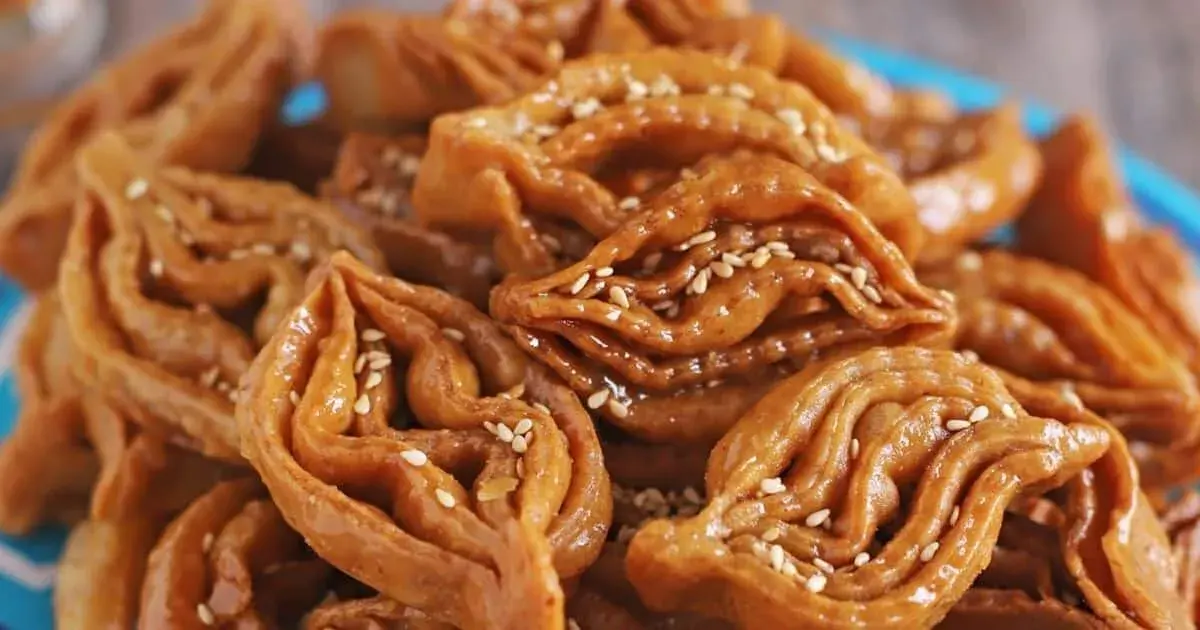
Chebakia (Moroccan Sesame Cookies)