

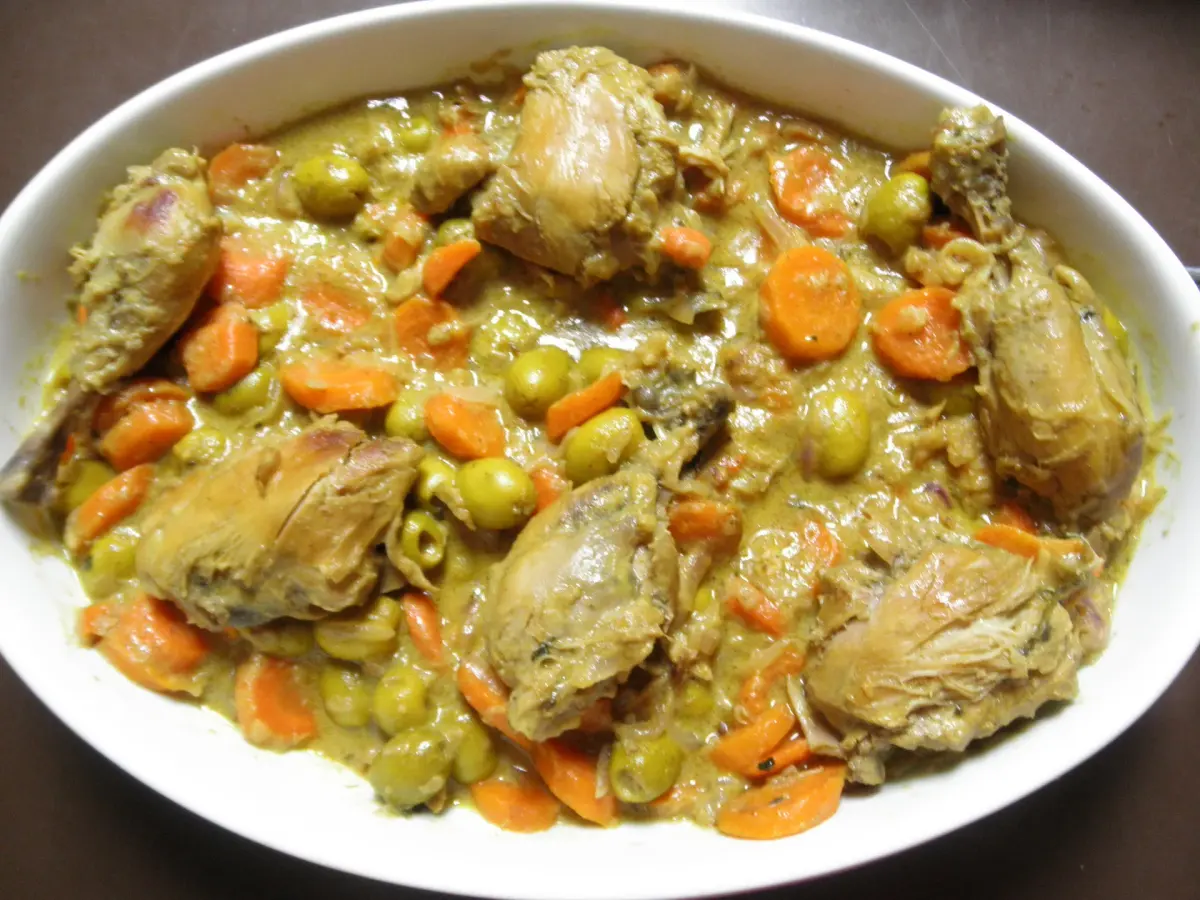
Tajine Zitoun
Aperçu
Tajine zitoun is an Algerian chicken and olive dish, zitoun meaning olives in Arabic, and it is a fixture at iftar during Ramadan and at occasions generally. Chicken, green olives, onion and carrot are cooked together and the sauce is finished with lemon juice and, in most versions, a little flour to thicken it. It looks like a Moroccan tagine and is not one, though both countries cook in earthenware and the resemblance is real. What distinguishes Algerian cooking, and this dish in particular, is the spice handling: restrained rather than layered, letting the olives and lemon carry the flavour instead of burying them under a heavy blend. Saffron or turmeric provides the colour. The olives need attention. Two cups of green olives brings a lot of salt with it, and the recipe is explicit about washing them well before use. Some cooks blanch them briefly for the same reason. Cooking the chicken bones in the broth and removing them before serving is the other technique worth noting: the source describes deboning the breast first, using the bones to build the sauce, then returning the browned meat at the end, which gives depth without anyone having to negotiate bones at the table.
Note de Patrimoine AFN
Tajine zitoun is an Algerian chicken and olive dish, its name taken from zitoun, the Arabic for olives. It is conventionally served at iftar during Ramadan and at other occasions.
Ingrédients
Les mentions alimentaires sont fournies par les contributeurs à titre indicatif. Elles ne sont pas vérifiées par AFN et dépendent des produits que vous achetez. En cas d’allergie grave, vérifiez vous-même chaque ingrédient. Cuisine, allergies et votre propre jugement
Préparation
- 1
Remove the bone from the chicken breast and cut the meat into thin slices. Keep the bones.
- 2
In a pot, combine the vegetable oil, chopped onion, carrots, salt, black pepper, the chicken bones and the green olives, and stir over low heat for about 3 minutes.
- 3
Add 3 glasses of water and let it boil until the olives are cooked.
- 4
In a pan, melt the butter and add the chicken slices with salt, half a teaspoon of black pepper, the garlic and the parsley. Cook, stirring, until the chicken turns golden.
- 5
Add the contents of the pot to the pan with the chicken and let them boil together for about 5 minutes.
- 6
Remove the bones and serve.
Notes de l’Africook
- Wash the olives thoroughly, or blanch them briefly in boiling water. Two cups of brined olives carries a great deal of salt into the sauce.
- Hold back on salt until the very end. Between the olives and the stock there may already be enough.
- Use the bones to build the sauce and lift them out before serving. That is where the body of the dish comes from.
- Brown the chicken separately rather than boiling it with everything. It keeps the meat from going stringy.
- A tablespoon of flour slaked in a little cold water, stirred in at the end, thickens the sauce in the traditional way. Cornflour works if you need it gluten free.
- Saffron gives the authentic colour and aroma, though turmeric is the common and much cheaper substitute.
Questions fréquentes
Is this the same as a Moroccan tagine?
No, though the resemblance is real and both countries cook in earthenware. Algerian tajine zitoun is distinguished by its restrained spicing, letting the olives and lemon lead rather than a heavy layered blend. Moroccan tagines lean more on ras el hanout, preserved lemon and dried fruit, and are usually cooked longer in the conical pot.
What kind of olives should I use?
Green olives, pitted, and washed well before use. Any firm green olive works; the recipe warns specifically about salt, since two cups of brined olives carries a lot of it into the sauce. Avoid black olives, which are softer and sweeter and give quite a different result.
Why cook the bones separately from the meat?
Because they do different jobs. The bones go into the pot with the vegetables and olives to build a flavoured broth, while the sliced meat is browned in butter so it stays tender rather than boiling into stringiness. The two are combined at the end and the bones lifted out before serving.
What is it served with?
Saffron rice is the usual accompaniment and what the source specifies. Bread is also standard for the sauce, and couscous works. It is often garnished with fresh coriander. As an iftar dish it appears alongside soup, dates and other Ramadan staples rather than on its own.
Avis
2 avis
my sister made this last week when I visited her in Accra. the trick is really washing and boiling the green olives well because they can be too salty paa if you skip that. using the reserved chicken bones for the broth gave it so much richness oo. cooking the sliced chicken breast in butter with the garlic and parsley smelled incredible.
Sautéing the sliced chicken in butter with garlic before combining with the broth is key sha. First time I made it I didn't wash the olives enough so it was too salty, but following the water boil step properly fixed it. E sweet no be small thing o, especially with the sliced carrots.