
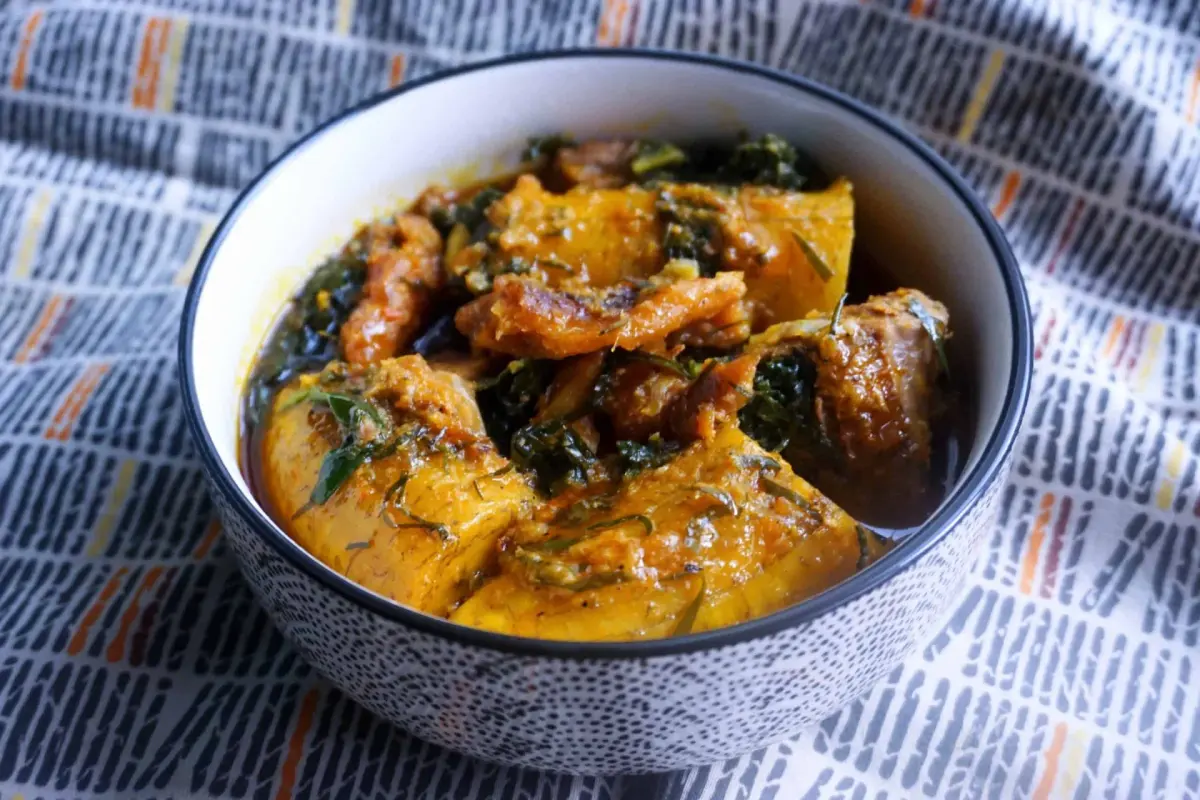
Sese Plantains (Cameroonian Plantain Porridge)
Abuja, Nigeria · Voir toutes les recettes
Aperçu
Green plantain cooked down in water with tomato, onion, pepper and palm oil until soft and the liquid has thickened around it. It is Cameroonian and eaten across West Africa, and it is one of the most straightforward one-pot meals in the repertoire. The name is a description of the cooking. Sese refers to the motion of turning the plantains as they cook, which is what gives the dish its texture, the pieces soften and their starch leaches into the liquid, thickening it without any need for a thickener. It is also called sese planti, turning planti, or simply unripe plantain porridge. Green plantain is the requirement rather than a preference. Unripe plantain is starchy and firm, holds its shape through the cooking, and provides the starch that thickens the pot. Ripe plantain is sweet and soft, disintegrates, and turns the dish into something else entirely. It scales in both directions. At its simplest it is plantain, palm oil, salt and crayfish; elaborated, it takes fish, any meat and vegetables. Both versions are made routinely. The source's water quantity is malformed and its health claims about palm oil have not been carried across. Cashews as a garnish are an unusual touch and worth keeping.
Note de Patrimoine AFN
Sese plantains, also called sese planti or turning planti, is a Cameroonian and West African one-pot dish of green plantain cooked with palm oil and seasonings. The name refers to the turning motion used while cooking, and the starch released by the plantain thickens the dish.
Ingrédients
Les mentions alimentaires sont fournies par les contributeurs à titre indicatif. Elles ne sont pas vérifiées par AFN et dépendent des produits que vous achetez. En cas d’allergie grave, vérifiez vous-même chaque ingrédient. Cuisine, allergies et votre propre jugement
Préparation
- 1
Cut the plantains into 6 pieces each.
- 2
Bring the water to the boil and put the plantains in.
- 3
Cook for 10 minutes, then mix in the tomatoes, pepper and onion.
- 4
Cook gently for 10 minutes more, then add the stock cube. Cover the pot and give it about five minutes to dissolve.
- 5
Mix in the palm oil.
- 6
Cook for a further 10 minutes, turning the plantains as they go, this is what the name refers to, and it is what releases the starch that thickens the pot.
- 7
Season to taste with salt and pepper.
- 8
Scatter with roasted cashews and serve.
Notes de l’Africook
- Use green, unripe plantain. Ripe plantain is sweet and collapses, and the dish becomes something else.
- Turn the plantains as they cook. The name refers to it, and it is how the starch gets into the liquid to thicken it.
- Keep the water low. This should end up thick rather than soupy, and you can always add more.
- Palm oil is a defining flavour rather than a cooking medium. Another oil gives a paler, plainer dish.
- It takes additions well, smoked fish, any meat, crayfish or leafy greens all work without changing the method.
- The roasted cashews are an unusual garnish and a good one, giving crunch against a soft dish.
Questions fréquentes
What does sese mean?
It refers to the motion of turning the plantains as they cook, which is why the dish is also called turning planti. That turning is not incidental, it is what releases starch from the plantain into the cooking liquid and thickens the pot without any added thickener. The name is a description of the technique rather than of an ingredient, which is fairly common in West African dish names.
Why must the plantain be green?
Because green plantain is starchy and firm. It holds its shape through the cooking and supplies the starch that thickens the dish, which is the whole mechanism. Ripe plantain has converted most of that starch to sugar, it is soft, sweet, and disintegrates into the liquid, giving something sweet and mushy rather than savoury and thick. Ripe plantain has its own dishes, dodo and alloco among them.
Can I add meat or fish?
Yes, and it is entirely normal to. The source describes the dish as scaling from very simple, plantain, palm oil, salt and crayfish, to elaborate, with fish, any variety of meat, and vegetables. Both versions are made routinely in Cameroonian households. Add meat early enough to cook through, and smoked fish towards the end so it does not break up entirely.
How thick should it be?
Thick rather than soupy. The plantain releases starch as it is turned, and the liquid should end up clinging to the pieces rather than surrounding them. If it looks watery, cook it uncovered for a few more minutes and keep turning. Starting with less water than you think you need is the safer approach, since you can always add more but cannot easily take it away.
Avis
Soyez le premier à noter cette recette
Vous l’avez cuisinée ? Votre note aide la personne suivante à se décider.
Aucun avis sur cette recette pour le moment. Si vous l’avez cuisinée, le vôtre serait le premier.