
Seffa Medfouna (Moroccan Buried Chicken with Sweet Vermicelli)
Abuja, Nigeria · Voir toutes les recettes
Aperçu
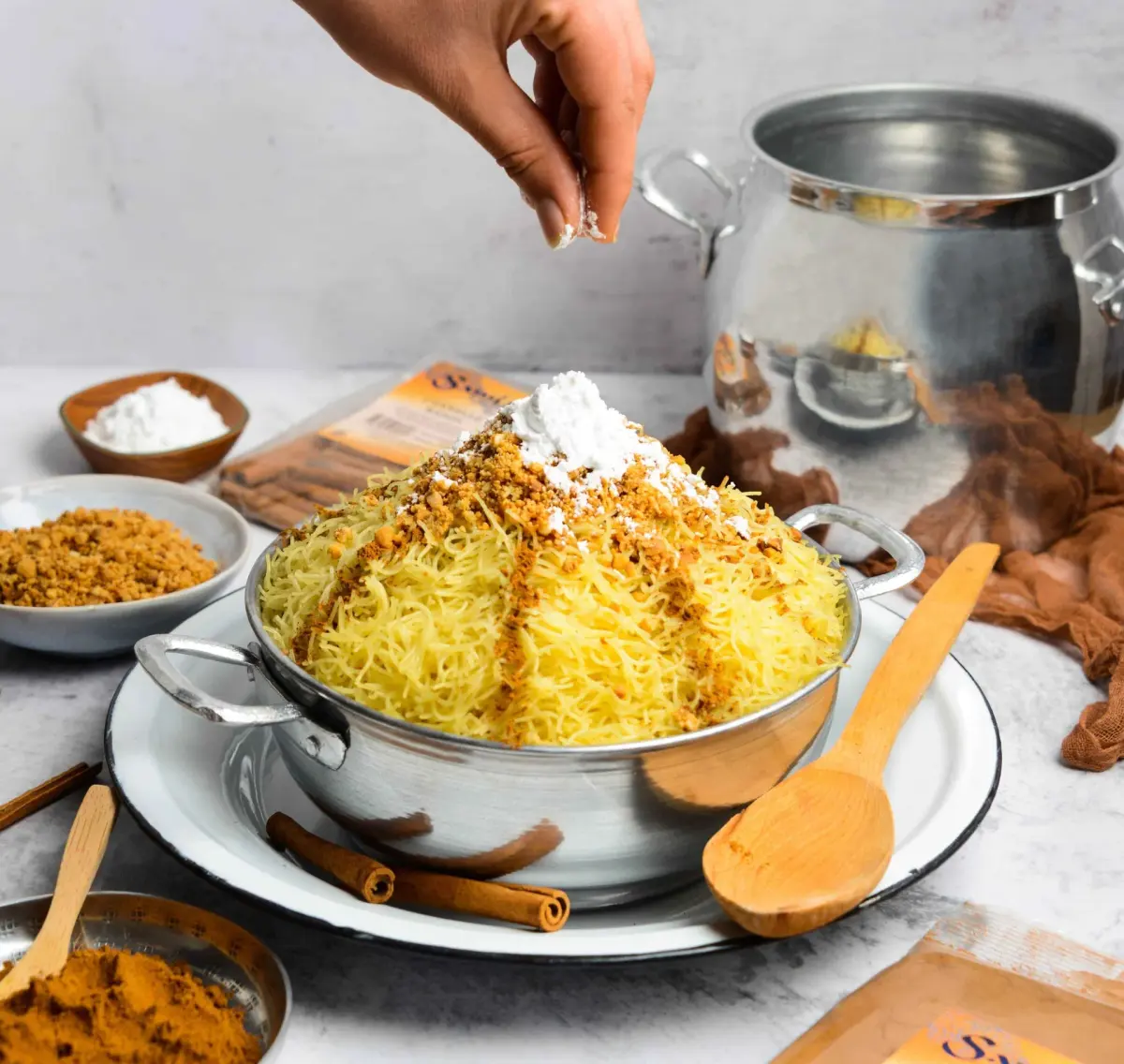
Seffa medfouna is saffron chicken hidden inside a mound of steamed, sweetened vermicelli, dusted with cinnamon, icing sugar and ground fried almonds. Medfouna means buried, and the concealment is the whole presentation. **It is finished with a cup of ground almonds, which the title gives no indication of.** It is the clearest example on this site of the Moroccan savoury-sweet axis. Saffron chicken cooked with ginger, turmeric and pepper is buried under vermicelli that has been sweetened with butter and icing sugar, studded with raisins, and decorated with cinnamon and almonds. Neither element is subtle, and the point is that they arrive in the same mouthful. This is the same tradition as pastilla, and it reflects the Andalusian and Arab influence that runs through Moroccan festive cooking. Seffa on its own is the sweetened steamed vermicelli or couscous, served as a dish in its own right. Medfouna is the version with meat concealed inside. The vermicelli is steamed four times. That is not an exaggeration in the method, repeated steaming with resting in between is what makes it light rather than claggy, and it is the same principle as double-steamed couscous. It is a dish for a table with several courses on it, not a weeknight.
Note de Patrimoine AFN
Seffa is a Moroccan dish of steamed couscous or broken vermicelli sweetened with butter and sugar and garnished with almonds, raisins and cinnamon. Seffa medfouna, meaning buried seffa, conceals saffron chicken, lamb or beef inside the mound, and is served at celebrations.
Ingrédients
Préparation
- 1
Fill the base of a couscoussier with plenty of salted water and bring it to the boil, then lower to a simmer. Steam the vermicelli or couscous, repeating the steaming with rests in between, four steamings for vermicelli. This is what makes it light rather than claggy.
- 2
If using raisins, add the soaked and drained raisins to the final steaming. Alternatively caramelise them: put them in a small pot with a tablespoon each of butter and sugar or honey, cover with water and cook until the liquid is absorbed. Set aside.
- 3
While the seffa steams, cook the meat. In a Dutch oven or heavy pot, combine the chicken or meat with the onions, spices, butter, oil and coriander.
- 4
Cook gently over medium heat for about 10 minutes, turning frequently to brown on all sides.
- 5
For chicken, add no water unless absolutely necessary, it will braise in its own juices. For lamb or beef, add enough water to just cover, and bring to a simmer.
- 6
Cover and cook over medium heat, turning occasionally, until very tender, about an hour for chicken, longer for beef or lamb. Add only small amounts of water as needed and take care not to burn it, which would ruin the sauce.
- 7
When the meat is tender, reduce the liquids to a thick sauce. Discard the cinnamon stick and adjust the seasoning.
- 8
After its final steaming, sweeten the hot vermicelli or couscous by tossing it with the butter and icing sugar to taste.
- 9
Layer a quarter to a third of the vermicelli on a very large serving dish. Arrange the meat in the centre and cover it with the sauce.
- 10
Pile the remaining vermicelli over the meat, shaping it by hand into a dome so the meat is completely hidden.
- 11
Decorate the mound with the ground cinnamon, ground almonds, extra icing sugar and the caramelised raisins.
Notes de l’Africook
- This is finished with a cup of ground almonds. Nothing in the name indicates it, so say so when serving.
- Steam the vermicelli four times with rests between. It is the difference between light seffa and a heavy mass, and it cannot be shortcut.
- Do not add water to chicken unless you have to. It braises in its own juices and the sauce is better for it.
- Reduce the sauce properly before assembling. A thin sauce soaks straight through the vermicelli.
- Build the dome by hand and take your time. The presentation is the dish and a collapsed mound loses the point of medfouna.
- Caramelising the raisins rather than steaming them keeps them distinct and glossy, which the source prefers.
Questions fréquentes
What does medfouna mean?
Buried. Seffa on its own is the sweetened steamed couscous or broken vermicelli, garnished with icing sugar, almonds, raisins and cinnamon, and eaten as a dish in its own right. Medfouna is the version with saffron chicken, lamb or beef concealed inside the mound, revealed only when someone breaks into it. The concealment is the presentation and the reason the dish is impressive at a table.
Isn't it strange to sweeten a chicken dish?
It is deliberate rather than accidental, and it is central to Moroccan festive cooking. The savoury-sweet combination, meat with sugar, cinnamon and almonds, runs through pastilla, tagines with dried fruit, and seffa alike, and reflects long Andalusian and Arab influence on the cuisine. The two halves are meant to arrive together in the same mouthful. Encountering it for the first time is genuinely surprising, and it is worth trying as intended before adjusting.
Why steam the vermicelli four times?
Because that is what makes it light. Repeated steaming with rests in between lets each grain hydrate and separate individually rather than clumping into a mass, and the same principle applies to properly made couscous, which is steamed at least twice. Vermicelli is finer and needs more rounds. Cooking it like ordinary pasta in boiling water produces something quite different and much heavier.
Is chaariya the same as vermicelli?
Chaariya is the Moroccan name for the very fine broken pasta used in seffa, and vermicelli or angel hair broken into short lengths is the standard substitute. Couscous can be used instead and is equally traditional, the recipe treats them as interchangeable. The choice affects texture rather than method: couscous gives a grainier mound, chaariya a finer and slightly silkier one.
Avis
Soyez le premier à noter cette recette
Vous l’avez cuisinée ? Votre note aide la personne suivante à se décider.
Aucun avis sur cette recette pour le moment. Si vous l’avez cuisinée, le vôtre serait le premier.
Vous Aimerez Aussi
Voir toutes les recettes Morocco →
Moroccan Chicken Rfissa
Tanjia Marrakchia
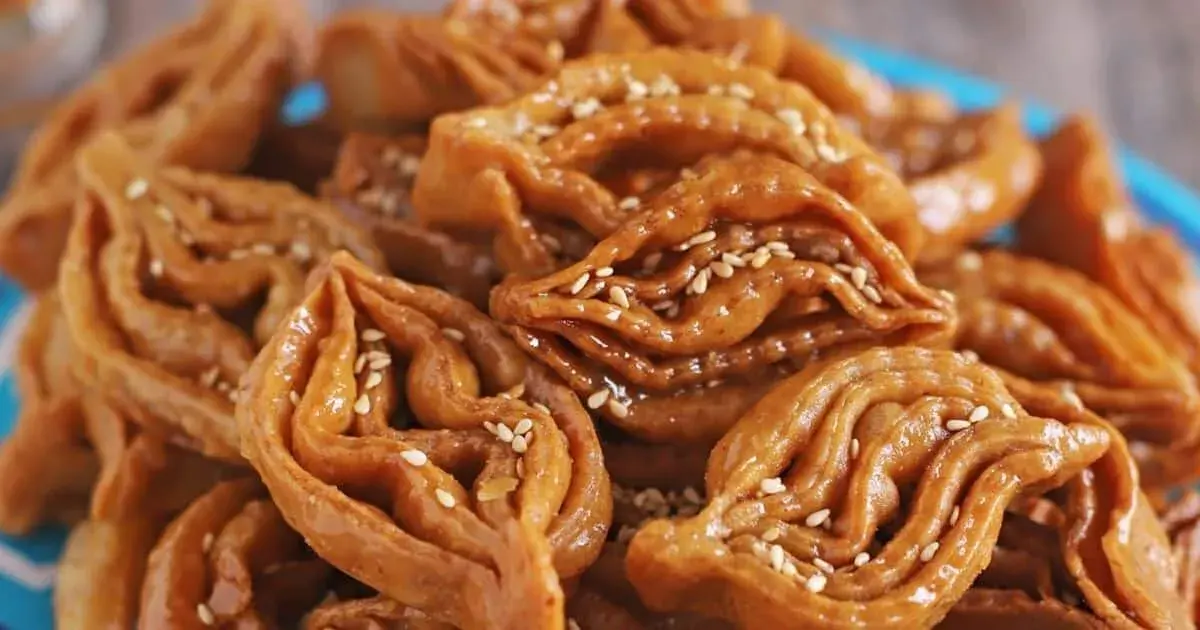
Chebakia (Moroccan Sesame Cookies)