
Romazava
Abuja, Nigeria · Voir toutes les recettes
Aperçu
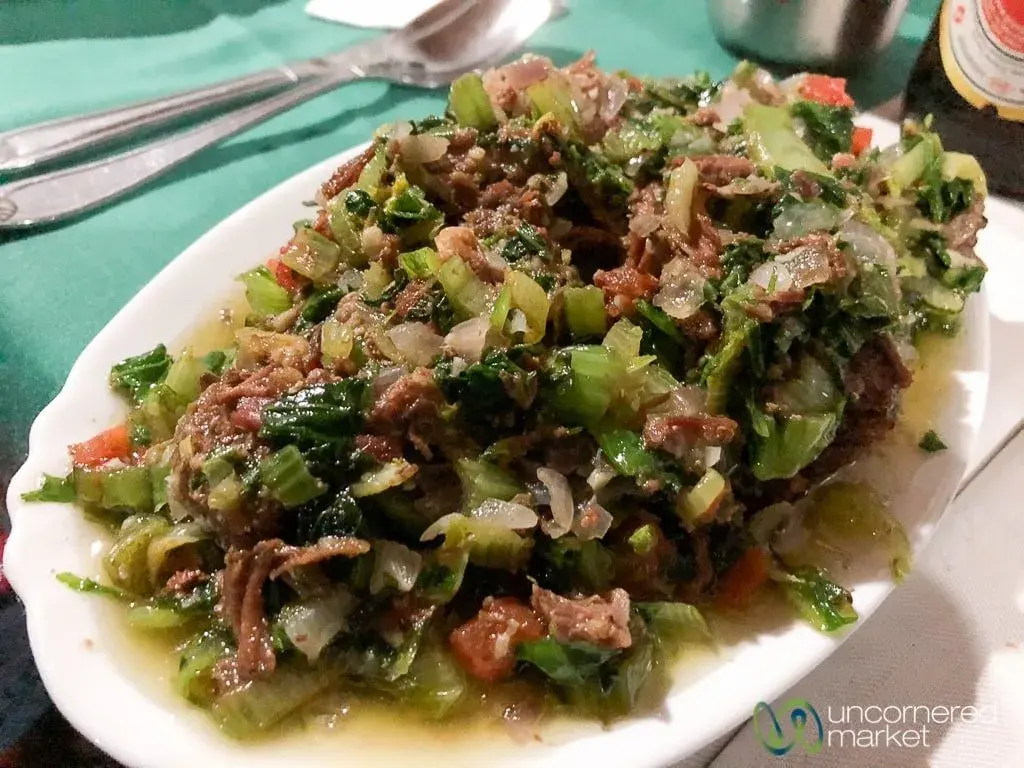
Romazava is the national dish of Madagascar, and the name describes it exactly: ro means broth or soup in Malagasy, mazava means clear. It is meat simmered with leafy greens in a clear broth, served over rice, and it is one of the seven royal dishes known collectively as tatao. It was once food for the Malagasy sovereign specifically. That association with royalty is part of why it holds the position it does, and it is now eaten by everyone rather than reserved for anyone. Three meats together, beef, pork and chicken, is characteristic of the fuller version, though households vary it. The greens are what make it Malagasy and they are the hardest part to reproduce elsewhere. Anamamy, paracress and mustard greens are what is used on the island; paracress in particular produces a tingling, numbing sensation on the tongue that is central to the authentic dish and has no European equivalent. Spinach and rocket are the usual substitutes and give a good soup that is missing that specific quality. Zebu, the humped cattle of Madagascar, is the traditional beef. It is served with sakay, the Malagasy chilli condiment, and small eggplants, ginger and tomato are common additions.
Note de Patrimoine AFN
Romazava is the national dish of Madagascar and one of the seven royal dishes known as tatao, historically associated with the Malagasy sovereign. Its name combines ro, meaning broth, with mazava, meaning clear.
Ingrédients
Les mentions alimentaires sont fournies par les contributeurs à titre indicatif. Elles ne sont pas vérifiées par AFN et dépendent des produits que vous achetez. En cas d’allergie grave, vérifiez vous-même chaque ingrédient. Cuisine, allergies et votre propre jugement
Préparation
- 1
In a large Dutch oven, heat the oil and brown the beef on all sides.
- 2
Add the tomatoes, stock, onion, chillies, garlic and ginger and bring to a simmer.
- 3
Cover the pot, reduce the heat to low and let it stew for about 30 minutes.
- 4
Add the pork and chicken pieces and bring to a boil, then reduce the heat to low and cover for another 10 to 15 minutes.
- 5
Add the greens. It will look like far too much, but they wilt down quickly.
- 6
Cover and stew for another 10 minutes.
- 7
Season with salt and pepper.
- 8
Serve over steamed white rice with sakay alongside.
Notes de l’Africook
- Add the greens last and in what looks like an absurd quantity. They reduce to a fraction of their volume within minutes.
- Brown the beef properly before any liquid goes in. That colour is where much of the depth of the broth comes from.
- Add the pork and chicken later than the beef. They need far less time and go stringy if given the full hour.
- Sakay, the Malagasy chilli condiment, is what completes the dish. Any fresh chilli and garlic paste approximates it.
- Leftovers keep five days covered in the fridge and reheat well.
- Paracress is the authentic green and has no real substitute. Mustard greens, spinach and rocket together get closest to the flavour, if not the tingle.
Questions fréquentes
What does romazava mean?
Clear broth, in Malagasy. Ro means broth or soup and mazava means clear, which describes the dish accurately: unlike a thickened stew, romazava keeps a clear liquid with the meat and greens suspended in it. It is a plain, descriptive name for a dish with an unusually grand history.
What greens should I use?
Anamamy, paracress and mustard greens are traditional in Madagascar. Paracress is the distinctive one, producing a tingling, slightly numbing sensation on the tongue that is central to the authentic version and difficult to find elsewhere. Spinach and rocket are the standard substitutes and make a very good soup, though without that quality.
What is zebu?
Zebu is the humped cattle raised across Madagascar and much of Africa and Asia, and it is the beef traditionally used in romazava. Its meat is leaner and firmer than most European beef. Beef chuck is the substitute given here and works well, since it holds up to the long simmer without falling apart.
What is sakay?
Sakay is the Malagasy chilli condiment, a paste of hot chillies with garlic and ginger, served alongside rather than cooked into the dish. It is what most Malagasy would say makes romazava, and the source is emphatic about having some to hand. Any fresh chilli garlic paste is a reasonable stand-in.
Avis
Soyez le premier à noter cette recette
Vous l’avez cuisinée ? Votre note aide la personne suivante à se décider.
Aucun avis sur cette recette pour le moment. Si vous l’avez cuisinée, le vôtre serait le premier.
Vous Aimerez Aussi
Voir toutes les recettes Madagascar →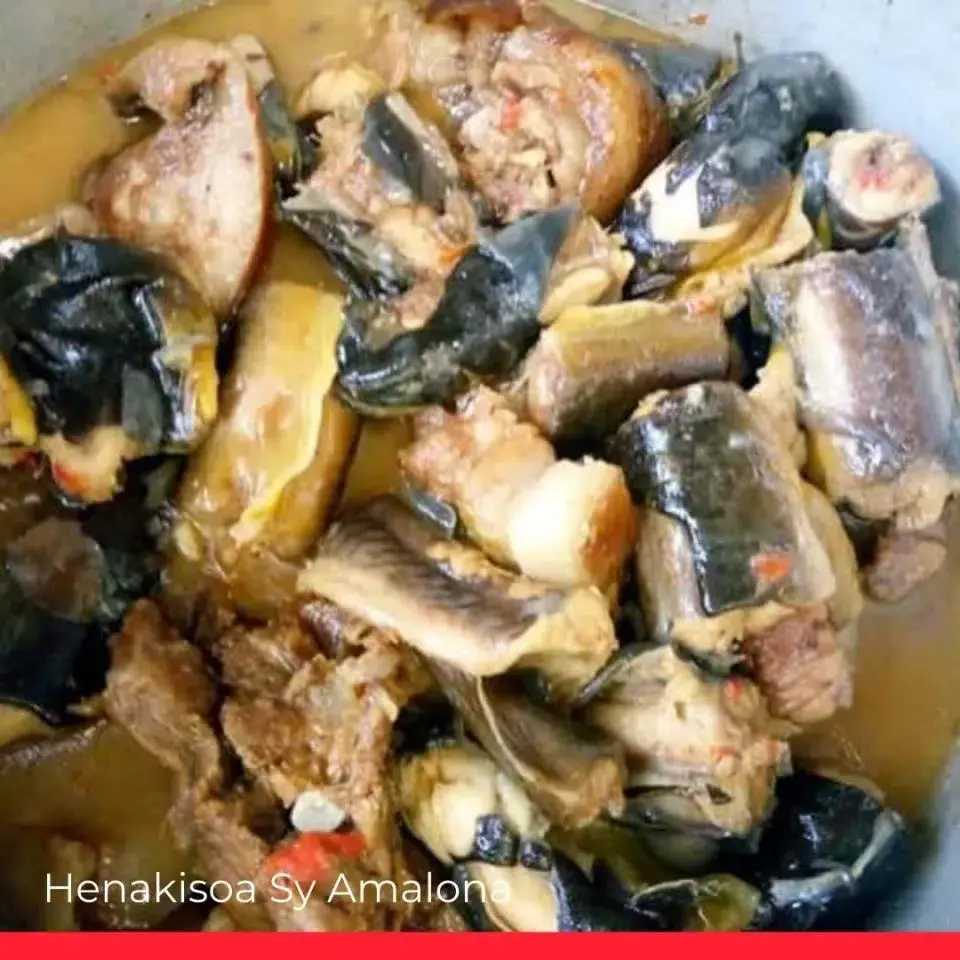
Henakisoa sy Ravitoto (Malagasy Pork with Cassava Leaves)
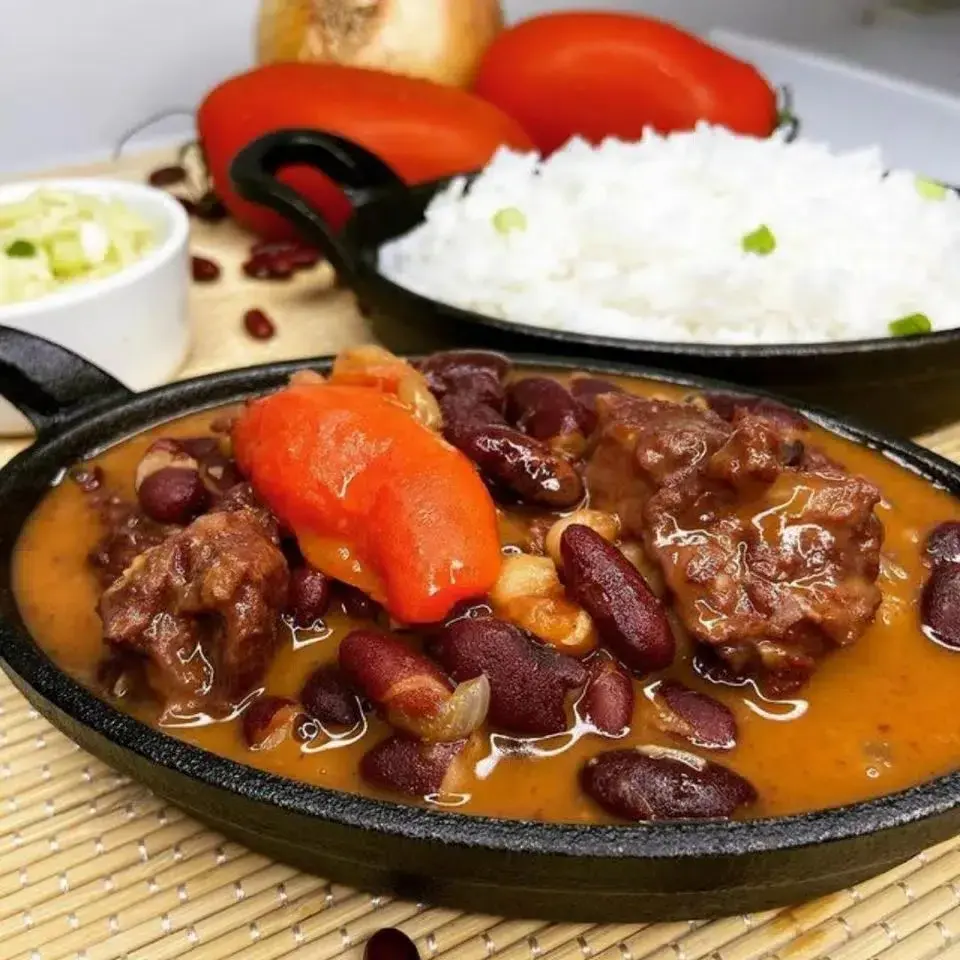
Tsaramaso Malagasy (White Bean and Tomato Stew)
Vary Amin'anana (Malagasy Greens and Rice)