
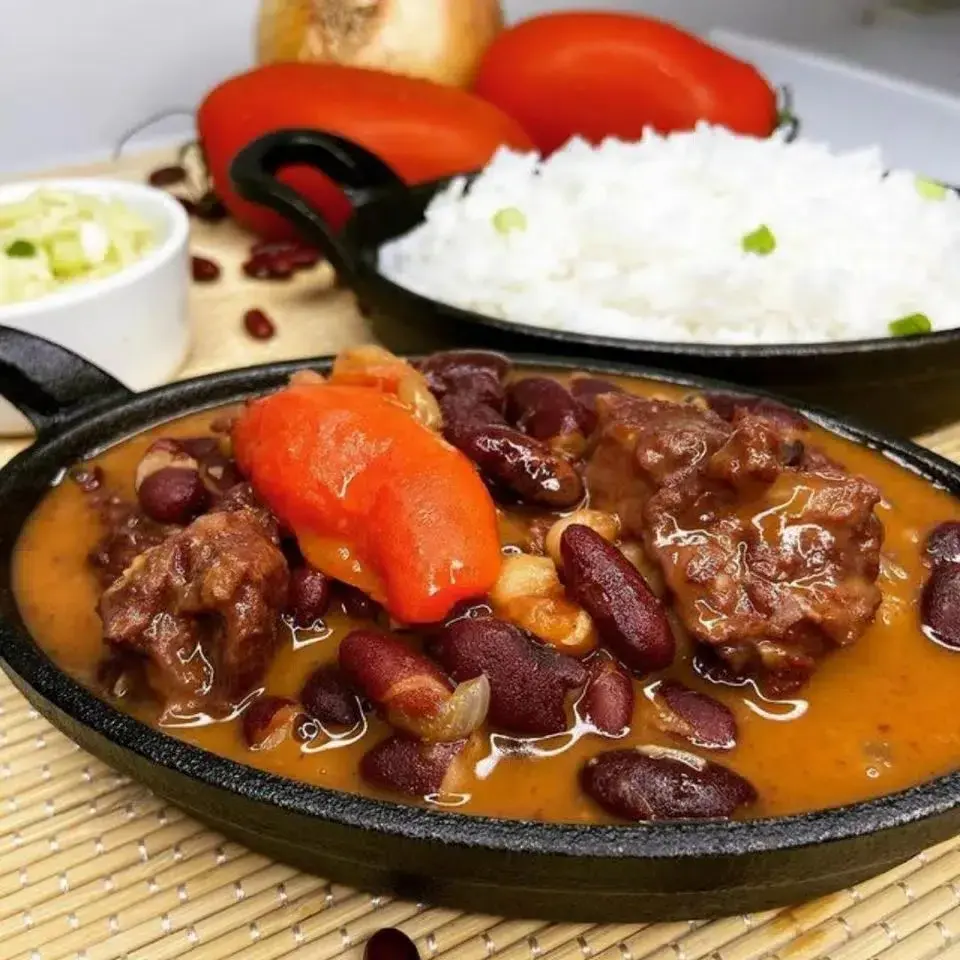
Tsaramaso Malagasy (White Bean and Tomato Stew)
Abuja, Nigeria · Voir toutes les recettes
Aperçu
Dried white beans cooked until tender, then finished with red onion and sliced tomatoes into a thick, soupy stew. It is Malagasy, and it is served everywhere on the island. It is laoka, which is the useful word here. In Malagasy eating, rice is the meal and laoka is whatever accompanies it, the thing that goes on top of, or beside, a large plate of rice. Tsaramaso is one of the most popular laoka in the country, and it is eaten as a matter of course rather than as an occasion dish. It is very often not vegetarian. Zebu meat, the humped cattle that are central to Malagasy life, makes it hen'omby sy tsaramaso, and pork makes it tsaramaso sy henakisoa. The shank is the cut the source recommends. This version is the plain one, which is also widely eaten. The technique in the recipe is worth noting: the beans are cooked separately in water, seasoned only at the end, and a cup of their cooking liquid is kept back. That liquid is what the finished stew is loosened with, and it carries starch and flavour that plain water would not. The source compares it to cassoulet, which is a reasonable shorthand, beans and meat cooked long and slow, though the seasoning is entirely different.
Note de Patrimoine AFN
Tsaramaso is a Malagasy stew of white beans cooked with tomato and onion, eaten widely across Madagascar as laoka, the accompaniment to rice that forms the centre of a Malagasy meal. Versions with zebu meat or pork are common.
Ingrédients
Les mentions alimentaires sont fournies par les contributeurs à titre indicatif. Elles ne sont pas vérifiées par AFN et dépendent des produits que vous achetez. En cas d’allergie grave, vérifiez vous-même chaque ingrédient. Cuisine, allergies et votre propre jugement
Préparation
- 1
Put the beans in a large pot and cover them with cold water by about an inch. Bring to the boil over high heat, then turn the heat as low as it will go and cover the pot partly so steam can escape.
- 2
Cook the beans, turning them occasionally, until tender, anywhere from 1 to 2 hours depending on whether they were soaked and how old they are. Keep them covered with water throughout, topping up with hot water as it evaporates.
- 3
Meanwhile, cut the tops off the tomatoes and discard them, squeeze out and discard the seeds, then slice the tomatoes thinly and set aside.
- 4
Once the beans are cooked, season them with salt. Reserve a cup of the cooking liquid, then drain them.
- 5
Warm the oil in a large Dutch oven or heavy pot over medium-high heat. Put in the onion and cook, turning occasionally, until it sizzles and begins to colour at the edges, 2 to 4 minutes.
- 6
Mix in the sliced tomatoes, cover and cook until they begin to break down, about 2 minutes.
- 7
Tip in the beans with the reserved cup of cooking liquid. Cover and bring to the boil.
- 8
Uncover and let it boil until the mixture has thickened noticeably but is still soupy, 5 to 10 minutes.
- 9
Season with salt one final time and serve hot with rice.
Notes de l’Africook
- Keep a cup of the bean cooking liquid. It carries starch and flavour, and plain water in its place gives a thinner, blander stew.
- Salt the beans only once they are tender. Salt added early can toughen the skins and lengthen the cooking considerably.
- Soak the beans overnight if you can. It shortens the cooking and helps them cook evenly, though it is not essential.
- Keep the beans covered with water throughout, topping up with hot water. A pot that boils dry gives unevenly cooked beans.
- Leave it soupy rather than reducing it to a paste. Tsaramaso is laoka, it goes over rice and needs some liquid.
- Zebu or pork shank turns it into the meat versions, which is how it is most often eaten in Madagascar.
Questions fréquentes
What is laoka?
The Malagasy word for whatever accompanies rice, which is the centre of virtually every meal on the island. Rice is not a side dish in Madagascar, it is the meal, and laoka is what goes with it, whether that is a bean stew, a meat dish, greens or fish. Tsaramaso is one of the most popular laoka in the country. Understanding that hierarchy explains why the dish is meant to stay slightly soupy rather than thick.
Should it have meat in it?
Very often it does. Zebu, the humped cattle central to Malagasy life, makes hen'omby sy tsaramaso, and pork makes tsaramaso sy henakisoa, with the shank being the cut the source recommends. Both are extremely common and arguably more usual than the plain version. This recipe is the meatless one, which is also widely eaten, and adding a shank to it means simmering the meat with the beans from the start.
Do I have to soak the beans?
No, but it helps. Soaking overnight in cold water shortens the cooking time and encourages the beans to cook evenly, which matters more than it sounds, unsoaked beans of uneven age can leave you with some collapsed and others still hard. Unsoaked, they simply take longer, anywhere up to two hours. The source is relaxed about it and that is fair.
Why keep the bean cooking liquid?
Because it is not just water by the time the beans are done. It has taken up starch from the beans, which gives the finished stew body, and it carries flavour that plain water cannot replace. A cup of it goes back in when the beans meet the tomatoes and onion, and it is what turns a pile of beans in tomato into something cohesive. Discard the rest or keep it for soup.
Avis
Soyez le premier à noter cette recette
Vous l’avez cuisinée ? Votre note aide la personne suivante à se décider.
Aucun avis sur cette recette pour le moment. Si vous l’avez cuisinée, le vôtre serait le premier.
Vous Aimerez Aussi
Voir toutes les recettes Madagascar →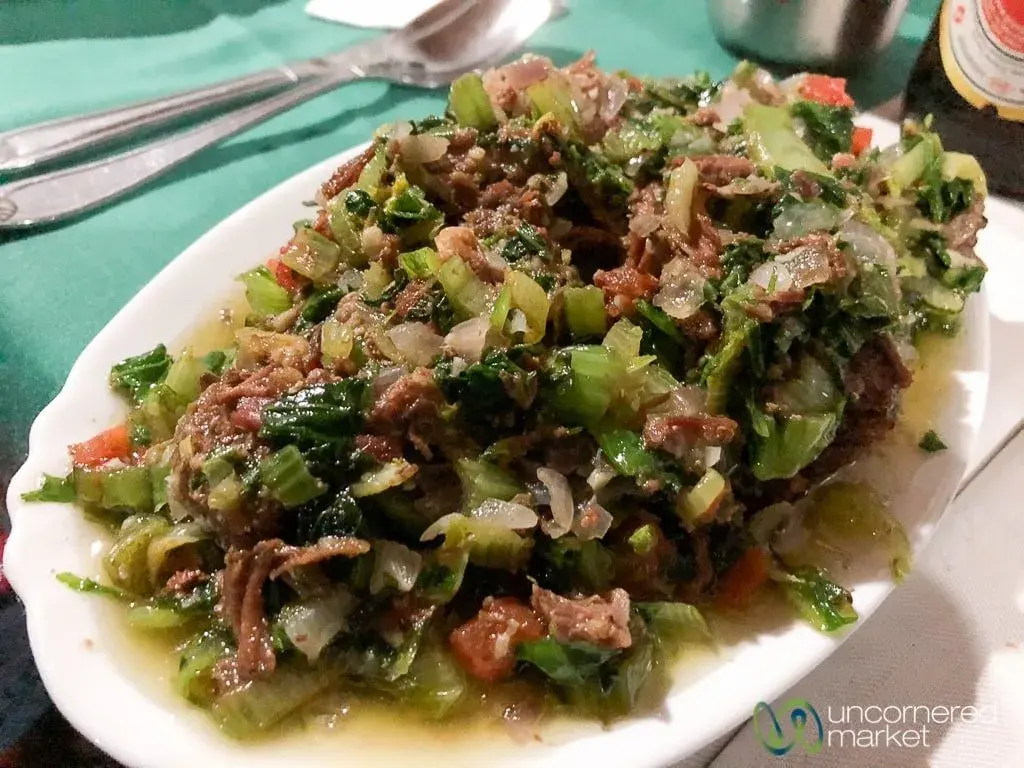
Romazava
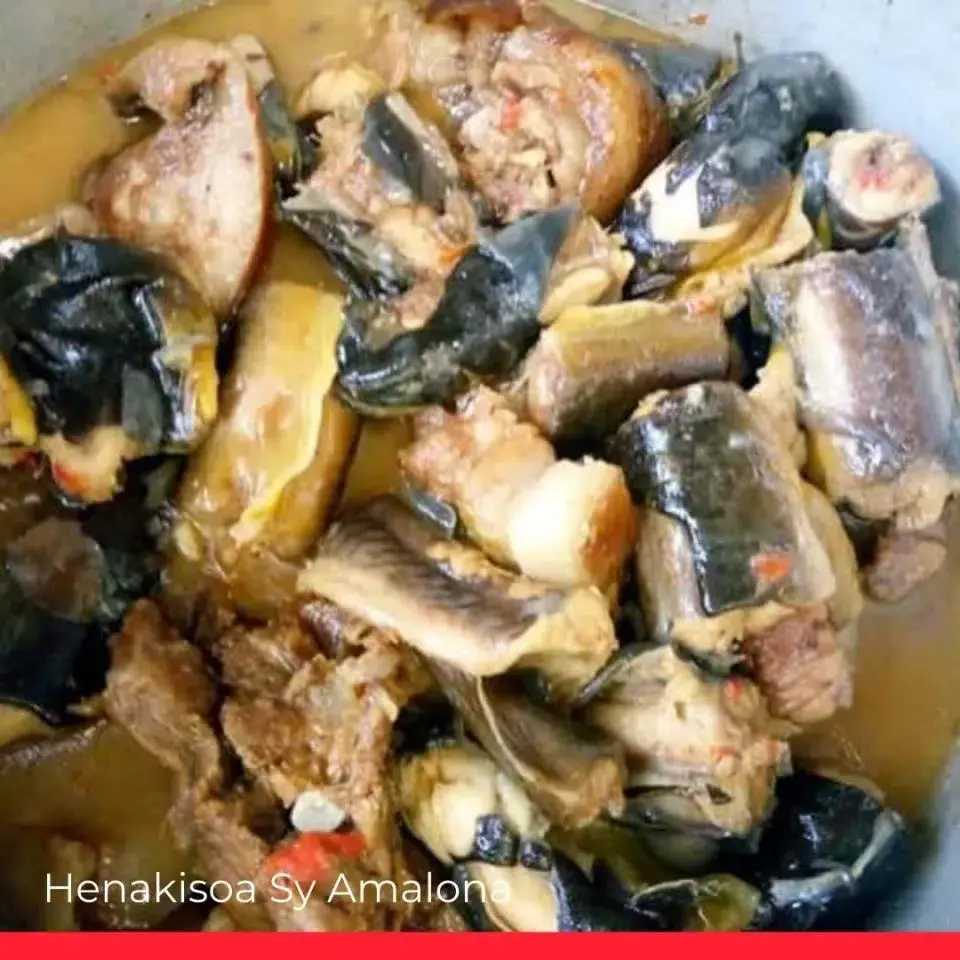
Henakisoa sy Ravitoto (Malagasy Pork with Cassava Leaves)
Vary Amin'anana (Malagasy Greens and Rice)