
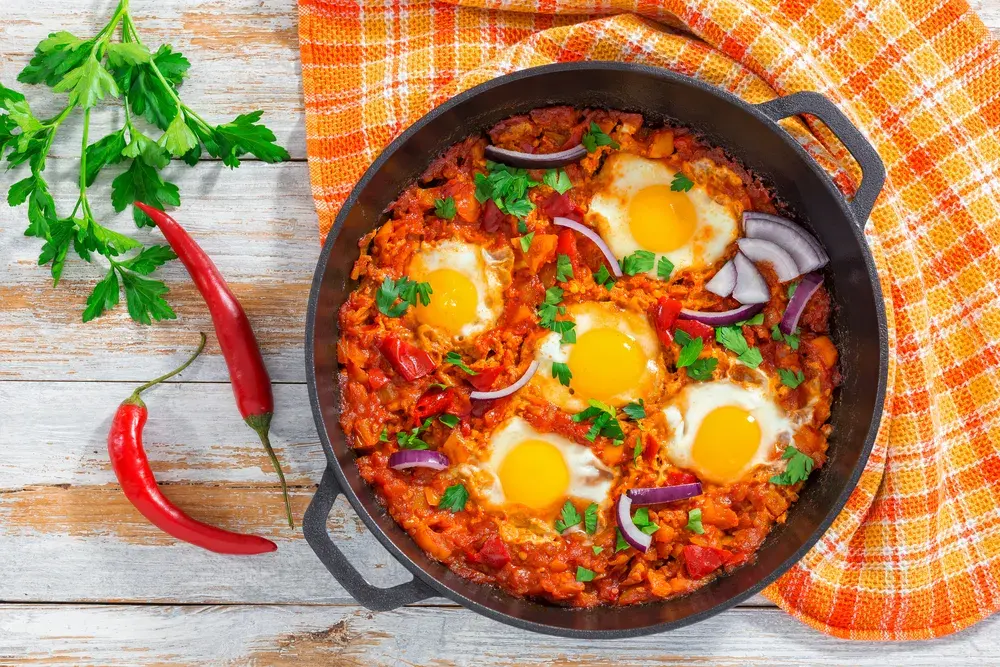
Ojja (Shakshuka)
Abuja, Nigeria · Voir toutes les recettes
Aperçu
Ojja is a Tunisian dish of eggs cooked in a spiced tomato and pepper sauce, and it is one of the country's most eaten meals. The name comes from Tunisian Arabic slang meaning mixture, which describes it accurately: tomato, pepper, onion, garlic and spice, with eggs finished in the sauce. Whether ojja and shakshuka are the same thing is genuinely disputed, and the disagreement is worth stating rather than resolving. Some Tunisians hold that ojja is made with garlic and no onion while shakshuka uses both. One published account draws the line differently, arguing that in ojja the eggs are stirred through the sauce while in shakshuka they are poached whole on the surface, which would make ojja a close relative of Turkish menemen. Others say the two words name one dish. The recipe here allows both egg treatments and notes that both are used in Tunisia. Its origin is generally placed in Tunisia or Yemen, and it is eaten across North Africa. It has also become a fixture of Israeli cooking over the past few decades, where it is eaten at any meal. Merguez, the North African lamb sausage, and harissa are what mark this version as Tunisian rather than anything else, and toasted whole coriander, caraway and cumin ground fresh give it a depth that pre-ground spice does not.
Note de Patrimoine AFN
Ojja is a Tunisian dish of eggs cooked in spiced tomato sauce, its name derived from Tunisian Arabic for mixture. Its origin is variously attributed to Tunisia or Yemen, and it is eaten across North Africa.
Ingrédients
Les mentions alimentaires sont fournies par les contributeurs à titre indicatif. Elles ne sont pas vérifiées par AFN et dépendent des produits que vous achetez. En cas d’allergie grave, vérifiez vous-même chaque ingrédient. Cuisine, allergies et votre propre jugement
Préparation
- 1
Toast the coriander, caraway and cumin seeds in a dry skillet over medium heat until fragrant, then grind them in a spice grinder or mortar and pestle. Set aside.
- 2
Sauté the onion and pepper in the olive oil with a pinch of salt in a large skillet over medium heat until the onion is soft and translucent.
- 3
Add the garlic and cook a few minutes more until fragrant.
- 4
Add the tomatoes, tomato paste, harissa, cayenne and sausages. Bring to a simmer and cook for a few minutes.
- 5
Either stir the eggs through the sauce, or make four small indentations in the surface with a ladle and crack an egg into each. Both methods are used in Tunisia.
- 6
If poaching whole, reduce the heat to low and cover with a lid until the whites are set but the yolks still soft.
- 7
Garnish with parsley and serve.
Notes de l’Africook
- Toast and grind the whole spices rather than using pre-ground. It takes two minutes and it is the largest single difference in the finished dish.
- Reduce the tomato sauce properly before the eggs go in. A watery base gives poached eggs sitting in liquid rather than set into a sauce.
- Cover the pan once the eggs are in. The trapped steam sets the whites from above while the yolks stay soft.
- Take it off the heat while the yolks still look underdone. They continue to firm up in the hot pan.
- For the stirred version, take the pan off the heat before mixing the eggs in and stir constantly, so you get a soft set rather than scrambled egg.
- Serve straight from the pan with bread. It does not transfer to plates well and is not meant to.
Questions fréquentes
What is the difference between ojja and shakshuka?
It is genuinely disputed. Some Tunisians say ojja uses garlic without onion while shakshuka uses both. One published account argues that ojja has the eggs stirred through the sauce while shakshuka has them poached whole on top, which would make ojja a relative of Turkish menemen. Many people use the two words interchangeably.
What is merguez and can I substitute it?
Merguez is a North African sausage of lamb or beef, spiced heavily with harissa, cumin and garlic, and it is what makes this version specifically Tunisian. It is sold at North African and halal butchers. Any spiced lamb sausage substitutes reasonably, or leave the sausage out entirely for a vegetarian ojja.
Should the eggs be stirred in or poached on top?
Both are done in Tunisia and the recipe allows either. Poaching whole gives a better looking dish and soft yolks to break into the sauce. Stirring through gives a softer, more integrated result closer to a loose scramble. Neither is more correct, though people who care about the ojja and shakshuka distinction will argue otherwise.
What is it served with?
Bread, for scooping straight from the pan. Crusty bread or a flatbread both work and are what it is eaten with across Tunisia. It is served for breakfast, lunch or dinner without distinction, and it is typically brought to the table in the skillet or tagine it was cooked in.
Avis
Soyez le premier à noter cette recette
Vous l’avez cuisinée ? Votre note aide la personne suivante à se décider.
Aucun avis sur cette recette pour le moment. Si vous l’avez cuisinée, le vôtre serait le premier.