
Moroccan Couscous Salad
Abuja, Nigeria · Voir toutes les recettes
Aperçu
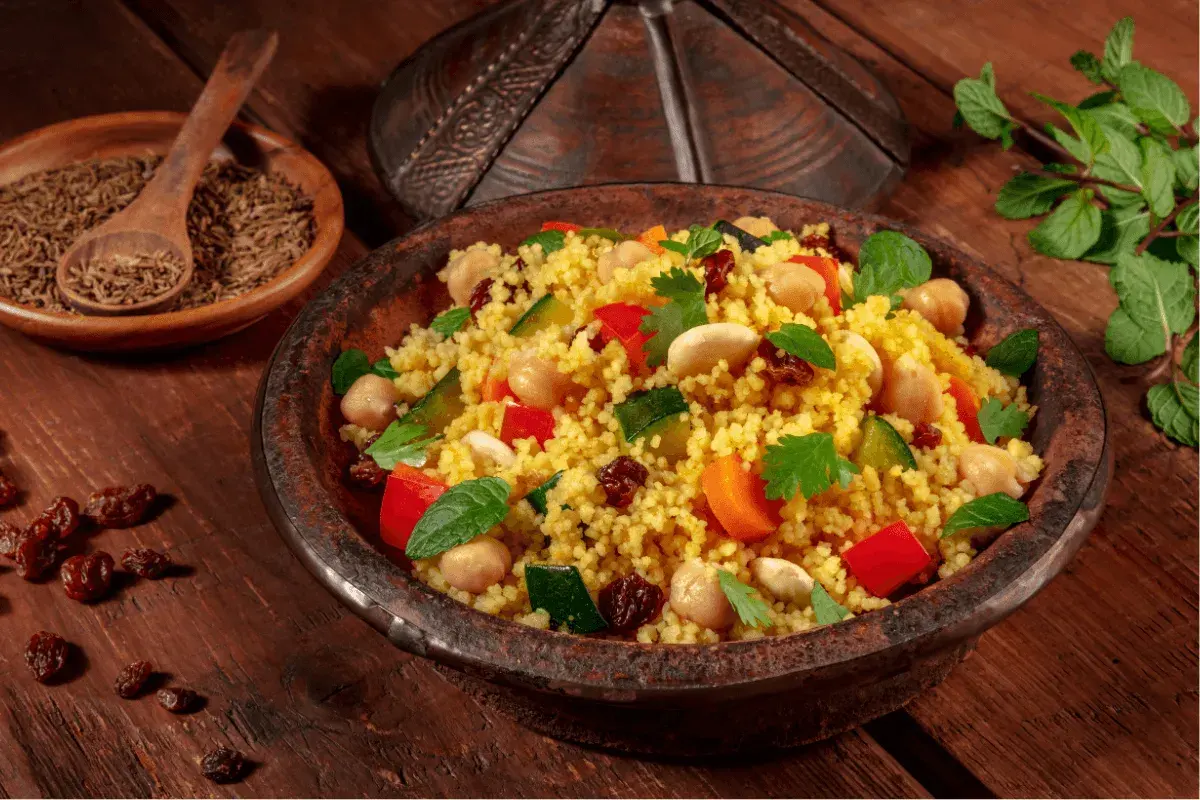
This is couscous with roasted vegetables, chickpeas, raisins and almonds, dressed with lemon, cumin and olive oil. It is a salad in the sense of being served at room temperature rather than a leafy one: the couscous is the bulk of it and the vegetables are folded through. Couscous was first made by the Amazigh people of North Africa, who worked out how to turn wheat into fine granules, and it remains a staple across Morocco, Algeria, Tunisia and Libya. Moroccan couscous is the smallest of the common grades, finer than Israeli or Lebanese couscous, and it is what this recipe uses. The technique is absorption rather than steaming. Hot broth is poured over the dry couscous, which has been tossed with olive oil and turmeric, and it is covered and left for five minutes. The raisins go in during that time so the residual heat plumps them. Traditional Moroccan couscous is steamed repeatedly in a couscoussier, which produces a lighter grain; this is the quick domestic method. The vegetables are roasted separately and folded in, which keeps them caramelised rather than steamed into the grain.
Note de Patrimoine AFN
Couscous was first made by the Amazigh people of North Africa and is a staple of Morocco, Algeria, Tunisia and Libya. Moroccan couscous is the finest of the common grades.
Ingrédients
Les mentions alimentaires sont fournies par les contributeurs à titre indicatif. Elles ne sont pas vérifiées par AFN et dépendent des produits que vous achetez. En cas d’allergie grave, vérifiez vous-même chaque ingrédient. Cuisine, allergies et votre propre jugement
Préparation
- 1
Chop the aubergine, bell peppers, courgette and onion into bite sized pieces and set aside. Mince the garlic.
- 2
Grate the carrots, chop the parsley and drain the chickpeas.
- 3
In a large mixing bowl, combine the couscous, olive oil and turmeric, mixing so the turmeric is evenly distributed.
- 4
In a saucepan, bring the chicken broth to a gentle boil. Pour the hot broth over the couscous so it is completely covered.
- 5
Cover the bowl and let it sit for about 5 minutes so the couscous absorbs the liquid.
- 6
Add the raisins while it steams, so the heat rehydrates them.
- 7
Preheat the oven to 200°C.
- 8
Arrange the aubergine, bell peppers, courgette and onion on a baking sheet. Drizzle with olive oil, sprinkle over the ground coriander and minced garlic, and season with salt and pepper. Toss to coat.
- 9
Roast for about 20 minutes, until tender and slightly caramelised.
- 10
For the dressing, whisk together the lemon juice, cumin, salt and pepper, then whisk in olive oil gradually.
- 11
Fluff the couscous with a fork to separate the grains. Gently fold in the roasted vegetables, grated carrots, parsley and chickpeas.
- 12
Drizzle over the dressing and toss gently to combine.
- 13
Sprinkle the slivered almonds over just before serving.
Notes de l’Africook
 Notes personnelles de Deborah Olayiwola
- Fluff with a fork rather than stirring with a spoon, which compacts the grains into a mass.
- Add the almonds at the very last moment. They soften in the dressing and their crunch is what the salad needs against the soft couscous.
- Roast the vegetables properly until they caramelise at the edges. Steamed vegetables folded into couscous give a bland, wet salad.
- Add the raisins while the couscous is still steaming so they plump in the residual heat.
- If packing it for lunch, keep the dressing separate until you are ready to eat.
- Use vegetable broth in place of chicken to make it vegetarian, which is otherwise a single-ingredient change.
Questions fréquentes
What is couscous and where does it come from?
Couscous is semolina wheat rolled into tiny granules. It was first made by the Amazigh, or Berber, people of North Africa and is a staple across Morocco, Algeria, Tunisia and Libya. Moroccan couscous is the finest of the common grades, smaller than Israeli or Lebanese couscous.
Can I make it vegetarian?
Yes, and it is a single change: use vegetable broth instead of chicken broth. Everything else in the recipe is already plant-based, and the chickpeas and almonds carry enough protein to make it a substantial main course rather than only a side.
How long does it keep?
Two days refrigerated in an airtight container, and no longer. If you are making it ahead, keep the dressing and the almonds separate and add them just before eating, since the couscous absorbs dressing as it stands and the almonds soften.
Is this how couscous is traditionally cooked?
No. Traditionally the grain is steamed repeatedly in a couscoussier, a two-tier pot with a steamer above the broth, and rolled between the hands between steamings. That gives a lighter, more separate grain. This recipe uses the quick absorption method with pre-steamed couscous, which is what most households now do.
Avis
Soyez le premier à noter cette recette
Vous l’avez cuisinée ? Votre note aide la personne suivante à se décider.
Aucun avis sur cette recette pour le moment. Si vous l’avez cuisinée, le vôtre serait le premier.
Vous Aimerez Aussi
Voir toutes les recettes Morocco →
Moroccan Chicken Rfissa
Tanjia Marrakchia
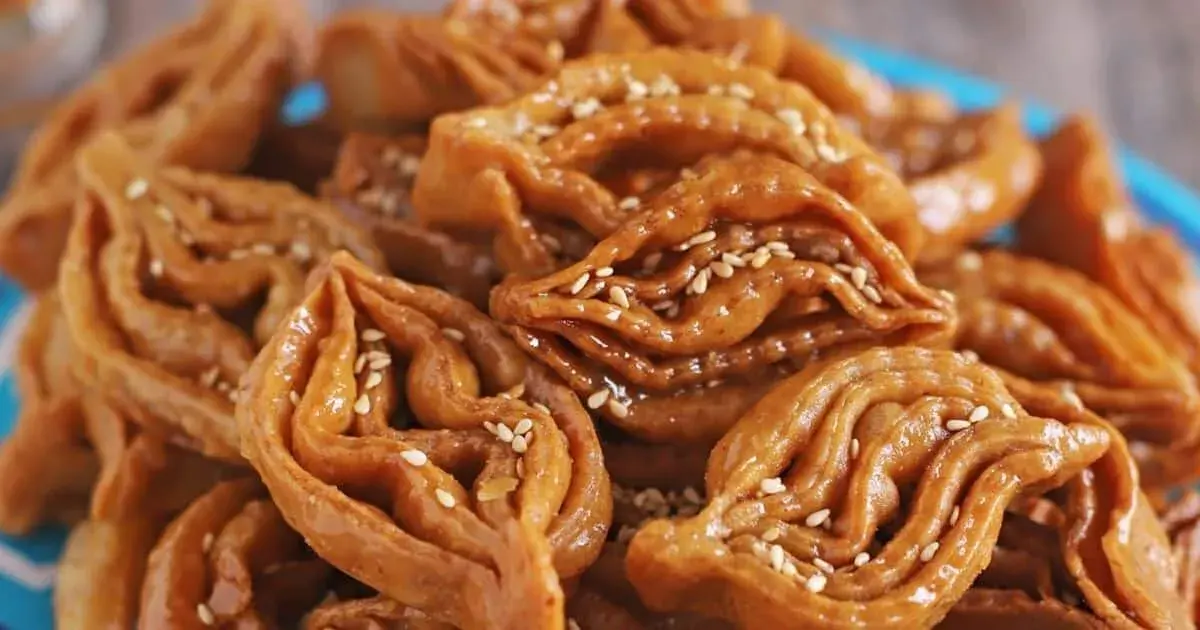
Chebakia (Moroccan Sesame Cookies)