
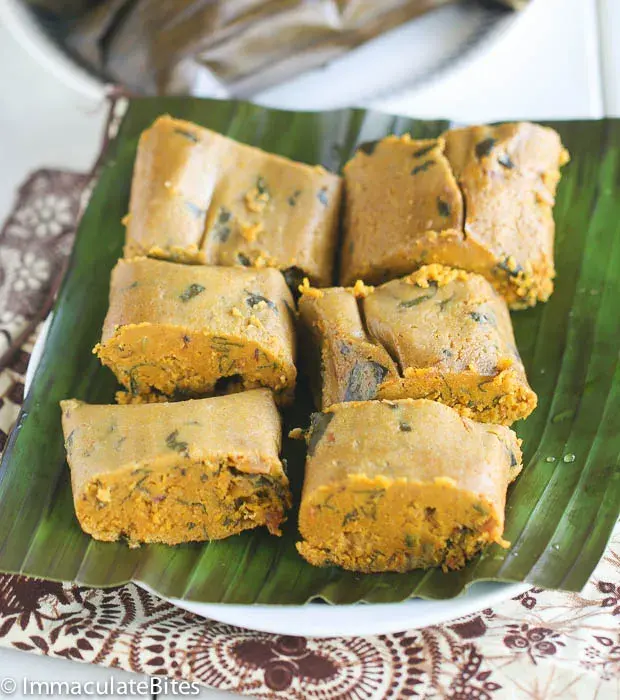
Kwacoco Bible (Cameroonian Steamed Cocoyam)
Abuja, Nigeria · Voir toutes les recettes
Aperçu
Kwacoco bible is grated cocoyam mixed with palm oil, smoked fish, crayfish and greens, wrapped in banana leaves and steamed until set. It is a staple of the Bakweri of Cameroon's South West Region. Its closest relative is Nigerian moi moi, the steamed bean pudding, and the technique is the same: a wet seasoned mixture portioned into leaf parcels and cooked in a covered pot with water in the base. Grated cocoyam behaves much like blended beans, it sets into a firm, sliceable mass when steamed, because the starch gelatinises and holds everything suspended in it. The banana leaves are not packaging. They flavour the parcels as they steam, and they are what gives the dish its particular aroma; foil holds the shape but contributes nothing. Cocoyam is worth knowing about here, because the variety matters. The source notes that the pink-fleshed ones are starchier and drier when cooked, and that raw cocoyam can leave a slight itch in the throat, that is calcium oxalate, and cooking removes it entirely. It is also why gloves are worth wearing when grating. Nobody, including the source, can explain the name. It has been left unexplained rather than given an invented etymology.
Note de Patrimoine AFN
Kwacoco bible is a Cameroonian dish of grated cocoyam mixed with palm oil, smoked fish and greens, wrapped in banana leaves and steamed. It is a staple of the Bakweri people of the South West Region and is prepared in the same manner as Nigerian moi moi.
Ingrédients
Les mentions alimentaires sont fournies par les contributeurs à titre indicatif. Elles ne sont pas vérifiées par AFN et dépendent des produits que vous achetez. En cas d’allergie grave, vérifiez vous-même chaque ingrédient. Cuisine, allergies et votre propre jugement
Préparation
- 1
Peel the cocoyams and grate them to a smooth paste, or work them in a food processor. Gloves are worth wearing, raw cocoyam irritates the skin.
- 2
Mix the grated cocoyam with the salt, seasoning cubes, palm oil, chopped greens, scotch bonnet and flaked fish until everything is evenly combined.
- 3
Line the base of a pot with banana leaves or foil.
- 4
Wrap about three-quarters of a cup of the mixture in each portion of banana leaf or foil, and set the parcels into the prepared pot.
- 5
Cover all the parcels with more banana leaves or foil, then pour in water to about halfway up the parcels.
- 6
Cook for one hour. Check every 15 minutes and top up the water so the pot does not run dry and burn.
- 7
After an hour, let any remaining water cook away, then turn off the heat.
- 8
Unwrap and serve, on its own or with a kpomo sauce as it is eaten in Bakweri villages.
Notes de l’Africook
- Use banana leaves if you can. They flavour the parcels as they steam in a way foil cannot, and that aroma is part of the dish.
- Check the water every 15 minutes. A pot that boils dry burns the bottom parcels and there is no recovering them.
- Grate the cocoyam finely and evenly. Coarse gratings do not bind and the parcels fall apart when unwrapped.
- Wear gloves while grating. Raw cocoyam contains calcium oxalate, which irritates skin, cooking destroys it entirely.
- Warm the palm oil before it goes in. It combines far more evenly than cold oil.
- Do not overfill the parcels. The mixture expands as the starch sets.
Questions fréquentes
How is this like moi moi?
The technique is essentially identical: a wet, seasoned mixture is portioned into leaf parcels and steamed in a covered pot with water in the base, and it sets into a firm, sliceable pudding. The difference is the base, moi moi uses blended beans, kwacoco bible uses grated cocoyam. Both work because the starch gelatinises as it steams and holds everything else suspended in it. Moi moi has its own recipe on this site.
Why is it called bible?
Nobody knows, including the source, which cheerfully admits as much. Explanations circulate, the shape of the wrapped parcel, the size of the portion, but none is documented. Rather than invent an etymology, it has been left unexplained here. Kwacoco on its own refers to cocoyam preparations generally in Cameroonian Pidgin; the bible part is the puzzle.
Can I use foil instead of banana leaves?
Yes, and the recipe allows for it. Foil holds the shape perfectly well and the parcels will set properly. What you lose is the flavour: banana leaves impart a distinct grassy fragrance to anything steamed inside them, and that aroma is a genuine part of what kwacoco bible tastes like. Frozen banana leaves are sold at African and Asian grocers and are worth seeking out.
Is raw cocoyam safe to handle?
It irritates the skin and can leave an itch in the throat if tasted, which is calcium oxalate, the same compound that makes raw taro unpleasant. Gloves solve the handling problem, and thorough cooking destroys the compound entirely, which is why cocoyam is never eaten raw anywhere. The source's observation that the flavour is earthy and can leave a slight itch is an accurate description of the raw root.
Avis
Soyez le premier à noter cette recette
Vous l’avez cuisinée ? Votre note aide la personne suivante à se décider.
Aucun avis sur cette recette pour le moment. Si vous l’avez cuisinée, le vôtre serait le premier.