
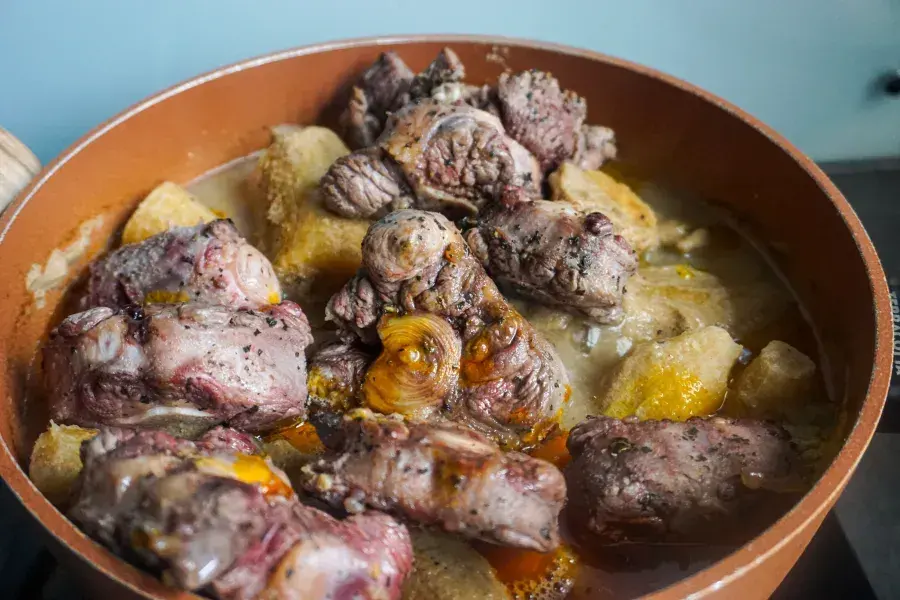
Kondré (Cameroonian Spiced Plantain and Meat Stew)
Abuja, Nigeria · Voir toutes les recettes
Aperçu
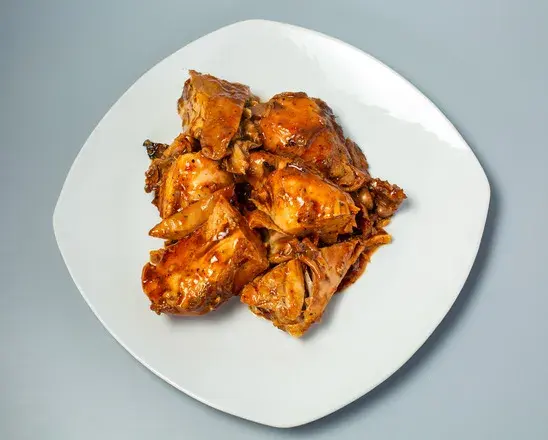
Kondré is green plantain and meat cooked slowly together in a blended spice paste until both are completely tender. It comes from the Bamileke of western Cameroon and is made for weddings, family gatherings and funerals. Three things make it, and the source sets them out clearly. The meat, goat traditionally, beef commonly, sometimes smoked pork, cooked long enough to fall off the bone, which means an hour and a half at minimum. The plantain, which must be green and unripe: ripe plantain collapses over three hours of cooking and, more importantly, tastes wrong. The source's line is worth quoting in spirit, if it is not green, it is not kondré. The third component is the spice list, and it is what makes this specifically Cameroonian rather than a generic stew. Pèbè (false nutmeg), djansang, rondelles, mesep and white Penja pepper are West and Central African spices with no straightforward substitutes, sold at African grocers. Penja pepper in particular is a protected Cameroonian product with a real reputation. Toasting the whole seeds before blending is marked optional in the method. It is worth doing, dry-toasting hard seeds releases their oils and deepens the whole dish. The source's ingredient list omits the plantain itself, which the method then requires.
Note de Patrimoine AFN
Kondré is a spiced one-pot dish of green plantain and meat from the western region of Cameroon, associated particularly with the Bamileke people. It is cooked for weddings, family gatherings and funerals, and is built on West and Central African spices including pèbè, djansang and white Penja pepper.
Ingrédients
Les mentions alimentaires sont fournies par les contributeurs à titre indicatif. Elles ne sont pas vérifiées par AFN et dépendent des produits que vous achetez. En cas d’allergie grave, vérifiez vous-même chaque ingrédient. Cuisine, allergies et votre propre jugement
Préparation
- 1
Peel and rinse the plantains, cut them in half and leave them in cold water so they do not discolour.
- 2
Wash the meat and pat it dry.
- 3
Salt the meat and leave it for 10 minutes.
- 4
Warm the vegetable oil in a large pot and brown the meat.
- 5Optional but worth doing
bring a small pan to a high heat and dry-toast the pèbè, rondelles, cloves, djansang and white pepper until fragrant. Toasting hard seeds releases their oils.
- 6
Take the meat out and set it aside.
- 7
Blend the basil, leek, celery, garlic, ginger, tomato, cloves and toasted seeds together until smooth.
- 8
In the same pot, put the plantain, half the blended mixture and salt, and cover with water. Cover and cook for 45 minutes.
- 9
Put the meat back in with the remaining blended mixture, the palm oil and the bouquet garni. Cover and cook for a further 60 minutes, until both meat and plantain are tender.
- 10
Turn it occasionally so nothing catches, and adjust the salt.
Notes de l’Africook
- Use green, unripe plantain only. Ripe plantain disintegrates over three hours and tastes wrong, this is the point the source is most insistent about.
- Give the meat the full time. Kondré wants meat falling off the bone, which is ninety minutes at an absolute minimum.
- Toast the seeds before blending. It is marked optional and it makes a real difference.
- The spices are what make this kondré. Pèbè, djansang, rondelles, mesep and Penja pepper have no straightforward substitutes, an African grocer is the answer.
- Blend the spice mixture properly smooth. Gritty spice paste stays gritty through three hours of cooking.
- Turn it from time to time. Plantain sticks to the base of the pot readily over a long cook.
Questions fréquentes
Why must the plantain be green?
Two reasons, and the source is emphatic about both. Green plantain is firm and starchy enough to survive three hours of cooking, whereas ripe plantain disintegrates into the sauce. And the taste is completely different, ripe plantain is sweet, which changes the character of the dish entirely. Kondré is meant to be savoury and spiced, with the plantain contributing starch and body rather than sweetness.
What are pèbè and djansang?
Two West and Central African spices central to Cameroonian cooking. Pèbè is false nutmeg, the seed of Monodora myristica, warm and aromatic and quite different from true nutmeg. Djansang, also spelt njansang, is the roasted ground seed of Ricinodendron heudelotii, nutty and slightly bitter, used as both flavouring and thickener. Neither has a straightforward substitute. African grocers stock both, usually whole.
What is Penja pepper?
White peppercorns grown in the Penja valley of Cameroon, and one of the few African foods with protected geographical status. It has a distinct, floral, less aggressively hot character than ordinary white pepper and a serious reputation among cooks internationally. Five seeds in a pot this size is a small quantity, which tells you something about its intensity. Ordinary white pepper substitutes at a pinch but is a noticeably blunter instrument.
When is kondré eaten?
At occasions. It is made for weddings, family gatherings and funerals in the western region of Cameroon, and the three-hour cook and long spice list are part of why, it is not a weeknight dish. That said the source also recommends it for weekends, and it is eaten as a substantial family meal rather than being reserved exclusively for ceremonies.
Avis
Soyez le premier à noter cette recette
Vous l’avez cuisinée ? Votre note aide la personne suivante à se décider.
Aucun avis sur cette recette pour le moment. Si vous l’avez cuisinée, le vôtre serait le premier.