
How to Cook Couscous
Aperçu
How to prepare instant couscous: boiling water or stock poured over, covered, left to steam, then fluffed. This is a technique page for a staple ingredient rather than a recipe for a dish, and it is filed as such. Couscous is North African, specifically Berber in origin, and it is a staple across Morocco, Algeria, Tunisia and Libya. Its status was recognised by UNESCO in 2020, when the knowledge and practices around couscous were inscribed on the Representative List of the Intangible Cultural Heritage of Humanity in a joint submission by Algeria, Mauritania, Morocco and Tunisia. It is not a grain, despite looking like one. Couscous is pasta, durum wheat semolina moistened, rolled into tiny granules and dried. Three sizes are common: Moroccan, the smallest; Israeli or pearl couscous, about the size of peppercorns; and Lebanese, the largest. The traditional method has nothing to do with pouring boiling water on. Couscous is steamed, usually more than once, in the upper chamber of a couscoussier over a stew whose vapours flavour it as it cooks. That is how it is made for a proper meal in North Africa and the results are much lighter. Almost all couscous sold in supermarkets is pre-steamed and dried, which is why the rehydration method here works.
Note de Patrimoine AFN
Couscous is a North African staple of Berber origin, made from durum wheat semolina rolled into granules. Traditionally it is steamed in the upper chamber of a couscoussier over a stew. In 2020 UNESCO inscribed the knowledge and practices concerning couscous on its Representative List of the Intangible Cultural Heritage of Humanity, in a joint submission by Algeria, Mauritania, Morocco and Tunisia.
Ingrédients
Les mentions alimentaires sont fournies par les contributeurs à titre indicatif. Elles ne sont pas vérifiées par AFN et dépendent des produits que vous achetez. En cas d’allergie grave, vérifiez vous-même chaque ingrédient. Cuisine, allergies et votre propre jugement
Préparation
- 1
Combine the couscous and salt in a large bowl.
- 2
Pour the boiling water or stock over it all at once and mix through quickly and thoroughly.
- 3
Cover the bowl tightly with a lid, a plate or cling film.
- 4
Leave it to steam for 10 to 15 minutes without lifting the cover.
- 5
Take the cover off and separate the grains with a fork, working through the whole bowl.
- 6
Mix in the butter or olive oil if you are using it.
- 7
Serve as a base for North African tagines and stews, alongside meat, fish or vegetables, or cooled as a salad.
Notes de l’Africook
- Use stock rather than water. Couscous has very little flavour of its own and absorbs whatever it is rehydrated in.
- Cover it properly. The steam trapped under the lid is what cooks the grains, and lifting it lets that escape.
- Fluff with a fork, thoroughly, and do not stir with a spoon, that compacts it into a mass.
- Equal volumes of couscous and liquid is the working ratio. More liquid gives a soggy result that no amount of fluffing recovers.
- For the traditional method, steam it in a couscoussier over a stew, twice, separating the grains between steamings. It is considerably lighter.
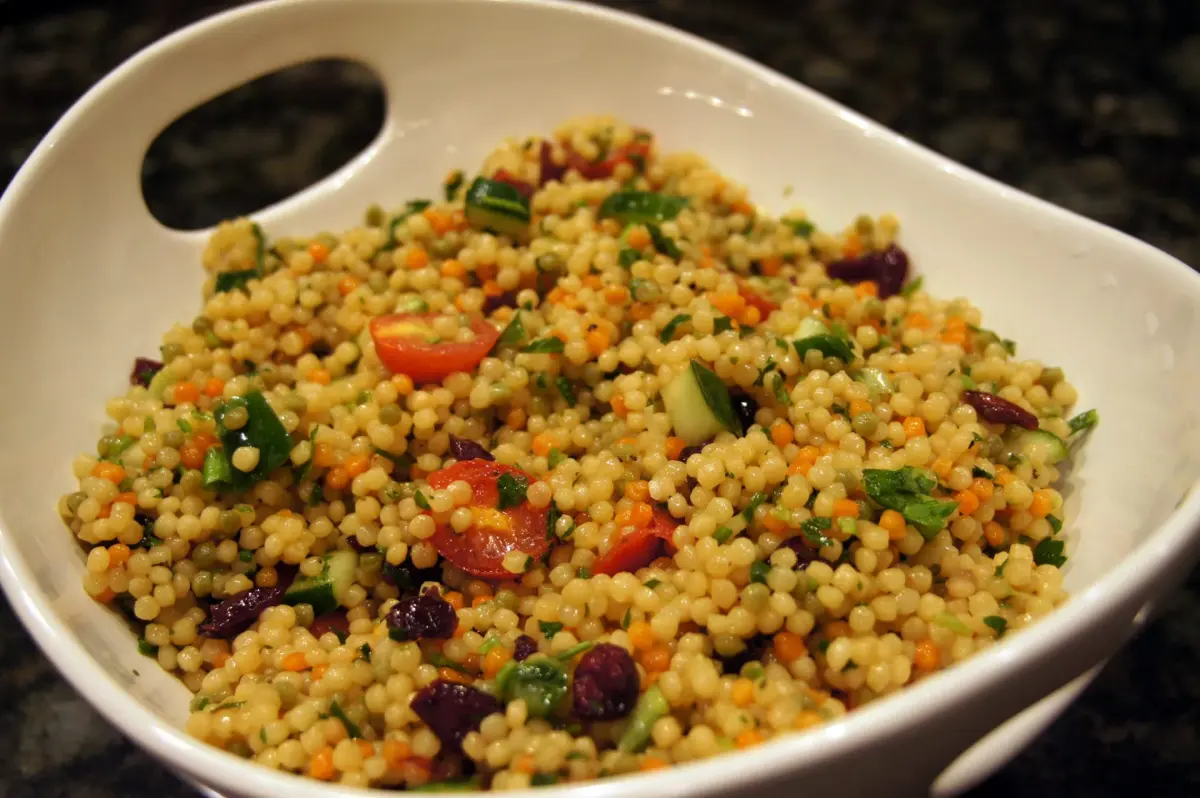
- It keeps for a few days refrigerated and works cold in salads with lemon, herbs and olive oil.
Questions fréquentes
Is couscous a grain or a pasta?
Pasta, though it is almost always treated as a grain. It is made from durum wheat semolina moistened, rolled by hand or machine into tiny granules and dried, the same raw material as dried pasta, in a different shape. That is why it cooks by absorption rather than by boiling, and why it is not gluten-free. Three sizes are common: Moroccan the smallest, Israeli or pearl couscous larger, and Lebanese largest of all.
What is the traditional way to cook couscous?
Steaming, in the upper chamber of a couscoussier set over a stew or tagine, so the vapours rising through it carry the flavour of what is cooking below. It is usually steamed more than once, with the grains separated and moistened between steamings, and the result is noticeably lighter and more separate than the pour-and-cover method. This is how couscous is made for a proper meal across North Africa.
Why does the pour-over method work at all?
Because nearly all couscous sold in supermarkets has already been steamed and dried before packaging, which is why it is often labelled instant. It only needs rehydrating rather than cooking, so boiling liquid poured over and left covered for ten minutes is enough. Genuinely raw couscous, which is harder to find outside North Africa, does need the full steaming treatment.
Is couscous recognised as cultural heritage?
Yes. In 2020 UNESCO inscribed the knowledge, know-how and practices concerning the production and consumption of couscous on its Representative List of the Intangible Cultural Heritage of Humanity. The submission was made jointly by Algeria, Mauritania, Morocco and Tunisia, notable in itself, given how often the four countries' claims to shared dishes are framed as competing. It recognises the whole social practice around couscous, not just the food.
Avis
Soyez le premier à noter cette recette
Vous l’avez cuisinée ? Votre note aide la personne suivante à se décider.
Aucun avis sur cette recette pour le moment. Si vous l’avez cuisinée, le vôtre serait le premier.
Vous Aimerez Aussi
Voir toutes les recettes Morocco →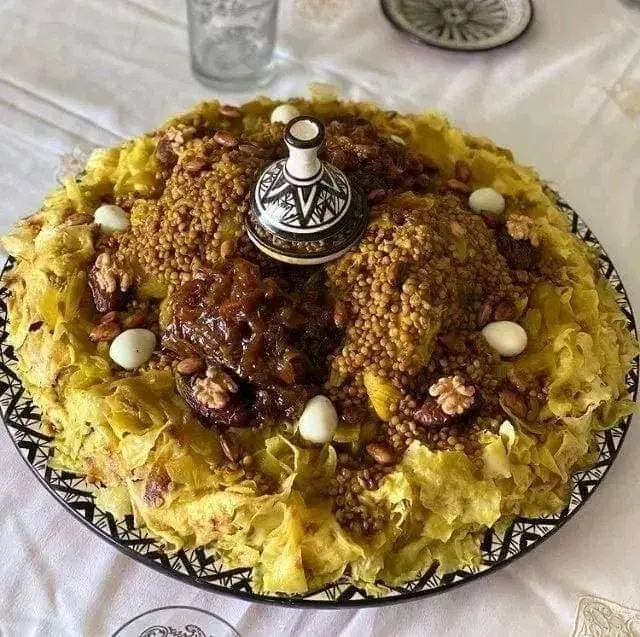
Moroccan Chicken Rfissa
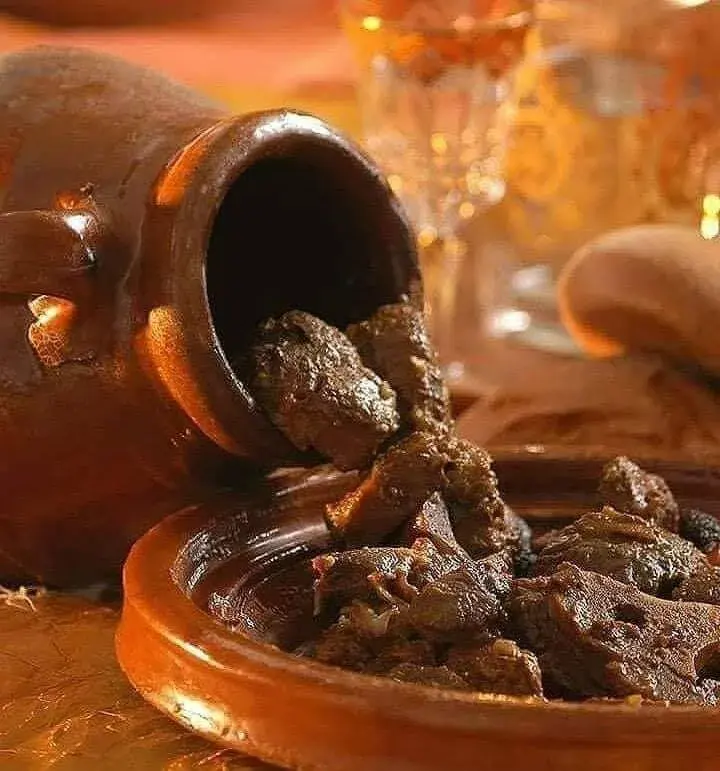
Tanjia Marrakchia
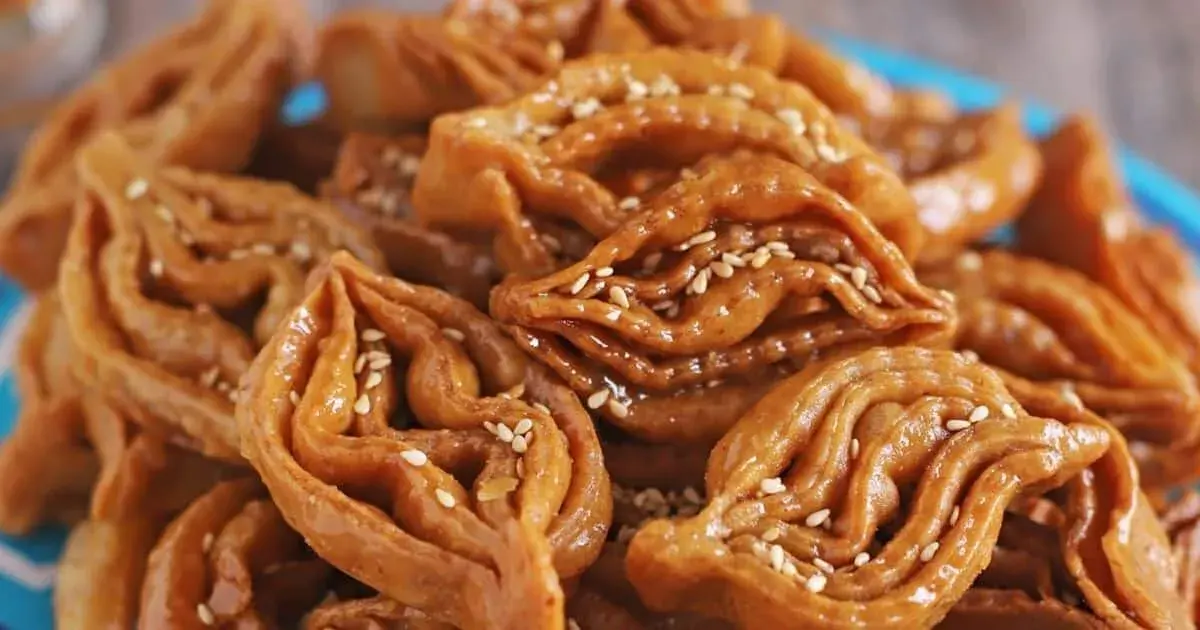
Chebakia (Moroccan Sesame Cookies)