

Zlabia
Aperçu
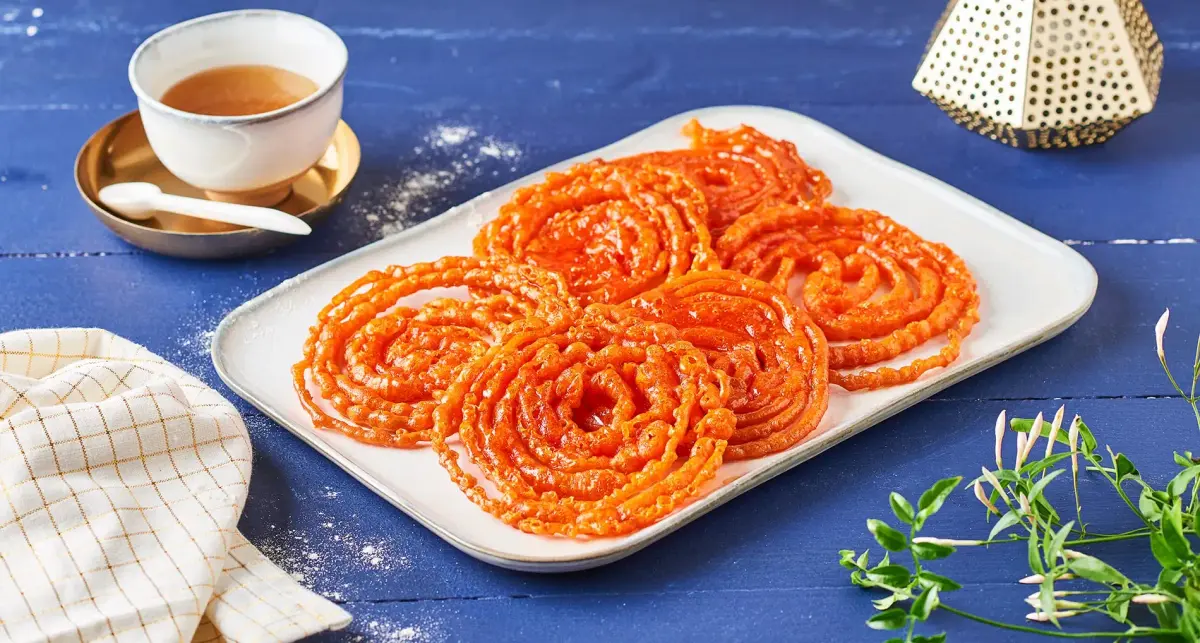
Zlabia, also written zalabia, and a close relative of the jalebi of South Asia, is a spiral of fermented batter piped into hot oil, fried until crisp, then dropped straight into cold syrup. In Algeria it belongs to Ramadan almost exclusively. Through the fasting month it is made and sold in quantity, and it is one of the sweets that appears on the table at iftar alongside the dates and the soup. Its bright orange coils are one of the visual markers of the month. The dish travels across an enormous stretch of the world under variations of the same name, jalebi in India and Pakistan, zoolbia in Iran, zalabia across the Arab world, which reflects centuries of movement along trade and pilgrimage routes. Algerians make it their own way, built on flour, starch and yeast, and scented with rose water and lemon in the syrup. The technique has one governing rule, the same one that decides kanafeh: temperature contrast. Hot fried batter into cold syrup gives a shell that stays crisp while the inside takes on sweetness. Both hot, and it goes limp within minutes. The batter also needs a genuine rest. It is yeasted, and that fermentation is what gives the finished spiral its faint tang against the sugar.
Note de Patrimoine AFN
Zlabia belongs to a family of fried syrup-soaked sweets found from South Asia to North Africa, jalebi, zoolbia, zalabia, reflecting movement along historic trade and pilgrimage routes. In Algeria it is strongly associated with Ramadan.
Ingrédients
Les mentions alimentaires sont fournies par les contributeurs à titre indicatif. Elles ne sont pas vérifiées par AFN et dépendent des produits que vous achetez. En cas d’allergie grave, vérifiez vous-même chaque ingrédient. Cuisine, allergies et votre propre jugement
Préparation
- 1
Mix sugar, water, lemon juice, and rose water in a saucepan. Stir over medium heat until sugar dissolves.
- 2
Bring to a slow boil for approximately ten minutes, or until it starts to have a syrupy consistency.
- 3
Allow the syrup to cool off while you work on the batter.
- 4
Mix yeast, sugar, and water. Cover, and allow to rest for 15 minutes.
- 5
Mix in cornstarch, flour, salt, and baking powder.
- 6
Cover and place in a warm location for one hour.
- 7
Heat vegetable oil to 375 degrees F.
- 8
Place batter in a squeeze bottle, cut the tip of the bottle if necessary.
- 9
Squeeze batter out of the bottle, into the hot oil, forming 3″ circles resembling funnel cakes.
- 10
Drain on paper towels. While still warm, dip the Zalabia in the syrup and allow excess to drip off.
- 11
Continue until the batter is used up. Enjoy!
Notes de l’Africook
- Make the syrup first and let it cool completely. The batter is fried hot and must go into cold syrup, not warm.
- Rest the batter properly. It is yeasted, and the fermentation gives the faint sourness that stops it being flatly sweet.
- Keep the oil at a steady medium heat. Too hot and the outside colours before the inside sets; too cool and it drinks oil.
- Pipe in a continuous spiral without lifting. Stopping and starting gives coils that break apart in the oil.
- Soak briefly, under a minute. Long soaking makes it soggy rather than syrupy.
Questions fréquentes
Is zlabia the same as jalebi?
They are the same idea and almost certainly share an ancestor, a fermented batter piped in spirals, deep-fried and soaked in syrup. Jalebi is the South Asian name, zlabia or zalabia the North African and Arab one, zoolbia the Iranian. The differences are in the batter proportions and the flavouring of the syrup: Algerian zlabia typically uses rose water and lemon, while jalebi often uses saffron and cardamom.
Why must the syrup be cold?
Temperature contrast is what keeps it crisp. Hot fritters going into cold syrup absorb sweetness at the surface while the shell stays firm. If both are hot the batter softens all the way through and collapses within minutes. This is the single most common reason home-made zlabia disappoints.
Why does my batter not hold its shape?
Usually it is too thin, or it has not rested. The batter should be thick enough to hold a piped line without immediately spreading, and the yeast needs time to work, that fermentation gives it both the flavour and enough structure to keep the spiral. Add starch a little at a time if it is running.
Is deep-frying it at home difficult?
It needs care rather than skill. Use a deep pan no more than a third full, keep the heat steady at a medium temperature, and never leave hot oil unattended. The sugar syrup is also worth respecting, hot sugar sticks to skin and burns badly, so let it cool as instructed rather than working with it hot.
Avis
2 avis
I was wondering why both yeast and baking powder in the same batter abeg, but when I fried it the light crunch explained everything. My syrup got a bit too hard because I left it boiling past 10 minutes on high heat, next time I will turn off the gas earlier.
couldnt find rosewater in sainsburys so I had to walk down to the arab shop in rusholme. the syrup took slightly longer than 10 mins to get proper thick on my stove but once dipped while hot e sweet well well. crispiness from that cornstarch is spot on sha