

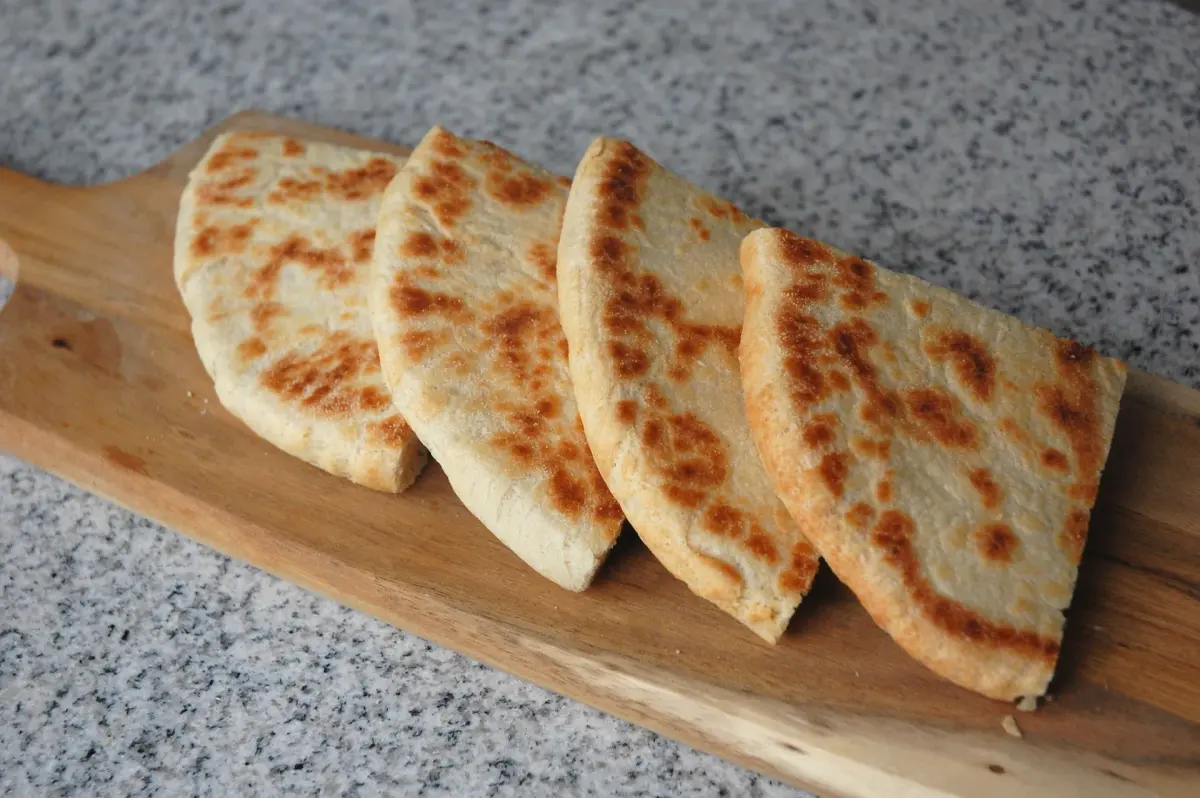
Kesra
Aperçu
Kesra is the Algerian flatbread: round, soft and chewy, cooked on a flat pan and marked by the rings of the pan it is cooked on. It is eaten with savoury and sweet meals alike, and it is the domestic alternative to the French baguettes that fill Algerian and Tunisian bakeries as a legacy of colonisation. Its names change across the country. It is khobz ftir in Algiers, kesra in the east, and aghroum n'tajin in Kabylia. It is native to eastern Algeria and is traditionally made with semolina rather than plain flour, along with oil, salt and water and nothing else. This particular recipe uses all purpose flour instead, which is a departure from the traditional semolina base and will give a softer, less characteristically grainy bread. It is unleavened. There is no yeast, no rising, only a rest of twenty minutes or so to relax the dough so it stops springing back when rolled. A heavy pan works best, and a cast iron one with embossed rings gives the circular pattern kesra is recognised by. Sesame or nigella seeds are a common addition worked into the dough. It is served alongside Algerian soups and stews, and berkoukes in particular is conventionally eaten with it.
Note de Patrimoine AFN
Kesra is an Algerian flatbread native to the east of the country, traditionally made from semolina, oil, salt and water. It is known as khobz ftir in Algiers and aghroum n'tajin in Kabylia.
Ingrédients
Les mentions alimentaires sont fournies par les contributeurs à titre indicatif. Elles ne sont pas vérifiées par AFN et dépendent des produits que vous achetez. En cas d’allergie grave, vérifiez vous-même chaque ingrédient. Cuisine, allergies et votre propre jugement
Préparation
- 1
In a mixing bowl, combine the flour, salt and oil, adding any seeds at this point.
- 2
Add the water and mix until the ingredients come together. The amount of water varies with humidity and elevation: you want a dough that is soft and smooth but firm enough to form into rounds and lift without tearing.
- 3
Knead until it forms a smooth, even ball.
- 4
Divide into evenly sized balls about the size of a fist, which should give 5 or 6.
- 5
If the dough starts to feel dry, smooth a little oil around the outside.
- 6
Lightly oil the balls to stop them drying and let them rest for at least 20 minutes.
- 7
Meanwhile, preheat a flat shallow pan over medium-high heat and grease it lightly. A heavy cast iron pan works well, and one with embossed rings gives the traditional circle pattern.
- 8
Roll out the first ball with your hands or a rolling pin into an even circle about 5mm thick.
- 9
Lift the bread carefully onto the pan, flipping half of the circle over your hand and using the other hand to support it, or use a wide oiled spatula.
- 10
Cook for several minutes on each side, poking small holes with a toothpick to stop it puffing.
Notes de l’Africook
- The dough is rested enough when it stops springing back as you flatten it. If it springs back, set it aside and wait longer.
- Keep the balls you are not working with lightly oiled and covered, or they dry out and crack when rolled.
- A heavy pan holds its heat much better than a thin one, and cast iron with embossed rings gives the pattern kesra is known for.
- Adjust the water rather than following it exactly. Humidity and flour vary, and the dough should be soft and smooth but not sticky.
- For the traditional bread, use fine semolina in place of all or most of the flour. It gives the grainy texture kesra is characterised by.
- There is no yeast and no rise. The rest is only to relax the gluten so the dough rolls without fighting back.
Questions fréquentes
Should kesra be made with semolina or flour?
Traditionally semolina, which gives the grainy, slightly sandy texture kesra is known for. This recipe uses all purpose flour, which produces a softer, plainer bread. Both are made, but if you want the characteristic Algerian version, use fine semolina for all or most of the flour.
What is the difference between kesra and kisra?
They are different breads from different countries despite the near-identical names. Kesra is Algerian, made from semolina and cooked on a flat pan as a soft round flatbread. Kisra is Sudanese, made from fermented sorghum and spread paper-thin, closer to injera. One letter separates the names and very little else.
Why does my kesra keep springing back when I roll it?
The dough has not rested long enough. Twenty minutes is a minimum and some doughs want longer. Set the ball aside, work on another, and come back to it. Fighting a dough that springs back gives an uneven bread and tears the surface.
What is kesra eaten with?
Algerian soups and stews, chorba and berkoukes in particular, and it is used to scoop rather than eaten as a side. It is also eaten with honey or jam at breakfast, and with olive oil. It is genuinely versatile, which is why most Algerian households make it alongside shop-bought baguettes.
Avis
2 avis
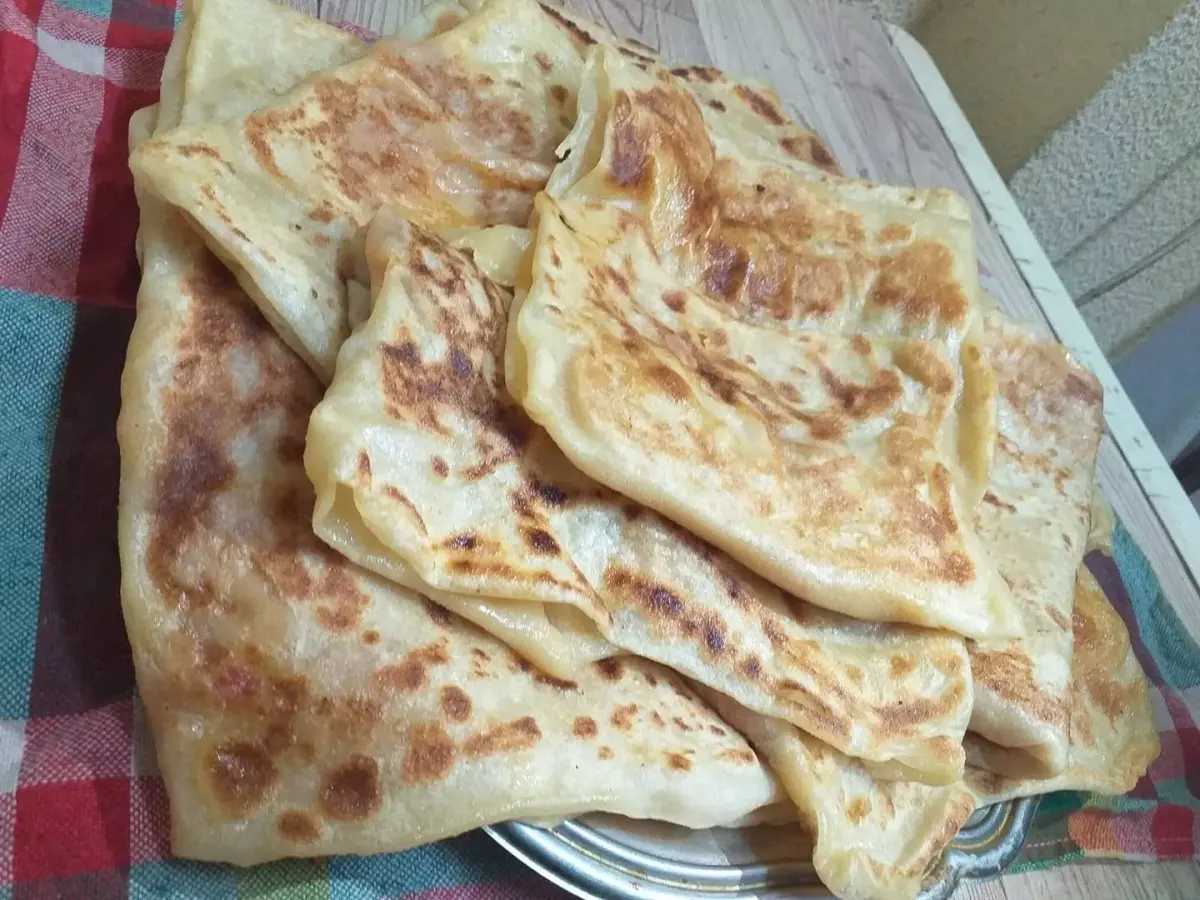
Ended up needing almost 1 1/2 cups of water since my kitchen was super dry today. I got 5 fist-sized balls, but when I cooked the first flatbread in my cast iron skillet, the center was still doughy while the outside was browned. I had to roll the remaining ones much thinner to get them to cook through properly.
i tried using AP flour like you wrote because I didn't want to drive all the way to Phoenicia on Westheimer for coarse semolina. Texture was surprisingly decent sha, but real semolina gives that proper light crunch. Next time I will add more nigella seeds, one tablespoon wasnt enough for 5 cups of flour o.