

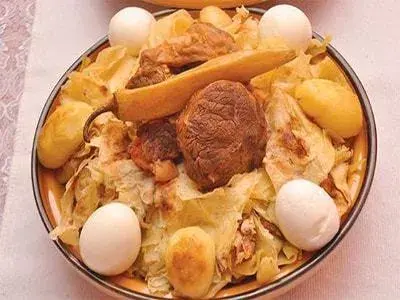
Chekhchoukha
Aperçu
Chekhchoukha, also written chakhchoukha, is torn flatbread under a spiced meat and chickpea sauce, and the name describes the tearing. It comes from tacherchert in the Chaouia language, meaning to crumble or to tear into small pieces, and the bread is broken by hand rather than cut. It is a Chaoui dish, from the Aurès mountains of eastern Algeria, and it spread from there into Constantine, Biskra and the rest of the country. Its origin is in shepherds' food, the substantial thing eaten on returning home on cold winter nights, and it kept that character even as it became a dish for festive occasions and celebrations rather than everyday eating. The bread is rougag, also called trid, a very thin round flatbread made from fine semolina. It is torn, steamed briefly to soften, then heaped on a plate and covered with marqa, the sauce of diced lamb, tomato, onion and chickpeas spiced with dried red chilli, caraway, ras el hanout, black pepper and cumin. Two versions are recognised: chakhchoukha of Biskra, which is this one, and chakhchoukha dfar, which uses a different flatbread and differs in taste and thickness. Which pot it is made in also varies, with some cities using clay and others iron.
Note de Patrimoine AFN
Chekhchoukha is a Chaoui speciality from eastern Algeria that has since spread across the country. Its name derives from tacherchert, meaning to crumble or tear into small pieces in the Chaouia language, and it is documented in two principal regional forms, that of Biskra and chakhchoukha dfar.
Ingrédients
Les mentions alimentaires sont fournies par les contributeurs à titre indicatif. Elles ne sont pas vérifiées par AFN et dépendent des produits que vous achetez. En cas d’allergie grave, vérifiez vous-même chaque ingrédient. Cuisine, allergies et votre propre jugement
Préparation
- 1
Start with the sauce. Put the olive oil in a saucepan over medium heat.
- 2
Add the onion, garlic, salt, pepper, ras el hanout, paprika and tomato paste, and cook for 5 minutes.
- 3
Add the grated tomato and the chickpeas and cook for 10 to 15 minutes.
- 4
Add the hot pepper if using.
- 5
Add the meat and pour in boiled water to just cover it.
- 6
Cook for about 45 minutes, or until the meat and chickpeas are done.
- 7
Meanwhile, tear the sheets of rougag into small pieces by hand.
- 8
Place the torn rougag in the top of a steamer and steam for about 5 minutes.
- 9
Transfer the steamed bread to a serving dish and set aside.
- 10
Check the sauce and adjust the salt. It should have reduced and thickened.
- 11
Arrange the meat and chickpeas over the rougag in the serving dish.
- 12
Spoon the sauce over the top, and serve with extra sauce alongside.
Notes de l’Africook
- Tear the rougag by hand rather than cutting it. Irregular torn pieces hold the sauce; knife cut squares slide apart under it.
- Steam the torn bread only briefly. Five minutes softens it; longer turns it to paste.
- Reduce the sauce properly before it goes on. A thin sauce soaks straight through the bread and leaves it sodden.
- Soak the chickpeas overnight. They will not soften inside the 45 minutes the meat needs.
- Lamb is the preferred meat in Algeria, though beef is used here and chicken works. Potatoes, courgette, carrot and green pepper are all added seasonally.
- Boiled eggs are a traditional garnish, and worth adding if you are serving it for an occasion.
Questions fréquentes
What is rougag and can I substitute it?
Rougag, also called trid, is a very thin round flatbread made from fine semolina, cooked on a griddle and used specifically for tearing into dishes like this. It is sold at North African grocers. Msemen or a thin unleavened flatbread will stand in at a push, though neither absorbs the sauce quite the same way. Ordinary bread does not work.
What is the difference between chakhchoukha of Biskra and chakhchoukha dfar?
Principally the flatbread, and after that the taste and the thickness of the finished dish. This recipe is the Biskra version. Both are widely made and neither is considered more correct than the other; which one a household makes generally follows where the family comes from.
What does the name mean?
It comes from tacherchert in the Chaouia language, meaning to crumble or to tear into small pieces. The name describes what you do to the bread rather than the sauce or the meat, which is a good indication of which part of the dish Algerians consider definitive.
Can I make it in advance?
Make the sauce ahead by all means, and it improves overnight as the chickpeas take up the spice. Do not combine it with the bread until you are serving, though. Rougag left sitting under sauce goes soft and loses the texture the dish depends on.
Avis
1 avis
I couldnt get proper rougag or trid flatbread here in Dallas abeg, so I used thin lavash sheets torn up. But that sauce! Grating the fresh tomatoes instead of chopping makes a huge difference with the ras el hanout. The beef was so tender after simmering. E sweet no be small thing o, tasted just like back home.